Few stadiums capture the balance between heritage and modernity like the Wanda Metropolitano. Once a forgotten athletics venue on Madrid’s outskirts, it now stands as a gleaming symbol of Atlético Madrid’s rise to global prominence. Its journey from rubble to modern fortress tells not just a story of architecture, but of a football club determined to define its own legacy.
Origins and the Early Metropolitano
Before the new stadium came into being, Atlético’s heart beat within another ground carrying the same name. The original Estadio Metropolitano de Madrid opened in 1923 and became the club’s home until 1966. It was an open, characterful ground nestled near Ciudad Universitaria, famous for its steep terraces and roaring atmosphere.
However, as football modernised, the stadium could no longer meet growing demands. By the mid-1960s, Atlético moved to the Estadio Vicente Calderón, leaving behind a place filled with memories of their early triumphs and heartbreaks. The old Metropolitano was eventually demolished, but its spirit lingered in the name and in the fans’ hearts.
The Birth of a Modern Stadium
Fast forward to 1994. On Madrid’s eastern edge, a new stadium emerged, initially known as the Estadio de la Comunidad de Madrid or La Peineta because of its distinctive comb-like shape. It was built primarily for athletics, part of the city’s long and ultimately unsuccessful Olympic ambitions.
Despite hosting events such as the 1997 World Athletics Championships, the venue fell into relative disuse. It stood quietly for years, an underutilised relic of grand plans that never quite materialised.
Atlético Madrid’s Vision and Reconstruction
By the late 2000s, Atlético Madrid’s leadership recognised the need for a modern home that could compete with Europe’s best. In 2013, they announced plans to move from the beloved but ageing Vicente Calderón to a redeveloped version of La Peineta.
The project was ambitious. The goal was to transform an old, half-forgotten athletics arena into one of the most advanced football stadiums in the world. Construction began in earnest, and by 2017 the rebirth was complete. The new stadium retained only part of the original structure, expanded dramatically to seat over 68,000 spectators, with cutting-edge facilities and a design that prioritised both comfort and intensity.
It was christened Wanda Metropolitano after Chinese conglomerate Wanda Group acquired partial naming rights, and as a nod to the original Metropolitano, connecting the modern club with its historic roots.
Design and Innovation
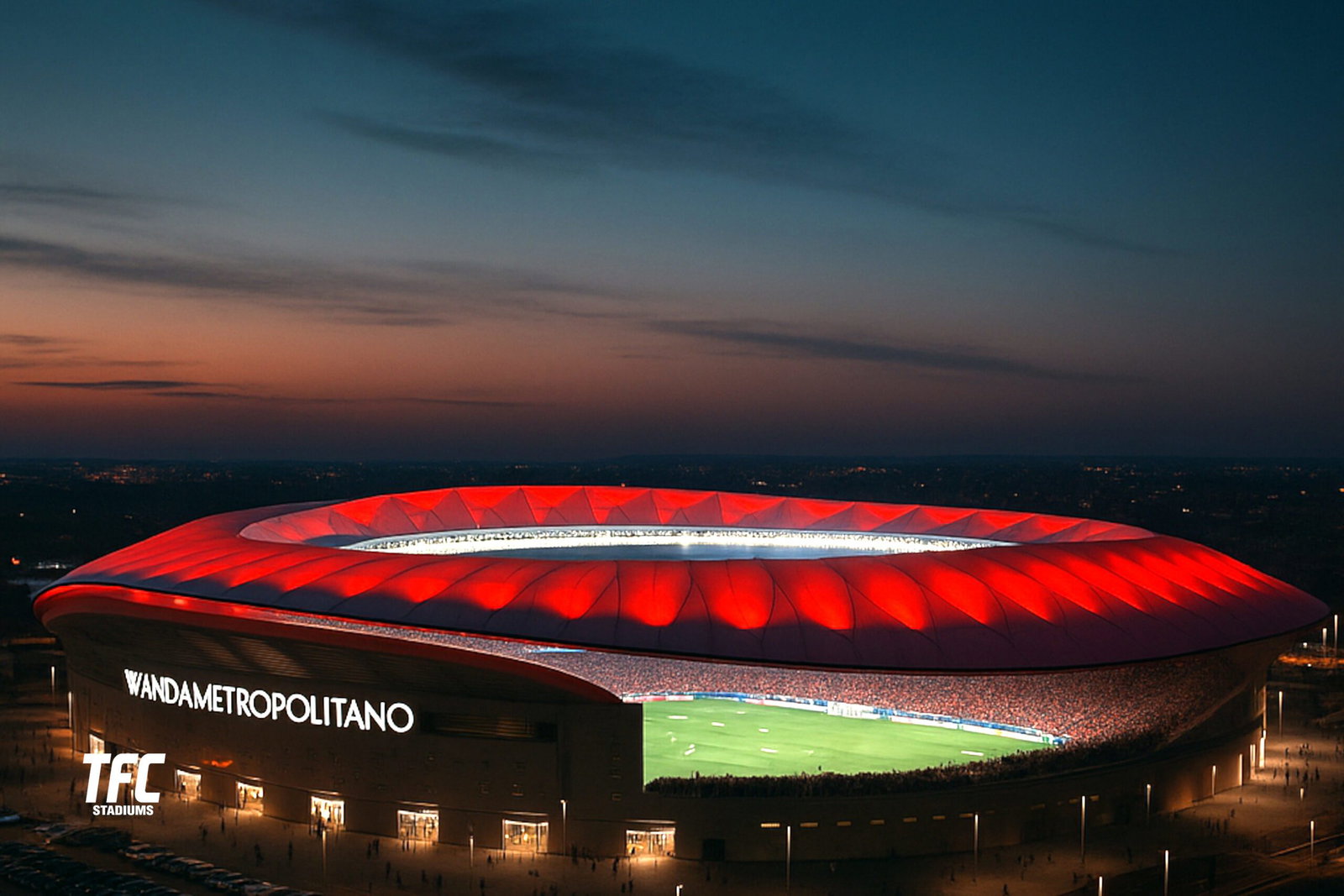
The stadium’s architecture reflects modern efficiency and aesthetic precision. Designed by Cruz y Ortiz Arquitectos, it features a sweeping white roof supported by a striking red structure that lights up Madrid’s skyline on match nights. The acoustics amplify chants, and every seat has an unobstructed view.
Key features include:
- Capacity: Around 68,456 spectators
- Roof: Lightweight, tensile design with LED lighting system
- Transport Links: Integrated metro and road connections
- Sustainability: Energy-efficient lighting and water systems
The stadium also became one of the first in Europe to achieve the LEED Gold certification for environmental sustainability.
Major Events and Footballing Legacy
Since opening in September 2017, the Wanda Metropolitano has hosted some of European football’s biggest occasions. The inaugural match saw Atlético defeat Málaga 1–0, with Antoine Griezmann scoring the first goal in the stadium’s history.
In 2019, it hosted the UEFA Champions League Final between Liverpool and Tottenham Hotspur, marking its place among Europe’s elite venues. The Spanish national team has also played several matches here, with the stadium earning praise for its atmosphere and accessibility.
Beyond football, it has staged concerts and large-scale events, further embedding itself into the cultural fabric of Madrid.
Symbol of a New Era
For Atlético fans, the move from the Calderón to the Wanda Metropolitano was emotional. The Calderón had stood beside the Manzanares River for half a century, a temple of noise and nostalgia. But the new stadium offered a fresh chapter, representing the club’s modern ambitions while retaining its working-class identity and relentless spirit.
The Metropolitano is now seen not merely as a stadium but as a declaration of intent. It symbolises how Atlético have evolved from Madrid’s “other” club into a powerhouse that can rival Real Madrid and Barcelona on and off the pitch.
Legacy and the Future
As of today, the Wanda Metropolitano (now officially known simply as Estadio Metropolitano following the end of the Wanda naming deal in 2022) remains a cornerstone of Spanish football. Its design and atmosphere have set new standards for stadium experiences, blending architectural excellence with fan passion.
Atlético Madrid’s success within its walls has strengthened its global image, and plans continue to evolve for further expansion and technological upgrades. In every sense, the Metropolitano stands as a monument to resilience, ambition, and identity.
TFC Takeaway
The story of the Wanda Metropolitano is one of rebirth and reinvention. From a neglected athletics venue to one of Europe’s most admired football arenas, it embodies Atlético Madrid’s journey, stubbornly defiant, constantly evolving, and fiercely proud of its past.
About the Author