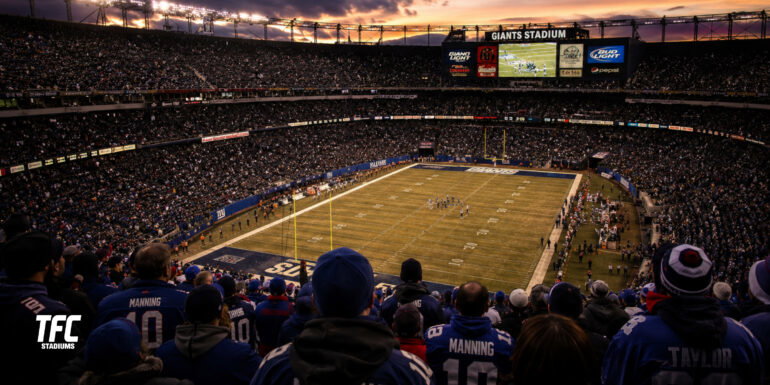
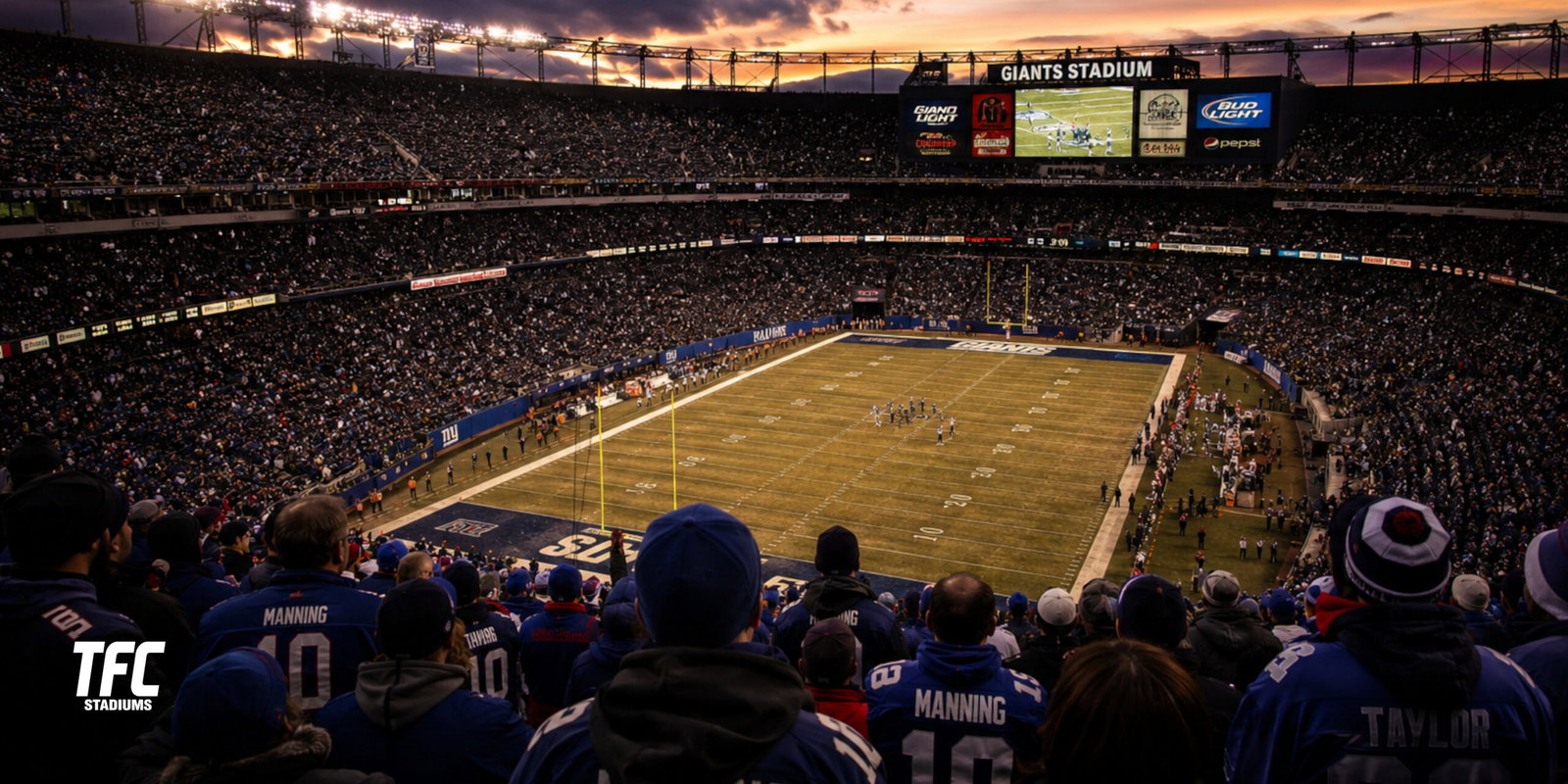
For more than three decades, Giants Stadium stood as one of American sport’s most recognisable venues. It hosted Super Bowl champions, unforgettable NFL rivalries, international football, concerts and countless moments that became part of sporting folklore.
When its final game arrived in January 2010, there was an unmistakable sense that an era was ending. The building itself was never the most glamorous stadium in America. It was concrete, functional and often brutally cold during New Jersey winters. Yet that simplicity became part of its identity. Fans came for football, not luxury.
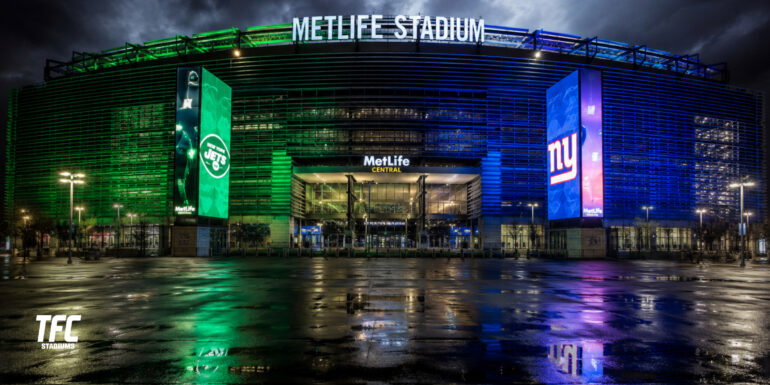
The final whistle closed the book on nearly 34 years of history before attention shifted next door to the brand-new MetLife Stadium.
Giants Stadium by the Numbers
Before looking back at its final game, it is worth remembering the scale of what Giants Stadium represented.
| Fact | Detail |
|---|---|
| Opened | 1976 |
| Closed | January 2010 |
| Capacity | Approximately 80,000 |
| Home teams | New York Giants, New York Jets |
| Super Bowls won by Giants while calling stadium home | 3 |
| Playoff games hosted | 30+ |
| Major concerts | Hundreds |
| FIFA World Cup matches | 1994 |
Although newer venues eventually surpassed it in technology and comfort, Giants Stadium became synonymous with tough, outdoor football in the northeast.
The Final Opponent
The last sporting event at Giants Stadium took place on January 3, 2010, during the final week of the regular NFL season.
The New York Giants welcomed the Minnesota Vikings for what became an emotional farewell.
Unfortunately for the home crowd, there was very little to celebrate on the scoreboard.
Minnesota defeated New York 44-7, with the Vikings producing one of their strongest performances of the season. Quarterback Brett Favre threw for more than 300 yards while the Giants struggled on both sides of the ball.
Few fans would have chosen such a result to end the stadium’s history.
A Difficult Season Ends
The defeat completed a disappointing 8-8 season for the Giants.
Just two years earlier, they had shocked the previously unbeaten New England Patriots in Super Bowl XLII. Expectations remained high entering the 2009 campaign, but injuries and inconsistent performances gradually deroded hopes of another playoff run.
The heavy defeat to Minnesota simply reinforced that the team had fallen short.
Sometimes stadium farewells mirror sporting success. This one reflected something different. It showed that even legendary venues cannot guarantee fairy-tale endings.
The Final Touchdown
The Giants’ lone touchdown came in the third quarter.
Quarterback Eli Manning connected with wide receiver Hakeem Nicks for a 68-yard score that briefly lifted the atmosphere inside the stadium.
Looking back, it became one of those oddly symbolic moments.
Nobody inside the building knew with certainty that it would be the final Giants touchdown ever scored there, but when history settled, Nicks had secured that honour.
Fans Were Saying Goodbye as Much as Watching Football
Long before kickoff, the atmosphere felt different.
Supporters arrived early to photograph entrances, walk familiar concourses and take one last look from their seats.
Some fans spent more time absorbing the surroundings than watching the game itself.
That reaction made perfect sense.
For generations of supporters, Giants Stadium represented birthdays, family traditions and lifelong friendships. Parents had introduced children to football there, who later brought their own children back decades later.
The building had become part of family history.
A Stadium Built for Football
One reason Giants Stadium remained so respected was its simplicity.
Unlike many modern venues filled with clubs, lounges and premium experiences, Giants Stadium focused attention squarely on the field.
The upper decks felt remarkably close to the action.
The open bowl trapped crowd noise effectively, especially during playoff games. Visiting quarterbacks regularly spoke about communication difficulties despite the stadium lacking the enclosed roof designs seen elsewhere.
During winter games, swirling winds and freezing temperatures only added to its intimidating reputation.
There was nothing glamorous about sitting through a January evening in East Rutherford.
That was exactly why many fans loved it.
Why MetLife Stadium Was Needed
Despite its popularity, Giants Stadium was beginning to show its age.
By the late 2000s, NFL franchises increasingly relied on premium hospitality, expanded concessions, wider concourses and enhanced technology to generate revenue.
MetLife Stadium addressed those challenges.
| Feature | Giants Stadium | MetLife Stadium |
|---|---|---|
| Opened | 1976 | 2010 |
| Shared by Giants and Jets | Yes | Yes |
| Premium suites | Limited | Significantly expanded |
| HD video boards | Small by modern standards | Massive high-definition displays |
| Wider concourses | No | Yes |
| Modern infrastructure | Ageing | State of the art |
From a business perspective, replacing Giants Stadium was an easy decision.
Emotionally, it proved far more complicated.
Demolition Came Quickly
Unlike some historic stadiums that remain standing for years after closure, Giants Stadium disappeared rapidly.
Demolition began shortly after MetLife Stadium opened in 2010.
Fans watched as the concrete structure that had hosted decades of memories was dismantled piece by piece.
Many collected seats, signage and other memorabilia before demolition crews completed their work.
Today, only memories and photographs remain.
The Legacy of Giants Stadium
Judging a stadium purely by architecture misses the point.
Giants Stadium was never intended to be America’s most beautiful sporting venue.
Its legacy comes from what happened inside.
It witnessed Lawrence Taylor redefine defensive football. It hosted Bill Parcells’ championship teams. Eli Manning began his remarkable career there. It welcomed World Cup matches, international football, unforgettable concerts and some of the loudest playoff crowds in NFL history.
Even its imperfections became part of its identity.
Fans remember frozen metal seats, long walks through parking lots, bitter winter winds and deafening celebrations after big victories.
Those experiences cannot be recreated simply by building a newer stadium.
A Farewell That Felt Honest
Perhaps there is something fitting about the final game.
It was not a Hollywood ending.
There was no dramatic comeback, no playoff berth and no championship celebration.
Instead, Giants Stadium bowed out much as football often unfolds in real life. One team was better, one season ended in disappointment, and supporters quietly reflected on everything that had come before.
When fans left after the Vikings’ victory, many paused for one final look back at the floodlights.
The building would soon be replaced by one of the NFL’s most modern stadiums, but for thousands of supporters, Giants Stadium would always remain home.
Sometimes a stadium’s greatest achievement is not the trophies it hosts, but the memories it leaves behind long after the concrete has disappeared.
About the Author