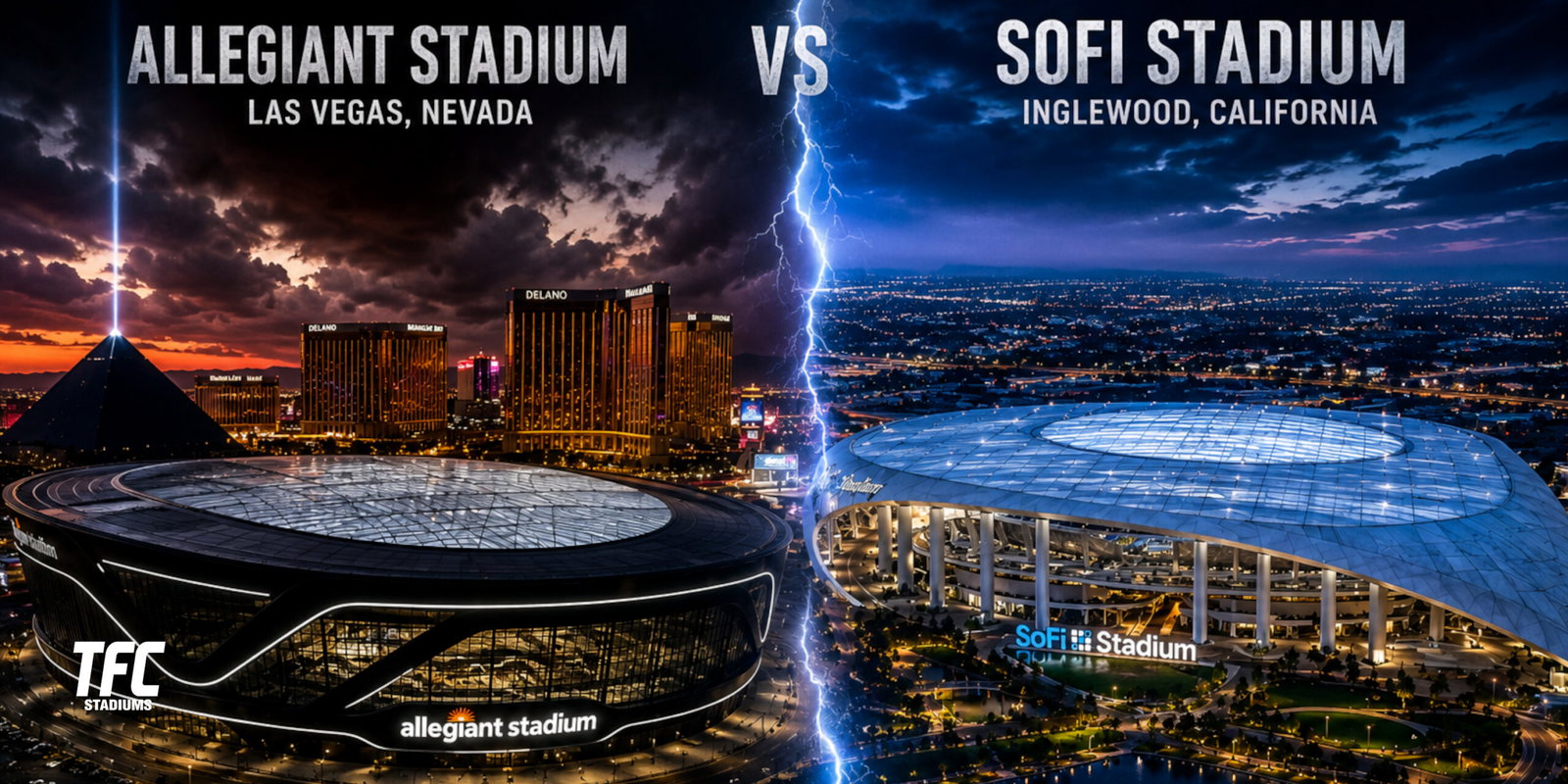
When Allegiant Stadium and SoFi Stadium opened in 2020, they immediately changed expectations for what a modern NFL venue could be. These were not just replacements for older grounds. They were ambitious attempts to redefine the relationship between sport, entertainment, architecture and city branding.
Both arrived in glamorous markets, both cost billions, and both became instant landmarks. Yet they represent very different ideas.
Allegiant Stadium in Las Vegas is compact, intense and built around spectacle. SoFi Stadium in Los Angeles is enormous, experimental and designed as a complete entertainment district.
Choosing the better stadium depends on what you value: the energy of a concentrated football environment or the scale of a global entertainment destination.
Quick Comparison
| Feature | Allegiant Stadium | SoFi Stadium |
|---|---|---|
| Location | Las Vegas, Nevada | Inglewood, California |
| Opened | 2020 | 2020 |
| Main NFL Teams | Las Vegas Raiders | Los Angeles Rams, Los Angeles Chargers |
| Capacity | Around 65,000, expandable | Around 70,000, expandable |
| Estimated Cost | Around $1.9 billion | More than $5 billion including development |
| Roof | Fixed translucent roof | Fixed canopy roof |
| Playing Surface | Natural grass for Raiders games | Artificial turf |
| Signature Feature | Retractable grass field, Vegas atmosphere | Infinity Screen, huge entertainment campus |
| Super Bowl Host | Super Bowl LVIII | Super Bowl LVI |
Design Philosophy: Vegas Theatre vs Los Angeles Scale
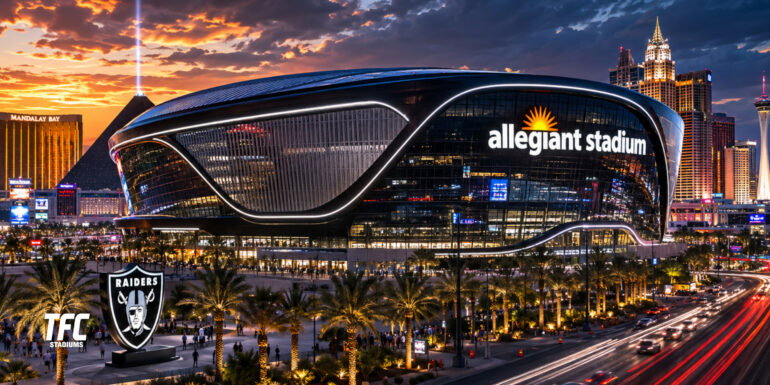
Allegiant Stadium looks exactly like something that belongs in Las Vegas. The dark exterior, reflective glass and sleek shape have earned it the nickname “The Death Star” among Raiders fans.
The design matches the franchise identity perfectly. The Raiders have always leaned into their outlaw image, and Allegiant feels like a modern fortress built around that personality.
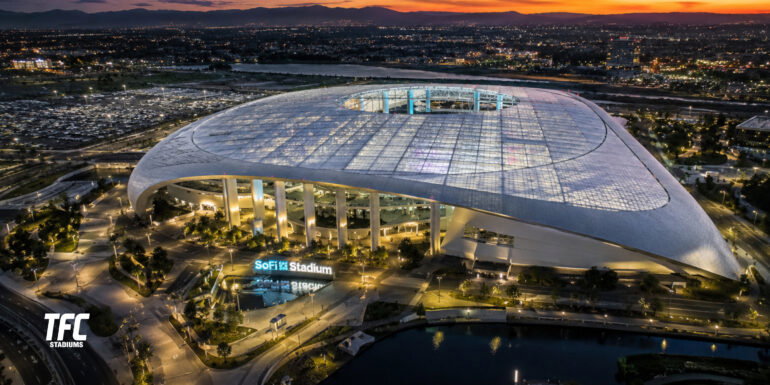
SoFi Stadium takes the opposite approach. Instead of creating one dramatic building, it creates an entire environment. The stadium sits under a huge sweeping canopy alongside plazas, performance spaces and commercial development.
Los Angeles wanted more than a football venue. It wanted a sports and entertainment landmark.
Architecture and Engineering
Allegiant Stadium
Allegiant’s smartest engineering feature is its natural grass tray. The Raiders’ field can roll outside into the Nevada sunshine, keeping real grass healthy while protecting the indoor environment.
Key features:
- Retractable natural grass field
- Climate-controlled interior
- Transparent ETFE roof
- Large north-facing windows overlooking the Las Vegas Strip
- 85-foot Al Davis Memorial Torch
The stadium solves a major Las Vegas problem: how to create a comfortable sports venue in extreme desert temperatures.
SoFi Stadium
SoFi is one of the most technically ambitious stadium projects ever built.
Key features:
- 298-acre sports and entertainment development
- Massive translucent roof canopy
- Open-air sides for airflow
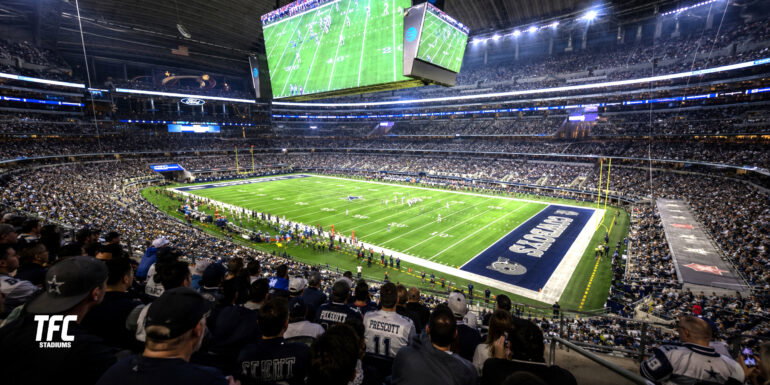
- 360-degree double-sided Infinity Screen
- Bowl structure built partly below ground because of airport height restrictions
The engineering is less about solving one problem and more about creating something that had never existed before.
Fan Experience
This is where the comparison becomes interesting.
Allegiant Stadium feels more like a traditional football venue. The crowd is closer, the building is darker, and Raiders fans bring decades of culture with them. The Black Hole may have moved from Oakland, but the personality survived.
Advantages:
- Louder enclosed environment
- Easier navigation
- Stronger single-team identity
- Walkable connection to the Las Vegas Strip
The downside is that Las Vegas attracts many travelling supporters. For major games, Allegiant can sometimes feel surprisingly balanced between home and away fans.
SoFi delivers a completely different experience.
Advantages:
- Stunning visual presentation
- Huge concourses
- Premium seating options
- Better outdoor gathering spaces
- Major event atmosphere
The challenge is creating a consistent home-field advantage. Sharing between two NFL franchises means the building naturally feels less tied to one identity.
Technology Comparison
SoFi has the advantage when it comes to pure technology.
The Infinity Screen is the stadium’s defining feature. At around 70,000 square feet of digital display space, it changes how fans watch games inside the venue.
Allegiant is technologically impressive, but more restrained. Its systems are designed around efficiency, comfort and atmosphere rather than overwhelming scale.
Technology winner: SoFi Stadium
Atmosphere: Which Stadium Is Louder?
This is closer than many expect.
SoFi has hosted enormous moments, including the Rams’ Super Bowl-winning season, but its size and openness can spread noise.
Allegiant’s enclosed design gives it a sharper acoustic feel. When the Raiders are competitive, the building can become genuinely intimidating.
For pure NFL atmosphere:
Winner: Allegiant Stadium
For major entertainment spectacle:
Winner: SoFi Stadium
Location and Matchday Experience
Allegiant Stadium
Few stadiums benefit from their surroundings more.
Visitors can:
- Walk from parts of the Strip
- Build an entire weekend around a game
- Access countless hotels and restaurants nearby
Vegas understands events better than almost anywhere. Allegiant feels naturally connected to that machine.
SoFi Stadium
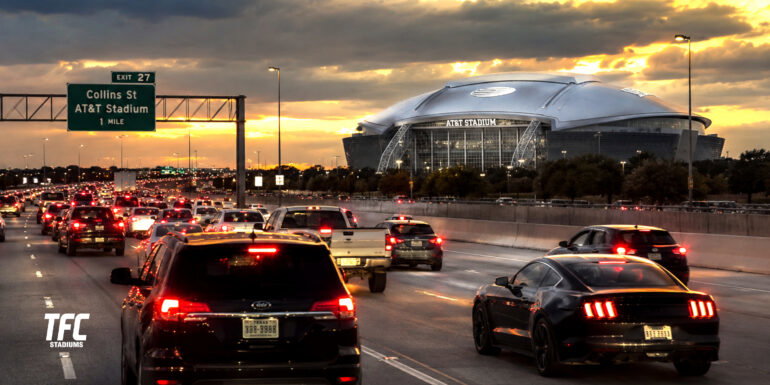
SoFi’s location has improved significantly since opening, but Los Angeles remains a car-focused city.
The surrounding Hollywood Park development gives the venue long-term potential, although transport remains one of the biggest complaints from visitors.
Events Beyond Football
Both venues were designed to avoid becoming buildings used only 10 times a year.
Allegiant Stadium hosts:
- NFL games
- College football
- International football
- Concerts
- Combat sports
SoFi Stadium hosts:
- NFL games
- Major concerts
- International football
- Super Bowl events
- Global sporting competitions
SoFi’s larger campus gives it a slight advantage for the biggest worldwide events.
Cost and Value Analysis
The financial difference between the two projects is huge.
Allegiant Stadium cost roughly $1.9 billion, with significant public funding support from Nevada.
SoFi Stadium became one of the most expensive sports developments ever, with the wider project exceeding $5 billion.
Value is difficult to judge. SoFi is the bigger achievement architecturally, but Allegiant arguably delivered exactly what Las Vegas and the Raiders needed at a lower cost.
Biggest Strengths and Weaknesses
| Stadium | Strengths | Weaknesses |
| Allegiant Stadium | Atmosphere, location, Raiders identity, smart engineering | Smaller scale, fewer revolutionary features |
| SoFi Stadium | Technology, architecture, premium experience, event capability | Expensive, less intimate, weaker team identity |
Final Verdict: Which Stadium Is Better?
Allegiant Stadium and SoFi Stadium show two very different futures for sports venues.
SoFi Stadium is the architectural masterpiece. It is bigger, bolder and feels like something designed for the next 50 years of global entertainment. The scale is ridiculous in the best possible way.
Allegiant Stadium is arguably the better football stadium. It understands its team, its city and its fans. It feels less like a corporate development and more like a home.
Final scores:
Architecture and innovation: SoFi Stadium
Technology: SoFi Stadium
Atmosphere: Allegiant Stadium
Location: Allegiant Stadium
Major events: SoFi Stadium
NFL identity: Allegiant Stadium
Overall winner depends on the question.
The most impressive stadium is probably SoFi.
The stadium many football fans would rather experience on game day might just be Allegiant.
About the Author