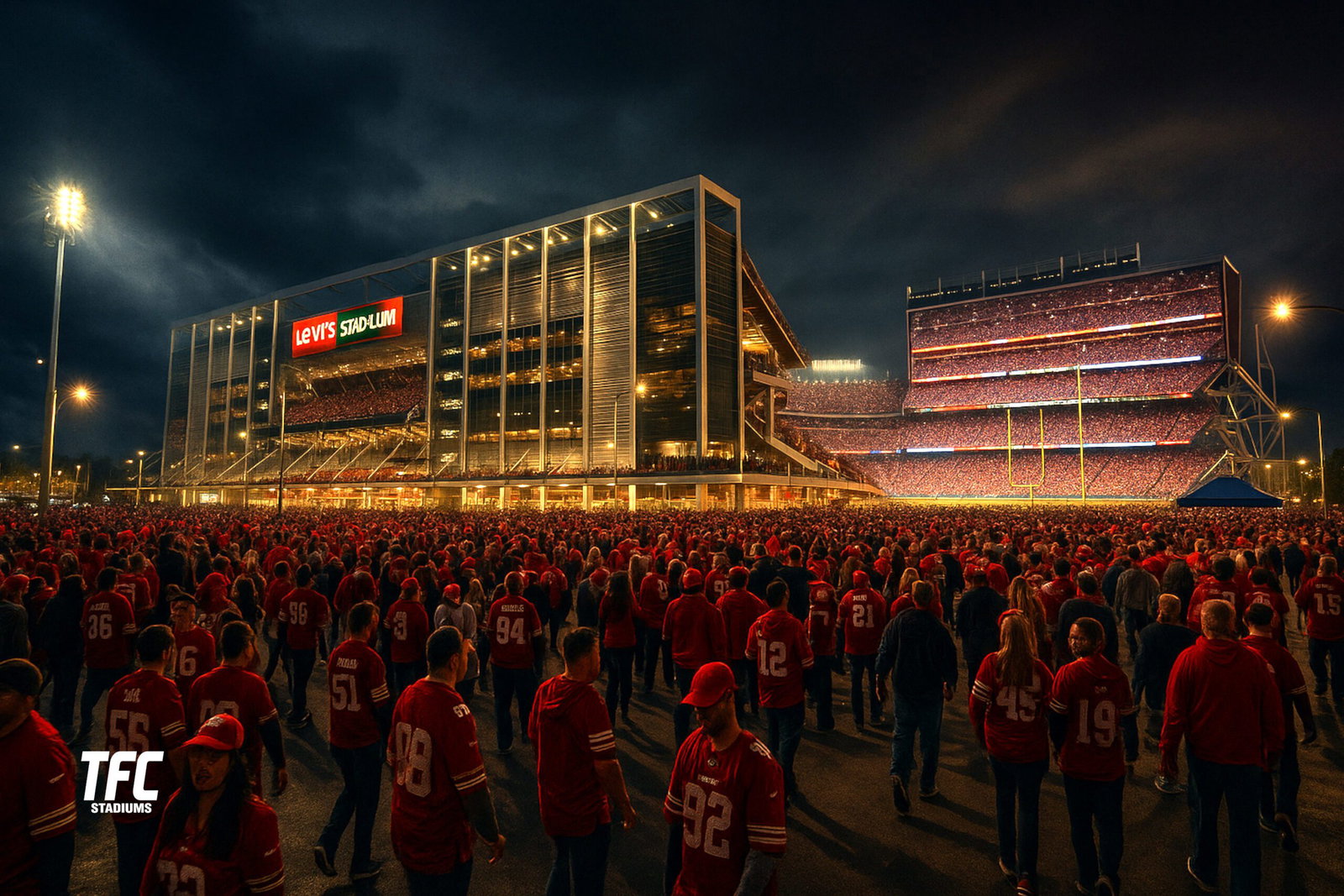
Levi’s Stadium runs a game day with the calm confidence of a veteran quarterback who has seen every defensive look the league can throw at him. The place is a polished piece of California engineering, part tech campus, part football cathedral, and part experimental lab for whatever fan engagement idea Silicon Valley dreams up after its third cold brew.
I have covered stadiums that feel like oversized sheds propped up by hope. Levi’s is not one of them. It moves people, power and data with the kind of efficiency the 49ers wish they had when they go two-minute drill.
Arrivals, Traffic and Fan Flow
The first miracle of any game day is simply getting tens of thousands of people into the building without turning the whole region into a parking lot with a scoreboard. Levi’s leans heavily on public transit with VTA light rail, ACE trains and dedicated ride-share zones.
Parking crews work with military precision. They guide cars into lots that seem to expand and contract depending on kickoff vibes and how many fans decided to tailgate instead of hitting brunch in Palo Alto. The stadium loops fans through secure checkpoints that keep lines moving. It feels almost choreographed, like someone backstage is calling cues.
Inside, wayfinding screens run updated directions based on congestion. If a concourse gets packed, staff reroute traffic with the quiet authority of bouncers who have seen it all.
Behind the Scenes Staff
Every stadium has workers who keep the place running. Levi’s has a full roster. Ushers who double as customer service gurus. Security teams who spot trouble before trouble realises it is trouble. Ops managers perched behind screens monitoring fan flow in real time.
The control room might be the most impressive. It looks like NASA but with more red jerseys. They monitor Wi-Fi loads, power systems, refrigeration, broadcast feeds and even restroom usage. Yes, they know when a queue is about to turn ugly and they fix it before any fan has time to tweet a complaint.
Technology, Connectivity and Data
Levi’s was built to show off. Gigabit Wi-Fi. Distributed antenna systems. Screens everywhere. It is a stadium that treats data the way a running back treats daylight, take it and sprint.
Real-time analytics influence staffing levels, concession lines and even restroom turnover. If you have ever wondered why the third-quarter snack rush feels smoother here than anywhere else, it is because someone in the ops room saw a spike coming and threw extra bodies at the problem.
The app ties this all together. Mobile ticketing, in-seat ordering for certain sections, wayfinding, replays and alerts. It does everything except adjust the play-calling, though I suspect some fans wish it would.
Concessions and Hospitality
Food workers at Levi’s move fast. They have to. California crowds expect their tacos, barbecue and craft beer delivered with the efficiency of a pit crew.
Stands communicate through shared dashboards, so when demand surges for chicken tenders, the kitchen does not panic. They pivot. Lines shorten. Fans stay happy. Everyone wins, except maybe the fryer.
Suites operate on a different plane entirely. Coordinators track orders, server requests and VIP arrivals with the same intensity as a defensive coordinator watching film.
Field Operations
Down on the turf, groundskeepers maintain the surface like it is a family heirloom. They track weather, moisture, wear patterns and sun exposure. The crew has backup plans for backup plans, including emergency turf patches that get swapped in faster than a coach challenges a bad spot.
Equipment managers time movements between locker rooms, tunnel transitions and media obligations so players do not collide with broadcast carts or drifting VIP tours.
Sustainability and Energy Management
This is California. If a building does not brag about sustainability, does it even exist. Levi’s leans into it with solar arrays, recycled water systems and smart cooling. Operators tweak energy loads throughout the day. When the crowd pops and power demand surges, the system absorbs it like a champ.
Post Game Operations
The final whistle does not signal the end of the day. It signals the start of the teardown. Cleaning crews sweep the place with industrial efficiency. Traffic managers clear the perimeter. Data teams compile performance reports before most fans reach the freeway.
By midnight, the stadium is already preparing for the next event, whether it is another game or a concert with enough pyrotechnics to make the fire marshal whisper a prayer.
Final Thoughts from Rick Dalton
Game day operations at Levi’s Stadium feel smooth because a small city’s worth of expertise sits behind every decision. The place runs on planning, caffeine and a little Silicon Valley ego. It is one of the rare stadiums where you can sense the choreography, even if the goal is for you not to notice anything at all.
I have covered sports long enough to know that perfect days do not happen by accident. Levi’s does a convincing impression of perfection.
If only some teams could manage the same.
About the Author