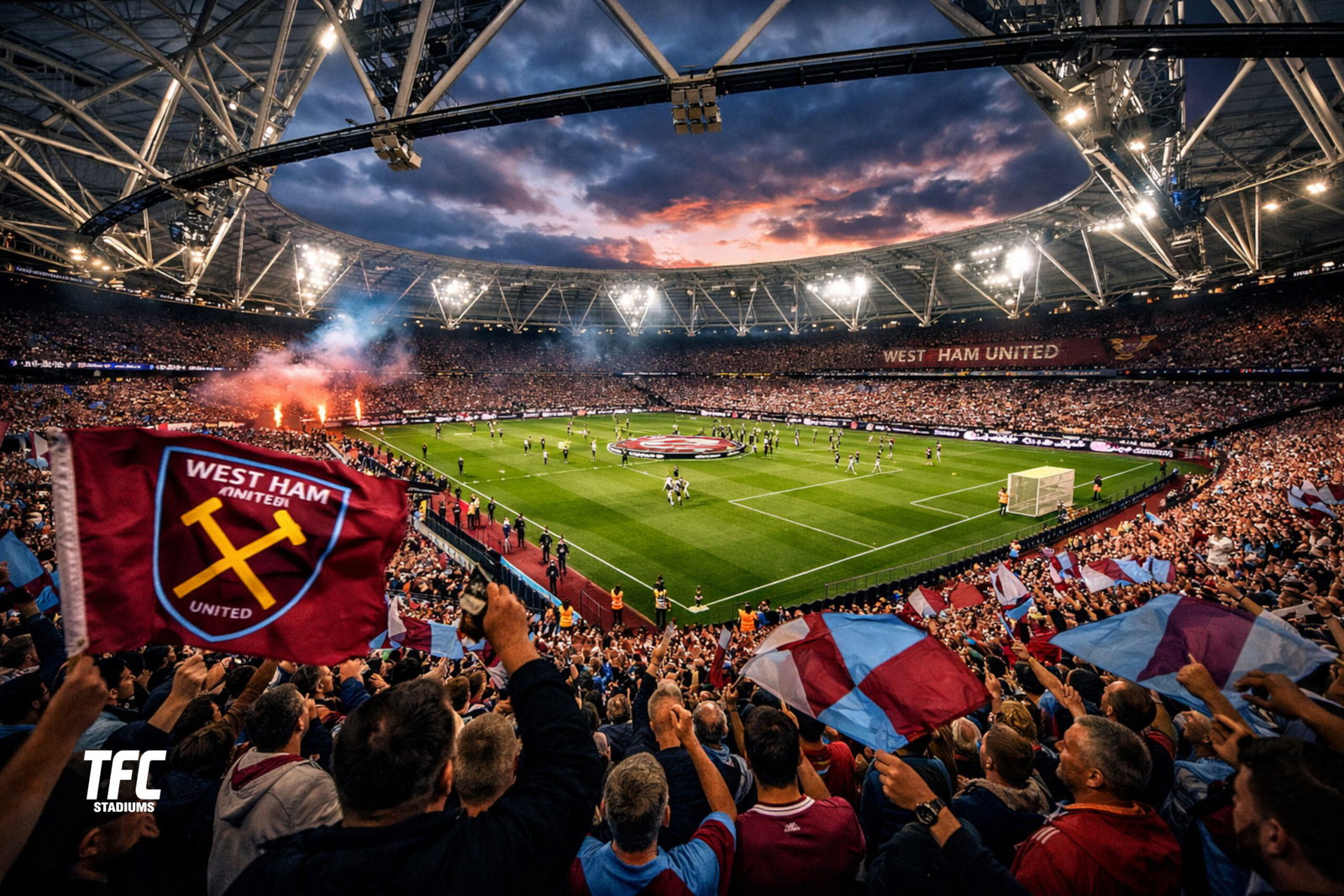
London Stadium is a venue built for spectacle rather than nostalgia, and matchdays here feel very different to the traditional English ground. Once the centrepiece of the 2012 Olympics, it now hosts Premier League football with its own rhythms, quirks, and scale. This is a historic roundup of what actually defines the experience when West Ham United play at home.
Capacity Changes the Matchday Rhythm
London Stadium holds roughly 62,500 spectators for football, making it one of the largest club venues in the country. The scale changes how crowds arrive, queue, and disperse. Unlike compact grounds where everything funnels through a few streets, this stadium absorbs supporters across the Olympic Park, spreading noise and movement over a much wider footprint. The upside is fewer bottlenecks. The downside is that the pre match buzz feels more stretched out.
The Walk In Is Part of the Event
Approaching London Stadium is a long, deliberate process. Supporters typically arrive via Stratford or Hackney Wick and walk through landscaped parkland rather than terraces and pubs. On matchdays this creates a festival feel, especially for evening kick offs, but it also means the stadium only really comes alive once fans are inside rather than in the surrounding streets.
Sightlines Reflect Its Olympic Origins
The stadium was never designed as a traditional football bowl. Even after reconfiguration, the distance between some seats and the pitch remains noticeable, particularly in the upper tiers. For many supporters the trade off is comfort and legroom versus intimacy. The best matchday views are widely accepted to be in the lower central sections, where elevation meets proximity without losing tactical perspective.
The Pitch Is Among the Largest in the League
London Stadium uses a pitch measuring close to 105 x 68 metres, aligning with UEFA elite dimensions. This benefits teams comfortable with width and transitions, but it can stretch defensive shapes and tire players late on. Visiting sides often comment on how much ground needs to be covered, especially when chasing the game.
Atmosphere Builds Late Rather Than Early
Unlike older grounds where noise begins well before kick off, London Stadium’s atmosphere often peaks after the match has started. The size of the bowl and the spread out seating mean chants take time to gather momentum. When they do, especially during big European nights or derby fixtures, the volume can be immense, but it is usually reactive rather than constant.
Crowd Demographics Are Broader Than Traditional Grounds
Matchday crowds here include a higher proportion of families, tourists, and casual attendees compared to many Premier League venues. This reflects the stadium’s location, transport access, and size. The result is a slightly calmer baseline atmosphere, punctuated by sharp surges during goals, big tackles, or controversial decisions.
Transport Efficiency Is a Major Strength
Stratford is one of the best connected transport hubs in London, served by multiple Underground lines, Overground, DLR, Elizabeth line services, and national rail. Post match clearance is generally quick despite the crowd size, with supporters dispersing in several directions rather than funnelling into one station. From a pure logistics perspective, it is one of the league’s most efficient exits.
Matchday Revenue Reflects the Scale
Large crowds translate into strong matchday income, even when ticket prices are relatively moderate by London standards. Concessions, hospitality lounges, and corporate areas occupy a significant footprint, reinforcing the stadium’s role as a modern multi use venue rather than a purely football driven one.
Approximate matchday figures
| Metric | Estimate |
|---|---|
| Football capacity | ~62,500 |
| Average league attendance | 60,000+ |
| Concourse length | Over 1 km |
| Turnstiles | 60+ |
Historic Head to Head Patterns at the Stadium
Since West Ham moved in permanently in 2016, London Stadium has developed its own statistical profile rather than inheriting one from Upton Park.
Selected Premier League head to head records at London Stadium
| Opponent | Matches | West Ham wins | Draws | Opponent wins |
|---|---|---|---|---|
| Tottenham Hotspur | 8 | 3 | 3 | 2 |
| Chelsea | 7 | 2 | 2 | 3 |
| Arsenal | 7 | 2 | 1 | 4 |
| Manchester United | 8 | 3 | 2 | 3 |
| Liverpool | 8 | 1 | 3 | 4 |
These numbers underline a pattern. West Ham tend to compete well against rivals here, even if overall dominance is rare.
The Stadium Is Still Defining Its Identity
A decade on, London Stadium remains a work in progress in cultural terms. It lacks the generational layering of older grounds, but it compensates with scale, comfort, and visibility on the world stage. On matchday it feels modern, sometimes clinical, occasionally thunderous, and always distinctive. It may never feel like a traditional English football ground, but it has firmly become West Ham’s stage.
About the Author