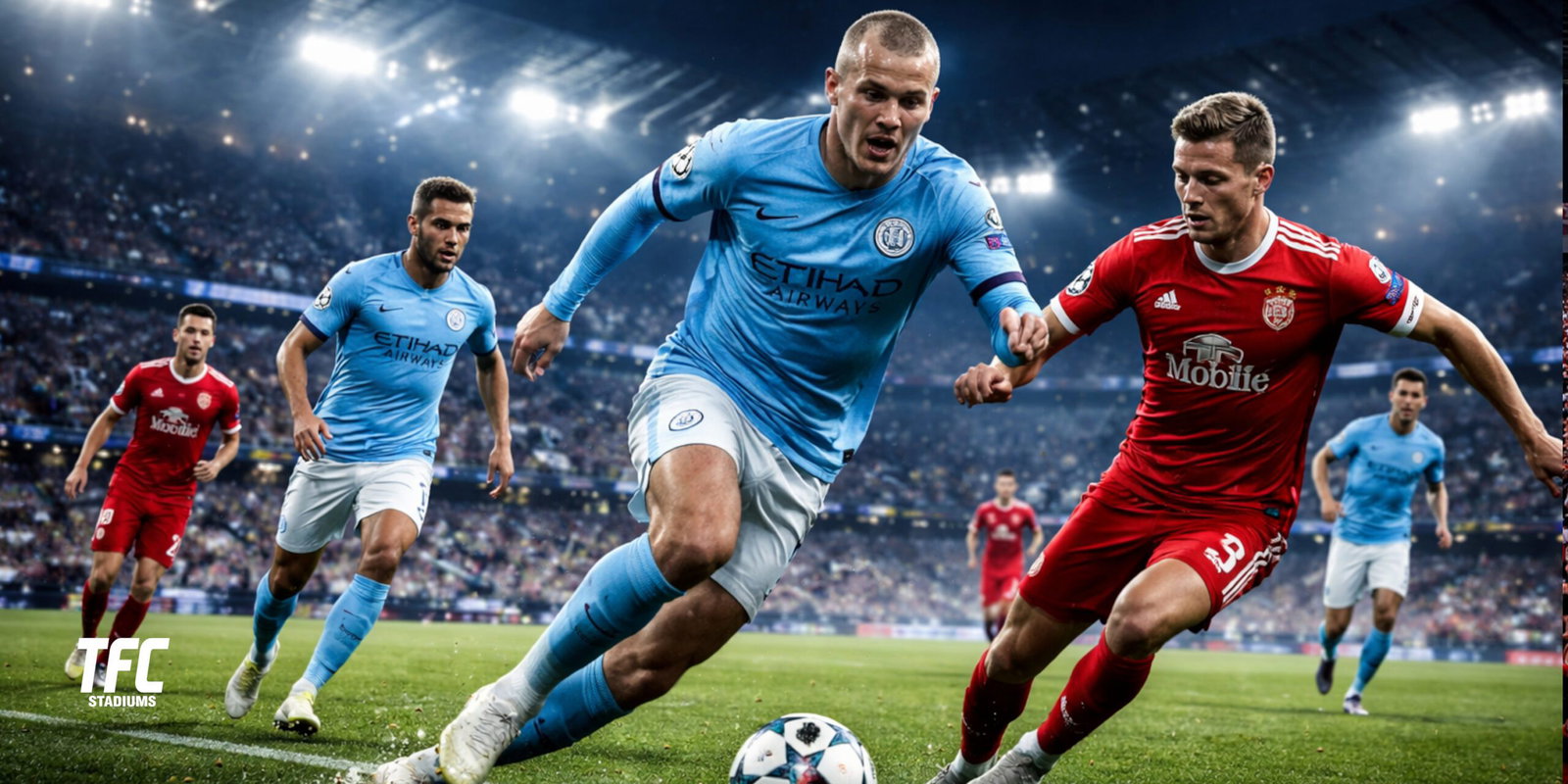
Few European fixtures feel as loaded with expectation as Manchester City hosting Bayern Munich at the Etihad. These meetings tend to arrive deep in the Champions League, when the margins are thin and the reputations on the line are enormous.
City represent the modern superpower of English football, built through meticulous recruitment and a tactical identity that has matured year after year. Bayern arrive with the weight of tradition, a club that has spent decades treating the latter stages of Europe as familiar territory rather than an ambition.
When the two meet in Manchester the contrast is fascinating. Bayern’s historic aura against City’s precise modern machine creates a contest that often feels like a referendum on where the balance of power in European football truly lies.
The Etihad as a European Stage
The Etihad Stadium has grown into one of the most intimidating venues in European football during knockout ties. Under the floodlights the ground carries a different intensity compared with regular league fixtures. The stands are tight, the sound carries sharply, and City’s players tend to start quickly.
For visiting sides this can become uncomfortable. Bayern are rarely intimidated anywhere, but even they have found the Etihad a difficult place when City are moving the ball at full rhythm.
The pitch itself suits City’s approach. Its width allows their positional play to stretch defences, creating spaces between the lines where their attacking midfielders thrive. Bayern teams that have struggled here often did so because they tried to press aggressively, leaving dangerous pockets for City to exploit.
Head-to-Head Record
Manchester City and Bayern Munich did not meet regularly until the 2010s, yet their encounters have quickly developed a competitive edge. Many have come in Champions League group stages or decisive knockout rounds.
| Category | Manchester City | Bayern Munich |
|---|---|---|
| Total meetings | 7 wins | 4 wins |
| Draws | 0 | |
| Goals scored | 18 | 10 |
| Biggest win | 3–0 (2023) | 2–0 (2014) |
Recent meetings have tilted toward City, particularly during the Guardiola era. Their ability to control possession and dictate tempo has often neutralised Bayern’s traditional attacking threat.
The 3–0 victory in the Champions League quarter-final first leg in April 2023 stands out. That match felt like a statement of authority from a City side that would go on to win the competition.
Memorable Etihad Encounters
Manchester City 3–0 Bayern Munich, 2023
One of the most complete European performances City have produced. Rodri’s curling strike opened the scoring before Bernardo Silva and Erling Haaland extended the lead.
The result was not only decisive but tactically revealing. City dominated possession while limiting Bayern to speculative moments. It felt like a clash between a team at the height of its tactical clarity and another still searching for balance.
Manchester City 3–2 Bayern Munich, 2014
A chaotic group stage match remembered for Sergio Agüero’s late hat-trick. Bayern controlled much of the game but City’s attacking talent produced a dramatic comeback.
It remains a reminder that even when Bayern appear comfortable, City possess the individual brilliance to change a match rapidly.
Tactical Identity of Both Sides
Manchester City under Pep Guardiola operate with extraordinary positional discipline. Full backs often move into midfield areas, allowing City to dominate the central zones. The system creates numerical superiority around the ball and gives their attackers constant support.
Key characteristics include:
- Controlled possession and short passing sequences
- Overloads in midfield areas
- Wingers holding width to stretch defensive lines
- Late runs into the box from midfield
Bayern Munich traditionally play a more direct, aggressive style. Even during tactical evolutions they remain a side that attacks with speed and confidence.
Typical Bayern traits include:
- Rapid transitions and vertical passing
- High pressing to win the ball early
- Wingers driving directly at defenders
- Full backs pushing high to support attacks
When these styles collide the battle often comes down to control. If City dictate the rhythm they can slowly dismantle Bayern’s shape. If Bayern force turnovers and accelerate the tempo the match becomes far more chaotic.
Key Battles on the Pitch
Some individual duels have repeatedly shaped this fixture.
Midfield control is always decisive. City’s holding midfielders must shield the defence while keeping possession flowing. Bayern, meanwhile, rely on energetic midfielders capable of disrupting City’s rhythm.
Wide areas also matter greatly. Bayern’s wingers traditionally attack aggressively, but doing so risks leaving space behind them. City’s wide players are experts at exploiting those gaps with quick combinations and diagonal runs.
Then there is the striker question. Bayern historically used mobile forwards who drop deep and link play. City’s use of a powerful central striker has added a different dynamic, forcing Bayern defenders into physical duels they did not always face in previous meetings.
Statistical Snapshot
| Metric | Manchester City | Bayern Munich |
|---|---|---|
| Average possession in meetings | 59% | 41% |
| Average shots per match | 15 | 12 |
| Average goals per match | 2.5 | 1.4 |
City’s advantage in possession reflects their tactical approach. Bayern tend to create fewer but often quicker chances, especially through counter attacks.
Why This Fixture Carries So Much Weight
European football thrives on tradition and reputation. Bayern Munich embody decades of continental success. Manchester City represent the modern force that has climbed rapidly toward that same level.
Every meeting therefore carries a subtle narrative. Is the established giant still dominant, or has the new power truly arrived?
The truth usually lies somewhere between those extremes. Bayern remain capable of beating anyone on their day, yet City’s tactical cohesion has made them one of the most difficult teams in Europe to outplay.
TFC Takeaway
Manchester City vs Bayern Munich at the Etihad rarely disappoints. The fixture blends tactical intrigue with high quality players and the quiet pressure of Champions League expectations.
For supporters it offers something close to a modern European classic. For neutrals it is simply a pleasure to watch two of the continent’s most sophisticated teams trying to outthink one another.
And for anyone who enjoys football strategy, these nights in Manchester tend to provide plenty to analyse long after the final whistle.
About the Author