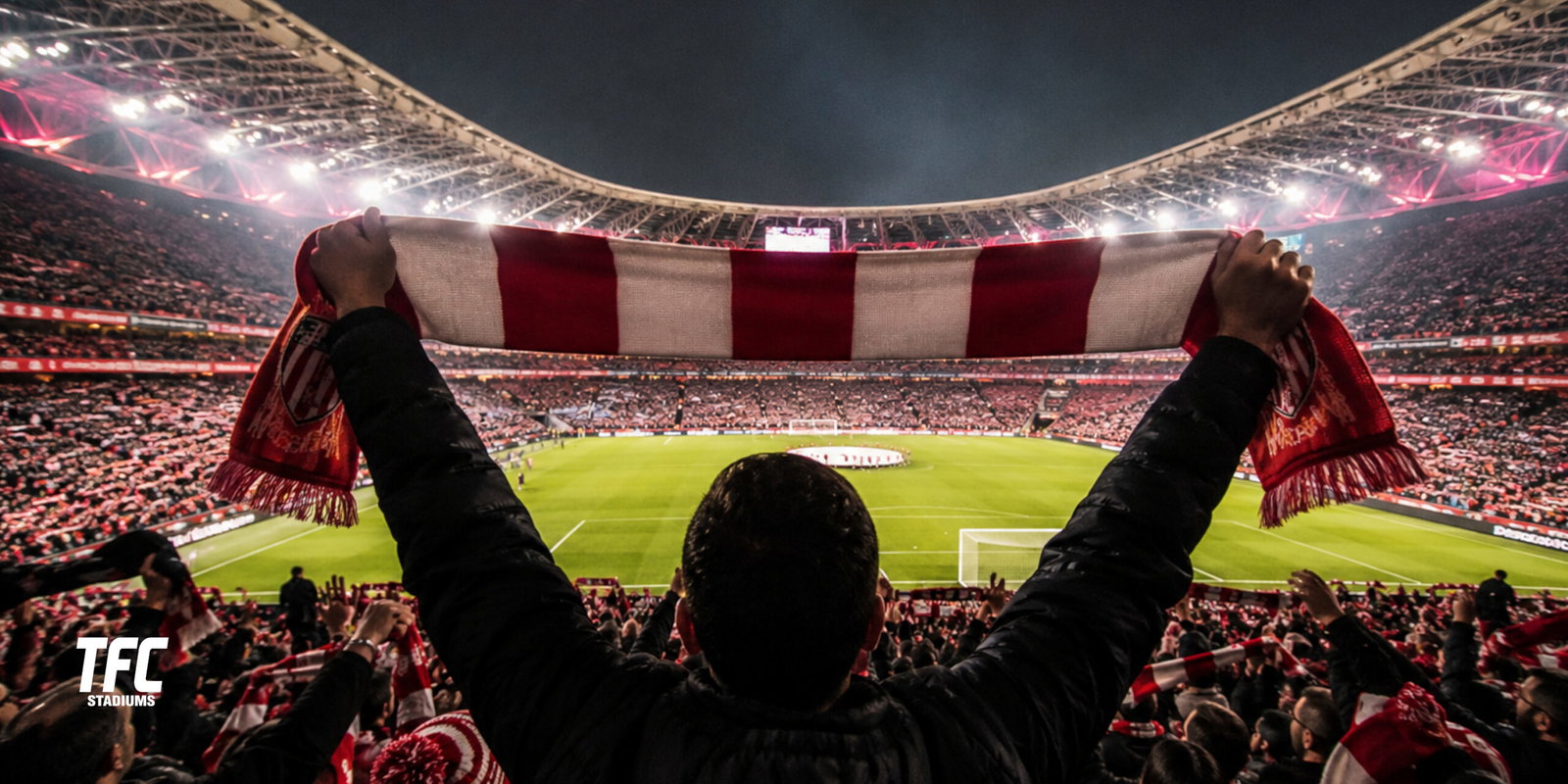
There are football stadiums that feel corporate. There are stadiums that feel historic. Then there is San Mamés Stadium, which somehow manages to feel ancient and futuristic at the same time.
You notice it before kick-off even starts. The red and white scarves hanging from balconies. The bars filling three hours before the gates open. Old men arguing about centre-backs with the seriousness of Cold War diplomats. Kids in Athletic shirts playing football in tiny side streets as if they have been personally selected to carry the future of Basque football on their shoulders.
Matchday in Bilbao is not manufactured atmosphere. It is inherited.
And honestly, if you are used to modern stadium experiences where fans spend half the game filming TikToks and queuing for artisan burgers, San Mamés can feel refreshingly intense.
The Walk to the Stadium
One of the best parts of the experience is simply getting there.
San Mamés sits right inside the city rather than marooned in some distant retail park beside a motorway and a suspiciously empty chain restaurant. Bilbao folds naturally into the stadium. The closer you get, the louder everything becomes.
The bars around Pozas Street begin overflowing hours before kick-off. Supporters crowd outside with small beers, plates of pintxos, and endless debates about Athletic’s starting XI. The atmosphere builds gradually rather than exploding all at once.
It feels communal.
You are not entering an event. You are joining a ritual.
The metro system makes access easy, and the stadium is connected well enough that even first-time visitors rarely struggle. Still, the best approach is walking through the surrounding streets and absorbing the noise properly.
That first glimpse of the illuminated exterior is brilliant too. The stadium almost glows red against the Bilbao skyline at night.
The Atmosphere Inside San Mamés
This is where San Mamés earns its reputation.
Capacity sits at around 53,000, but the noise regularly feels much larger because the crowd stays engaged for the full match. Athletic Club supporters are emotional, demanding, fiercely loyal and deeply connected to the identity of the club.
You hear constant singing from the Herri Harmaila section behind the goal, but the noise spreads quickly around the ground. Even the quieter areas remain attentive. There is very little tourist silence here.
The crowd reacts to tackles, pressing, interceptions and defensive work with the same intensity some stadiums reserve only for goals.
That tells you a lot about the football culture.
Athletic fans appreciate effort almost as much as flair. A crunching recovery tackle from the captain can generate nearly as much noise as a counterattack.
The acoustics help massively too. The steep stands trap sound extremely well, particularly during European nights or derbies against Real Sociedad.
When the entire stadium joins in with “Athleeeetic! Athleeeetic!” it genuinely rattles through your chest a bit.
Which sounds dramatic, but it is true.
Athletic Club’s Identity Shapes Everything
You cannot separate the matchday experience from Athletic Club’s Basque-only player policy.
Even neutral visitors tend to feel the difference quite quickly.
The players on the pitch often come from nearby towns, local academies or Basque footballing families. Fans know the backgrounds of these players in ridiculous detail. Youth development matters here in a way that many clubs merely pretend it does.
That connection changes the emotional temperature inside the stadium.
Victories feel personal. Defeats feel personal too, unfortunately.
The crowd expects intensity because the club identity is built around resilience, local pride and continuity rather than superstar marketing campaigns.
And somehow it works.
Athletic remain competitive in one of Europe’s richest leagues while operating under restrictions that would probably make most sporting directors cry into spreadsheets.
The Noise Before Kick-Off
Arrive early.
Seriously.
Around 30 to 40 minutes before kick-off, the energy begins climbing sharply. Scarves go up. Songs become louder. The teams emerge to warm up and every decent touch gets cheered like it is a World Cup final.
By the time the players walk out properly, San Mamés becomes a wall of sound.
The club anthem carries brilliantly around the ground and the lighting effects add tension without turning the place into a nightclub. Thankfully.
Some modern stadiums feel obsessed with pre-match pyrotechnics and DJs. San Mamés keeps the focus on football and supporters.
Which is probably why it feels more authentic.
Food, Beer and the Pre-Match Routine
The food culture around Athletic Club deserves its own article.
Bilbao is one of the best football cities in Europe for eating before a match. Pintxos bars line the surrounding streets and many supporters spend hours moving between venues before heading into the stadium.
Popular pre-match staples include:
- Jamón ibérico
- Chorizo pintxos
- Salt cod dishes
- Croquetas
- Txakoli, the local sparkling white wine
- Small beers served constantly and somehow infinitely
Inside the stadium, food options are solid by football standards, though the real experience happens outside beforehand.
Honestly, lingering in packed bars discussing football with locals while plates of food appear every ten minutes is half the reason to go.
What Away Fans Should Expect
Away supporters are generally treated well in Bilbao, especially compared to some older European football reputations that still haunt travel guides from the 1980s.
There is passion and intensity, but also respect.
Security is visible without feeling oppressive, and the surrounding areas remain lively rather than hostile. The biggest challenge for many away fans is honestly just being drowned out by home support for 90 minutes.
The steep away section also gives excellent views of the pitch, though you will absolutely know when Athletic score.
The entire stadium practically detonates.
European Nights at San Mamés
League matches are excellent.
European nights are something else.
The stadium sharpens noticeably under floodlights. The crowd becomes louder, more nervous, more emotionally volatile. Bilbao already has a naturally dramatic setting with hills surrounding the city, and night matches somehow amplify everything.
Athletic supporters carry huge expectations in Europe because continental competition feels deeply tied to the club’s identity and prestige.
You can sense tension in the stands from the opening whistle.
And when Athletic are pressing aggressively under the lights, San Mamés becomes one of those grounds where momentum genuinely seems to affect matches physically.
Players rush passes. Referees get pressured. Opponents start retreating ten yards deeper than intended.
It is one of the few stadiums where atmosphere still feels capable of changing football matches.
Data and Analysis Behind the Atmosphere
Athletic Club consistently rank among the better home sides in La Liga across recent seasons.
Several patterns stand out:
- Higher pressing intensity at home
- Strong defensive records in Bilbao
- Increased duel success rates at San Mamés
- Noticeably more aggressive starts in the opening 20 minutes
The crowd clearly feeds into Athletic’s style.
Matches in Bilbao often become physically demanding very quickly because the team presses aggressively from the start, encouraged by constant crowd noise and pressure.
Opponents who fail to settle early can get overwhelmed surprisingly fast.
As a fan watching from the stands, you can actually feel momentum swings happening. The noise level changes instantly after a turnover or dangerous attack.
It creates a feedback loop between supporters and players that many stadiums simply do not have anymore.
TFC Takeaway
San Mamés feels modern without losing its soul, which is harder to achieve than most clubs realise.
Too many new stadiums end up polished but emotionally hollow. Athletic Club avoided that trap. The new San Mamés still carries the edge, tension and identity that made the old ground legendary.
As a football fan, it is one of those stadiums that reminds you why matchdays matter in the first place.
Not for content creation.
Not for corporate hospitality.
Not for influencer selfies beside oversized burgers named after midfielders.
For noise, nerves, tradition, belonging and ninety minutes of collective emotional instability shared by fifty thousand people wearing red and white.
About the Author