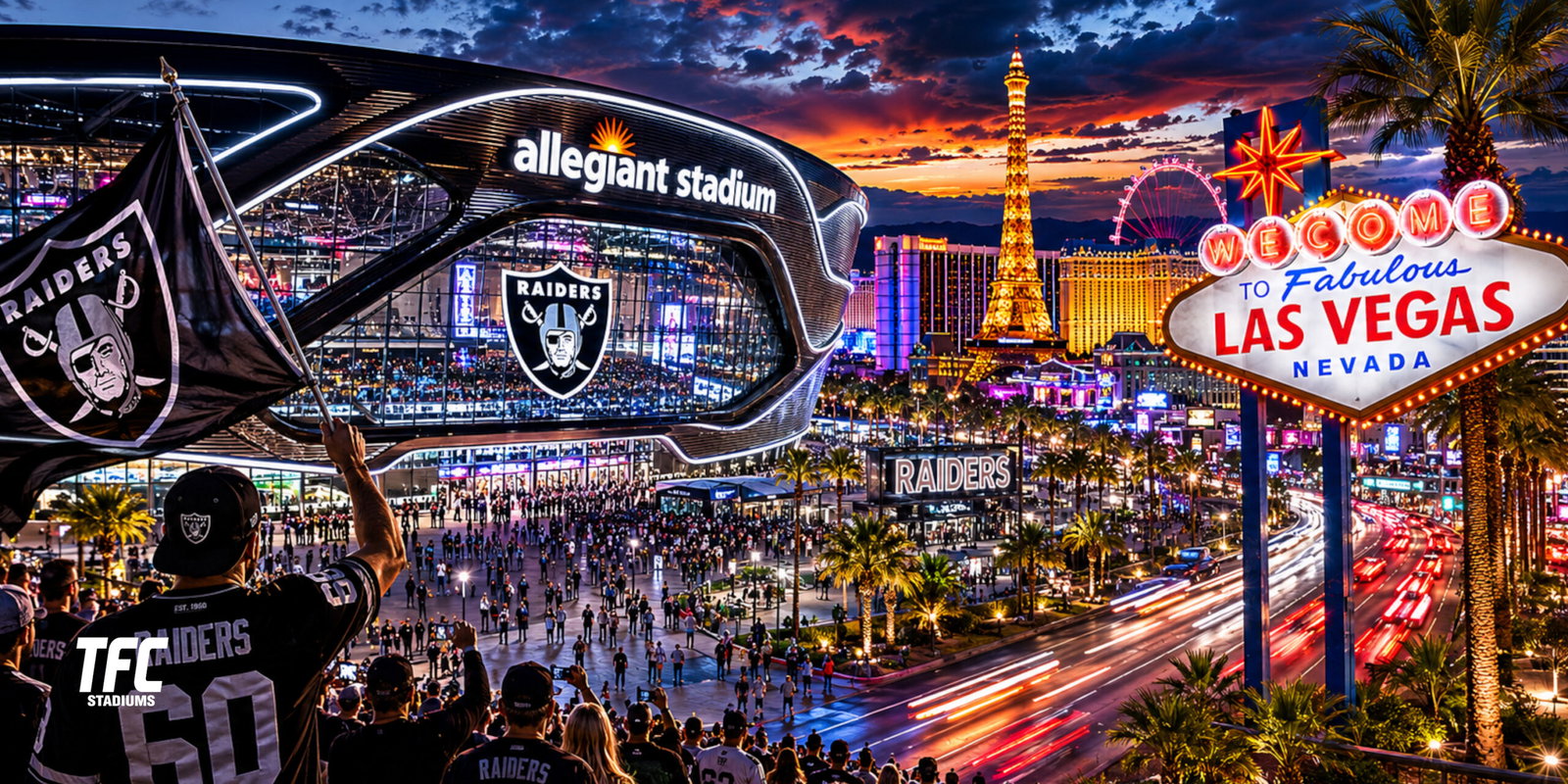
Allegiant Stadium was built to print money while football happens nearby.
When the Raiders left Oakland for Las Vegas, plenty of fans saw betrayal, others saw survival, and a few probably just saw a giant black spaceship parked beside Interstate 15. All three reactions were fair. But from a business perspective, Allegiant Stadium was never simply about touchdowns or tailgates. It was about transforming Las Vegas into a year-round sports and entertainment economy powerful enough to rival the biggest American markets.
And honestly, it worked.
The stadium has become one of the most commercially aggressive venues in world sport. NFL games are only part of the equation. Concerts, sponsorships, tourism, Formula 1 spillover, corporate events, UFC weekends, college football and even destination weddings all feed into the machine. Somewhere in a luxury suite, a casino executive is probably closing a deal worth more than the average running back contract while Pitbull performs two miles away.
That is Vegas. Nothing stays in its lane.
Why Las Vegas Wanted an NFL Stadium So Badly
For decades, Las Vegas was treated like the slightly chaotic cousin of American professional sport. Everyone visited, everyone enjoyed themselves, but nobody wanted to officially move in.
The gambling stigma mattered. League executives worried about integrity issues. Owners worried about optics. Traditionalists worried about just about everything.
Then sports betting became mainstream, fantasy sports exploded, and suddenly the NFL realised it had spent years pretending it was not standing next to a gold mine.
Las Vegas already had:
- Massive tourism infrastructure
- Thousands of hotel rooms
- International visibility
- Corporate hospitality demand
- An airport built for constant traffic
- A population growing fast enough to support major league sport
What it lacked was a marquee stadium capable of hosting elite events at every level.
Allegiant Stadium changed that overnight.
The $1.9 Billion Gamble
The final cost of the stadium came in at roughly $1.9 billion. That number still feels slightly absurd when you say it out loud. You could probably build a small kingdom from fantasy television for less money.
Funding came from a mixture of public money, private investment and NFL backing.
Key financial elements included:
| Revenue Source | Estimated Contribution |
|---|---|
| Public funding via hotel tax | Around $750 million |
| Raiders contribution | Roughly $500 million |
| NFL stadium loan | Approximately $200 million |
| PSL sales and private financing | Remaining balance |
The public funding aspect remains controversial. Critics argued taxpayers should never subsidise billionaire owners. Supporters argued the tourism impact would repay the investment long term.
As with most stadium debates, both sides conveniently ignore whichever numbers make them uncomfortable.
Still, the economic activity generated since opening has been difficult to dismiss.
The Raiders Became a Destination Brand
The genius of the Raiders moving to Las Vegas was not just local support. It was turning every home game into a tourism event.
Raiders fans travel exceptionally well already. Add Vegas to the equation and suddenly away supporters become part of the business model too.
A typical NFL city relies heavily on local season ticket holders. Las Vegas operates differently.
Fans fly in for weekends. They book hotels. They gamble. They eat at expensive restaurants. They attend shows. Then they spend Sunday inside one of the most visually striking stadiums in America before heading back home with questionable financial decisions and at least one blurry photo beside a slot machine.
That tourism cycle creates enormous economic spillover.
The NFL essentially gained a neutral-site atmosphere every week, except the home team still collects the revenue.
Premium Seating Is the Real Gold Mine
The average fan sees touchdowns and giant video boards. Stadium executives see luxury inventory.
Allegiant Stadium was designed around premium hospitality from the beginning.
The venue reportedly includes:
- More than 120 luxury suites
- Club seating with private lounges
- VIP entrances and casino partnerships
- Exclusive hospitality zones
- Corporate entertainment areas
Las Vegas may actually be the perfect city for modern luxury sports business because companies already bring clients there constantly. Instead of hosting executives in a steakhouse alone, businesses now package entire NFL weekends.
And unlike colder NFL cities, nobody has to explain why entertaining clients outdoors in December might become a survival exercise.
Naming Rights Changed the Game
The naming rights deal with Allegiant Air reportedly runs for about $20 million annually.
That immediately placed the venue among the most commercially valuable stadium sponsorships in the NFL.
The partnership also makes geographic sense. Allegiant Air specialises heavily in leisure travel and budget tourism routes, which aligns perfectly with Las Vegas visitor traffic.
In many ways, the stadium acts like a giant tourism advertisement as much as a sports venue.
Every televised game becomes free marketing for Las Vegas itself.
Concerts and Non-NFL Events Keep the Revenue Flowing
Modern stadiums cannot survive on eight or nine home games alone. Owners know this. Cities know this. Taylor Swift definitely knows this.
Allegiant Stadium aggressively pursues year-round events.
Major concerts have included some of the biggest artists in the world, while the venue has also hosted:
- College football
- International football matches
- WrestleMania
- UFC-related events
- Corporate conventions
- Music festivals
The ability to host multiple mega-events annually is crucial to the business model.
Las Vegas also offers something most stadium markets cannot: built-in entertainment infrastructure surrounding the venue. Visitors already plan weekends around experiences. The stadium simply inserts itself into that spending ecosystem.
Super Bowl LVIII Was the Ultimate Showcase
Hosting Super Bowl LVIII validated the entire project.
The event brought enormous international exposure and showcased Las Vegas as a fully legitimate sports capital. Hotel prices surged. Restaurants filled instantly. Casino traffic exploded. Corporate spending went through the roof.
The NFL loves spectacle, and Las Vegas practically breathes spectacle twenty-four hours a day.
From a television standpoint, the city works brilliantly. The skyline, the lights, the atmosphere, the celebrity culture, it all fits modern sports entertainment perfectly.
Traditional football purists may grumble about the corporate feel. They also said indoor stadiums would ruin football. Then they happily watched games in climate-controlled comfort while eating nachos worth roughly the price of a small mortgage payment.
The Local Economic Impact
Economic impact reports surrounding stadiums are always debated because projections tend to arrive wrapped in optimism thicker than a casino carpet.
Still, Allegiant Stadium has clearly created:
- Jobs in hospitality and operations
- Tourism growth during NFL weekends
- Increased convention appeal
- New entertainment investment nearby
- Higher international sports visibility for Las Vegas
The surrounding area has also benefited from infrastructure improvements and increased commercial interest.
Critics remain sceptical about long-term public return on investment, especially concerning taxpayer funding. That debate is unlikely to disappear anytime soon.
But visually and commercially, the stadium transformed how major leagues view Las Vegas.
That alone carries enormous value.
Vegas Finally Entered the Big League
Allegiant Stadium represents something larger than football.
It symbolises Las Vegas completing its transformation from entertainment outpost into full-scale sports metropolis.
The city now hosts:
- The Raiders
- The Golden Knights
- Formula 1
- Major boxing events
- UFC showcases
- Large-scale college sports
- International sporting exhibitions
Twenty years ago, that sentence would have sounded ridiculous.
Now it feels normal.
That may be the stadium’s biggest achievement of all.
Takeaway
Allegiant Stadium is not subtle. Neither is Las Vegas. Together they form one of the boldest commercial partnerships in modern American sport.
The stadium succeeds because it understands something many venues still struggle with: fans are not just paying for games anymore. They are paying for experiences, status, convenience and atmosphere.
Las Vegas already mastered those industries decades ago.
Football simply joined the party.
And if we are being honest, the Raiders may finally have found a home city whose personality matches the franchise. Loud, theatrical, rebellious and occasionally chaotic. Perfect fit, really.
About the Author