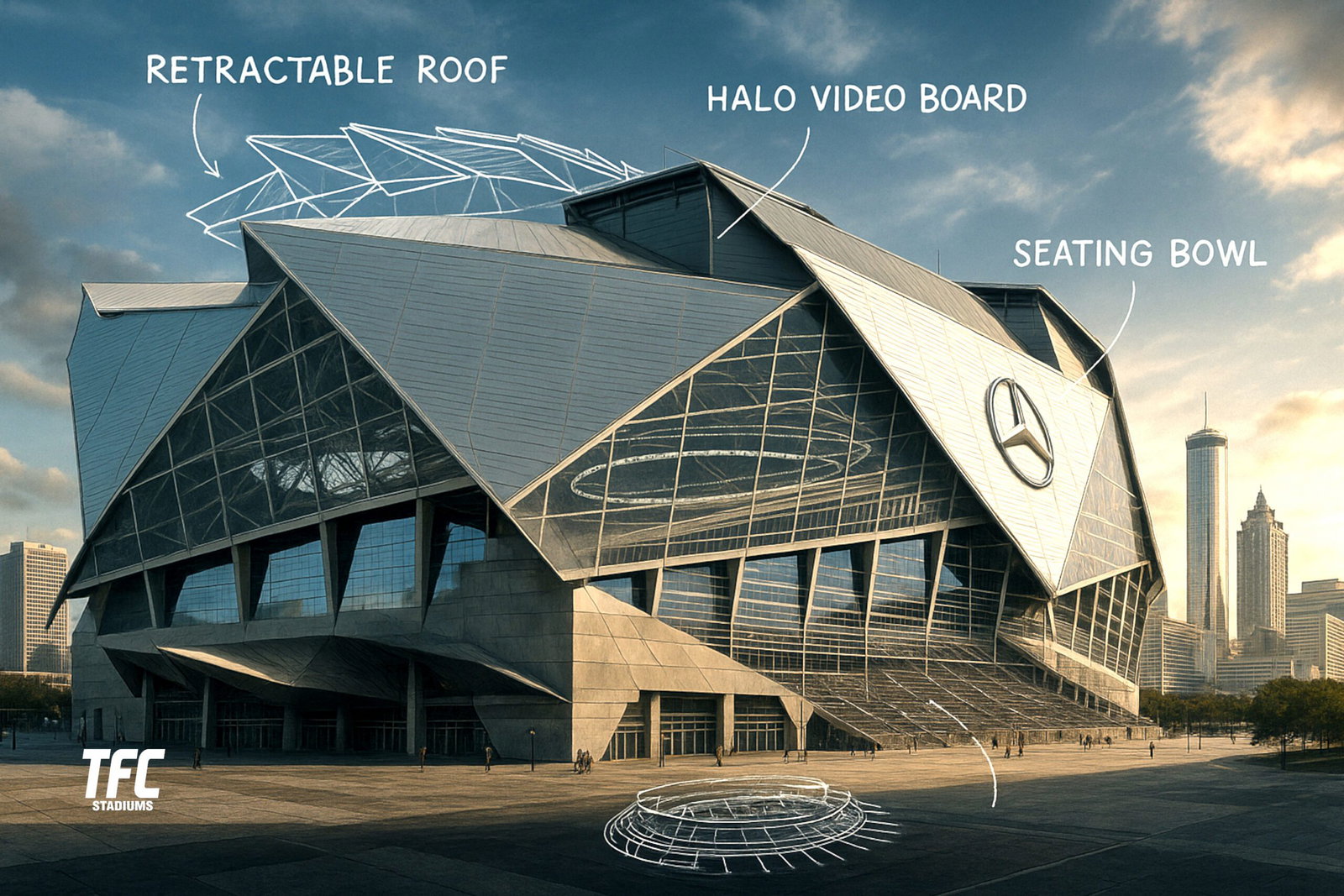
A Stadium Built to Make a Statement
Mercedes-Benz Stadium does not do subtle. Sitting in downtown Atlanta like a sci-fi prop that wandered onto a college campus, it announces itself long before you reach the gates. Opened in 2017 as the shared home of the Atlanta Falcons and Atlanta United, the stadium was designed to be a civic landmark first and a sports venue second.
This is not a traditional bowl with some fancy cladding slapped on. The architecture is the experience, and almost everything about the building is meant to be noticed, debated, photographed, and argued about over a beer.
The Retractable Roof That Steals the Show
The roof is the headline act. Inspired by the Pantheon in Rome, which is not a comparison most NFL stadiums dare to make, Mercedes-Benz Stadium features an eight-panel retractable roof that opens like a camera aperture. When it works smoothly, it is spectacular. When it does not, well, Atlanta sports fans are already emotionally prepared for disappointment.
Unlike older retractable roofs that slide awkwardly or vanish into the distance, this one remains visually central even when open. The panels stack in a circular pattern, framing the sky and giving the stadium a rare indoor outdoor feel. It is architectural ambition on full display, and credit where it is due, few venues have tried anything this bold.
The Halo Video Board, Because Bigger Was Not Enough
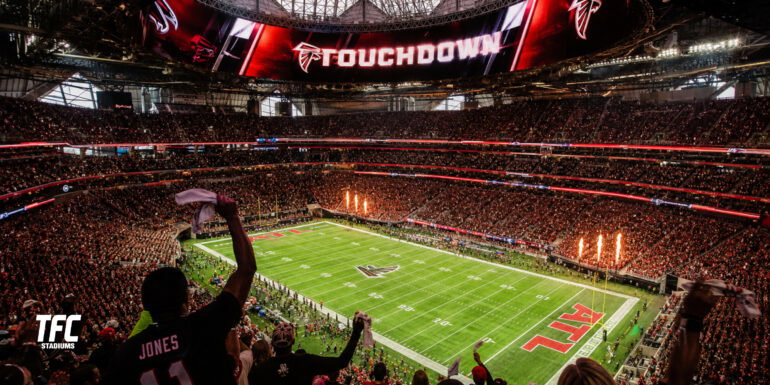
Hanging beneath the roof is the now famous 360-degree halo video board. It wraps around the stadium like a glowing crown and immediately resets expectations for what a scoreboard should be. At the time of opening, it was the largest video board in sports, and it still feels slightly ridiculous in scale.
From an architectural point of view, the halo is more than a screen. It defines the interior space, pulling the eye upward and reinforcing the circular geometry of the building. From a fan point of view, it means you can watch replays from almost anywhere, including while queuing for overpriced beer that somehow still feels cheaper than at most NFL grounds.
A Bowl Designed for Sightlines, Not Status
One of the smarter architectural choices is the steep seating bowl. Mercedes-Benz Stadium prioritises sightlines over traditional luxury separation, which is a polite way of saying the cheap seats do not feel like exile. The angles are aggressive, the upper decks feel closer to the field than expected, and the roof design keeps crowd noise trapped inside.
This is not accidental. The architects leaned heavily into the idea of intimacy in a large venue, which is harder than it sounds when you are designing a stadium that holds more than 70,000 people. The result is a building that feels loud even when the Falcons are testing the patience of their own fanbase.
Glass, Light, and Atlanta’s Skyline
The exterior uses vast glass façades that open the stadium visually to the city. On one end, massive windows frame downtown Atlanta, allowing natural light to flood the concourses and giving the building a sense of openness that many enclosed stadiums lack.
It also helps that Atlanta’s skyline does not look half bad from inside a stadium. This transparency reinforces the idea that the venue belongs to the city rather than sitting apart from it like a sealed dome of corporate sadness.
Sustainability, With Less Preaching
Mercedes-Benz Stadium is often cited as one of the most sustainable stadiums ever built, and for once this is not marketing fluff. It was the first professional sports venue to achieve LEED Platinum certification. Rainwater harvesting, solar panels, and energy efficient systems are baked into the design rather than bolted on later.
The clever part is that the sustainability features do not dominate the visual language. You can enjoy the building without being lectured about it, which might be the most fan friendly design decision of all.
Architecture That Fits Modern Sport
What Mercedes-Benz Stadium gets right is understanding modern sport as entertainment, not just competition. The architecture supports spectacle, television production, concerts, and football in equal measure. It feels purpose built for an era where a stadium has to perform every night, not just on Sundays.
Is it perfect? No. The roof has had its issues, and the building can feel overwhelming at first visit. But it is unapologetically ambitious, and that alone sets it apart in a league full of safe, shiny bowls.
Final Thoughts From the Press Box
Mercedes-Benz Stadium is what happens when a city decides to swing big and actually follows through. It is loud, dramatic, slightly excessive, and very Atlanta. As a piece of architecture, it refuses to blend in, and as a fan experience, it mostly delivers on the promise.
You might not love every detail, but you will remember it. And in modern stadium design, that is half the game.
About the Author