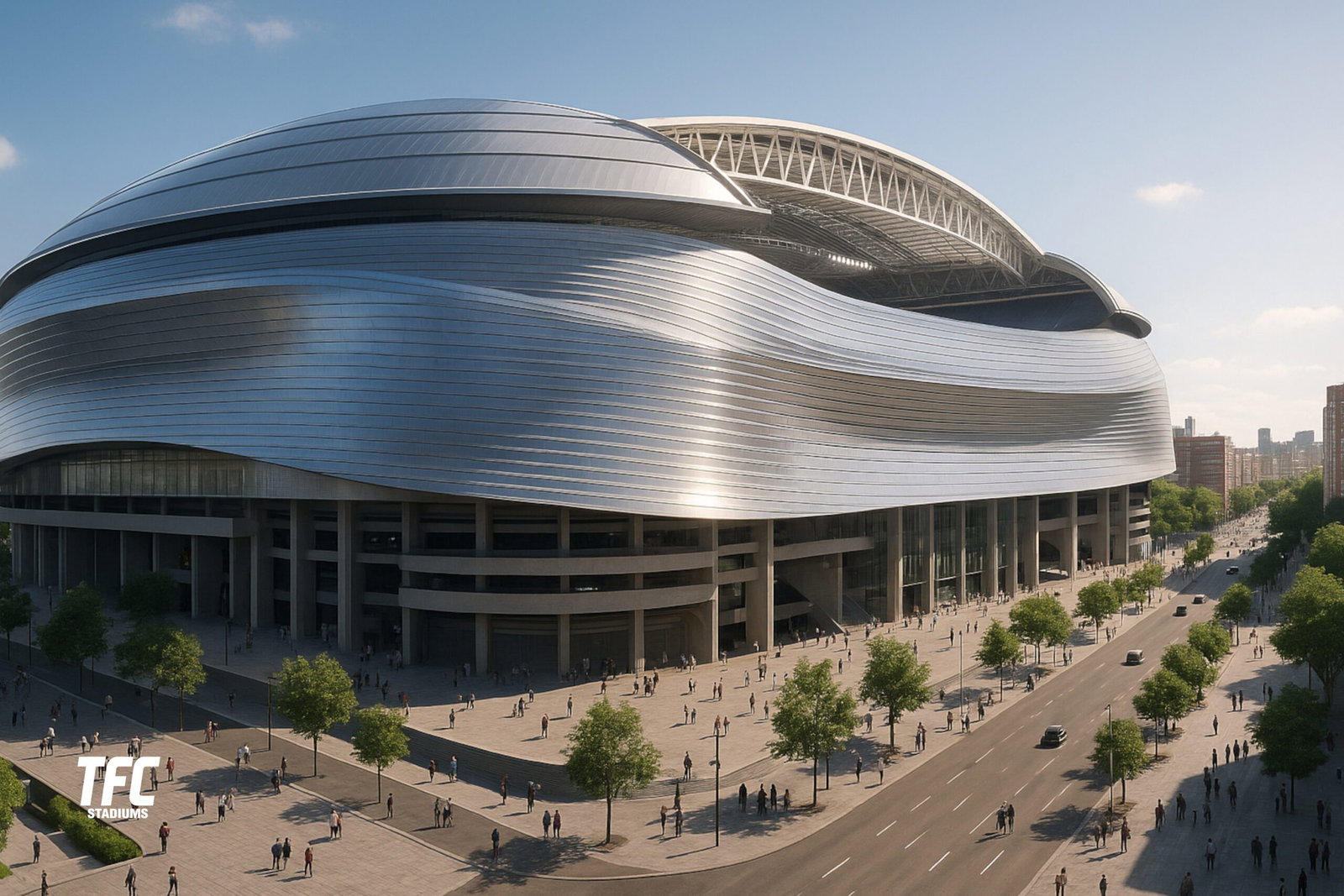
The Santiago Bernabéu Stadium, home to Real Madrid since 1947, has undergone one of the most ambitious and expensive stadium renovations in football history. From retractable roofs to an underground pitch storage system, the transformation aimed to future-proof the venue as a year-round entertainment complex.
Renovation Timeline
| Phase | Date | Key Milestones |
|---|---|---|
| Planning | 2012–2017 | Urban planning proposals, architectural designs approved |
| Start of Works | June 2019 | Demolition of outer structure, excavation of underground areas |
| Pandemic Delay | 2020 | Construction paused temporarily due to COVID-19 |
| Major Construction | 2021–2023 | Roof structure, new façades, pitch storage system |
| Final Stage | 2024 | Interior fit-out, commercial zones, external plazas |
Total Cost of Renovation
The cost of the renovation rose significantly over time:
- Initial Estimate: €300–400 million
- Revised Budget (2019): €575 million
- First Financing Package: €575 million loan
- Second Financing Package: €225 million (2021)
- Third Financing Round: €370 million (2023)
- Estimated Final Cost: €1.347 billion
- Including Interest and Full Scope: Around €1.76 billion
Loan repayments began in 2024 and are scheduled through 2049.
What Changed: Key Features and Upgrades
Architectural and Structural Upgrades
- New Steel Façade: A metallic skin wraps around the stadium, giving it a futuristic appearance.
- Retractable Roof: 12 mobile trusses with PTFE-membrane cushions allow the stadium to be fully covered in under 20 minutes.
- 360-Degree LED Screen: A panoramic ribbon display encircles the seating area for immersive visuals.
- Retractable Pitch: Stored underground in a six-layer chamber with irrigation and lighting systems.
Capacity and Seating
- Capacity remains approximately 81,000 but with better vertical circulation, upgraded VIP boxes, and restructured sightlines.
Accessibility and Infrastructure
- New Entrances: Main access points redesigned, including one directly from Paseo de la Castellana.
- External Plazas: Surrounding pedestrian areas improved for foot traffic and event staging.
- Underground Tunnels: For logistics and team movement, easing surface-level congestion.
- Relocated Towers: Structural towers shifted to enhance flow and improve symmetry.
Commercial Additions
- SkyBar & Restaurants: High-end hospitality services for matchday and non-matchday revenue.
- Retail and Museum Space: Expanded tour experience and merchandise operations.
- Event Hosting Areas: Multipurpose halls for concerts, conventions, and corporate events.
Legal and Environmental Issues
Despite its innovation, the project has faced legal challenges:
- Court Injunctions: Work on certain underground tunnels and parking halted due to environmental and regulatory violations.
- Contract Irregularities: Questions raised over bidding discrepancies, with reported cost gaps from €561 million to €6 million.
- Noise Complaints: Local opposition to events like concerts due to extended curfews and high decibel levels.
Strategic Impact and Legacy
The renovation goes beyond aesthetics. It transforms the Bernabéu into a commercial and cultural hub in Madrid. Real Madrid now operates a stadium that can host football, concerts, corporate functions, and tourist experiences all year long.
It is expected to generate significant annual revenue, helping the club stay competitive financially while offering fans a more immersive and accessible experience.
The TFC takeaway
The Santiago Bernabéu has evolved from a traditional football stadium into a state-of-the-art, multi-purpose complex. While costs soared and legal battles unfolded, the end result positions Real Madrid at the forefront of sports venue innovation.
If you’re planning to visit or cover the club’s financial model in more detail, this renovation will remain a key talking point in European football infrastructure for years to come.
About the Author