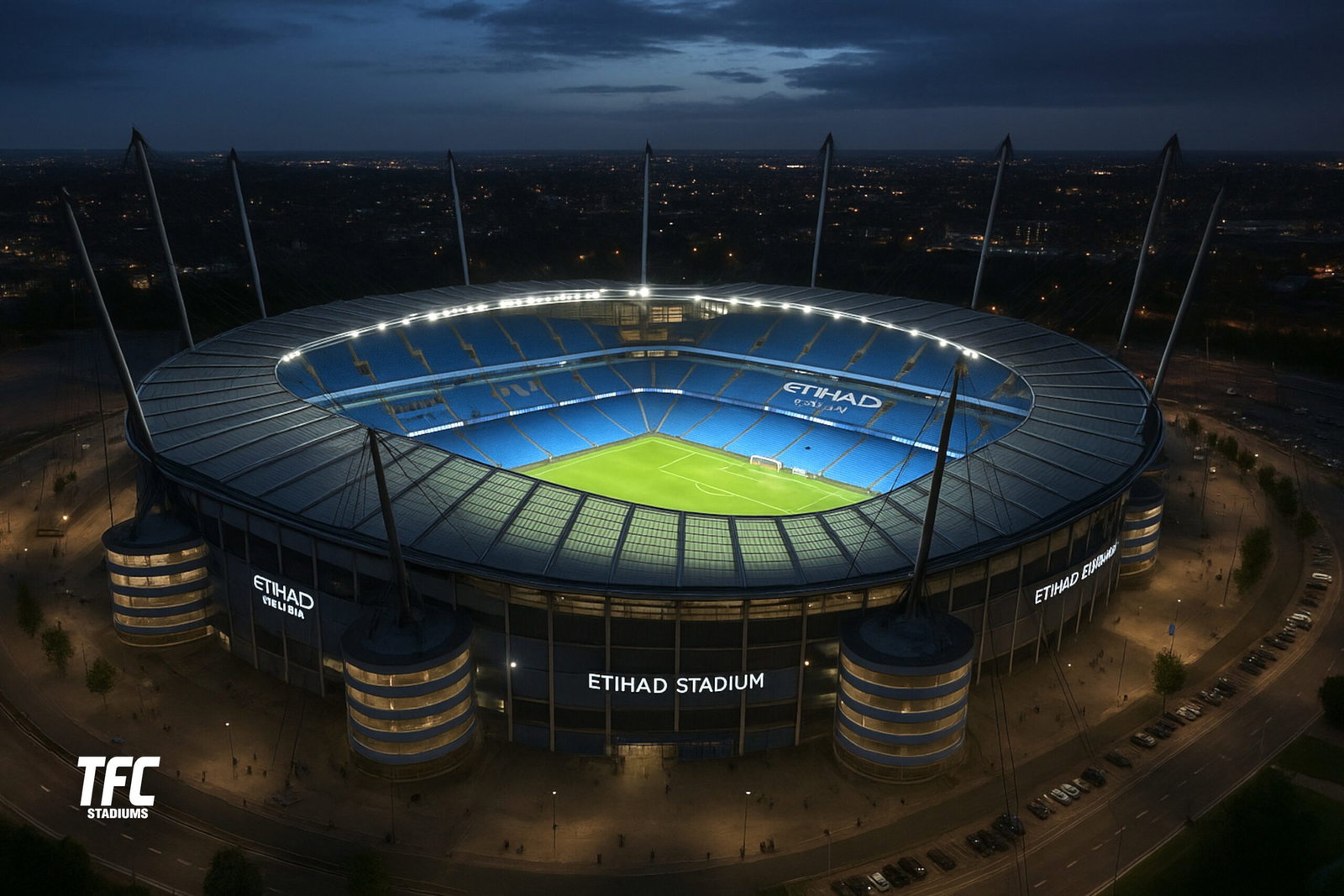
The Etihad Stadium, home of Manchester City, is one of the most recognisable modern football venues in the world. But beyond the televised matches and high-profile signings, there’s more going on beneath the surface. These ten facts reveal lesser-known details about the stadium’s construction, evolution, and quirks.
1. It Was Originally Designed for Athletics
The Etihad wasn’t built for football at first. Known as the City of Manchester Stadium during its early planning stages, it was developed for the 2002 Commonwealth Games. Athletics, not football, was the priority, and the pitch area was initially surrounded by a running track. Only after the games did it undergo reconstruction to suit a football format.
2. Arsenal Almost Moved In First
Before Manchester City, Arsenal were approached as potential tenants during the early 1990s. The plan was to relocate the London club to a new purpose-built stadium in Manchester as part of a wider sporting regeneration bid, but the idea was quickly abandoned due to geography and club identity.
3. The Stadium Sinks into the Ground
Most football grounds are visible from afar. The Etihad is different. Nearly 20 metres of the stadium bowl are built below ground level. This clever engineering minimised visual impact on the surrounding area and allowed for a lower-profile roofline without sacrificing capacity.
4. It Features One of the Longest Stadium Roof Cables in the World
The Etihad’s roof is supported by a complex cable-stay system. At its time of completion, it featured the longest stadium roof cable in the world, stretching 2.5 km in total. This created a ‘bowl effect’ that contributes to the stadium’s distinctive aesthetic.
5. The Capacity Has Been Quietly Expanded
Though originally seating 38,000 spectators, the stadium now holds over 53,000 after successive expansions. The most significant was the 2015 addition of a new third tier to the South Stand. Further expansion to the North Stand is now underway, aiming to push capacity closer to 61,000.
6. There’s a Hidden Time Capsule on Site
Buried during the 2002 Commonwealth Games, a time capsule sits beneath the stadium grounds. It contains artefacts from the games, letters from children imagining the future, and memorabilia from Manchester City. The capsule is intended to remain sealed until 2050.
7. City Football Group Built a Footballing Empire from the Etihad
The stadium isn’t just a home ground. It became the hub of an ambitious global strategy. From here, City Football Group expanded to own or invest in clubs across the US, Australia, Spain, Japan, India, and beyond. The Etihad serves as headquarters for this multi-club operation.
8. The Roof Collects Rainwater to Irrigate the Pitch
Manchester’s rainfall isn’t wasted. The stadium’s roof is designed to funnel rainwater into a filtration system which is then reused to water the pitch and maintain surrounding green areas. This sustainable feature was ahead of its time in football stadium design.
9. It Hosted a Bon Jovi Gig Before Manchester City Played There
Manchester City didn’t play their first competitive match at the ground until August 2003. But fans gathered there weeks earlier for a Bon Jovi concert in June of that year. The gig was the first major event held at the redeveloped stadium.
10. The Etihad Campus Is the Largest of Its Kind in the UK
The stadium sits at the heart of a sprawling 80-acre Etihad Campus, which includes the City Football Academy, community pitches, training grounds, and education facilities. No other Premier League club has a single-site operation on this scale in Britain.
About the Author