St James’ Park has been the heart of Newcastle United for well over a century. Its imposing presence on the city skyline, right in the centre of Newcastle, gives it a status few stadiums in world football can rival. Yet as modern football evolves, questions over whether it can meet the club’s ambitions are no longer hypothetical. The debate now centres on three options: expansion, renovation or full relocation.
Current Capacity and Constraints
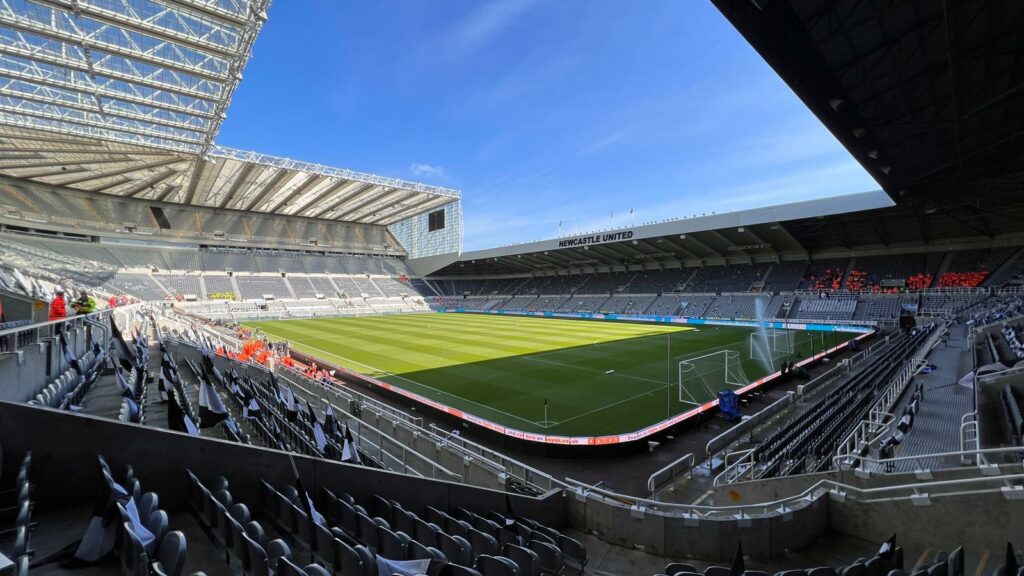
With a current capacity of just over 52,000, St James’ Park is the eighth-largest football stadium in England. It regularly sells out, and Newcastle United’s resurgence under new ownership has reignited demand for tickets, prompting the club to assess whether the existing ground can be developed further.
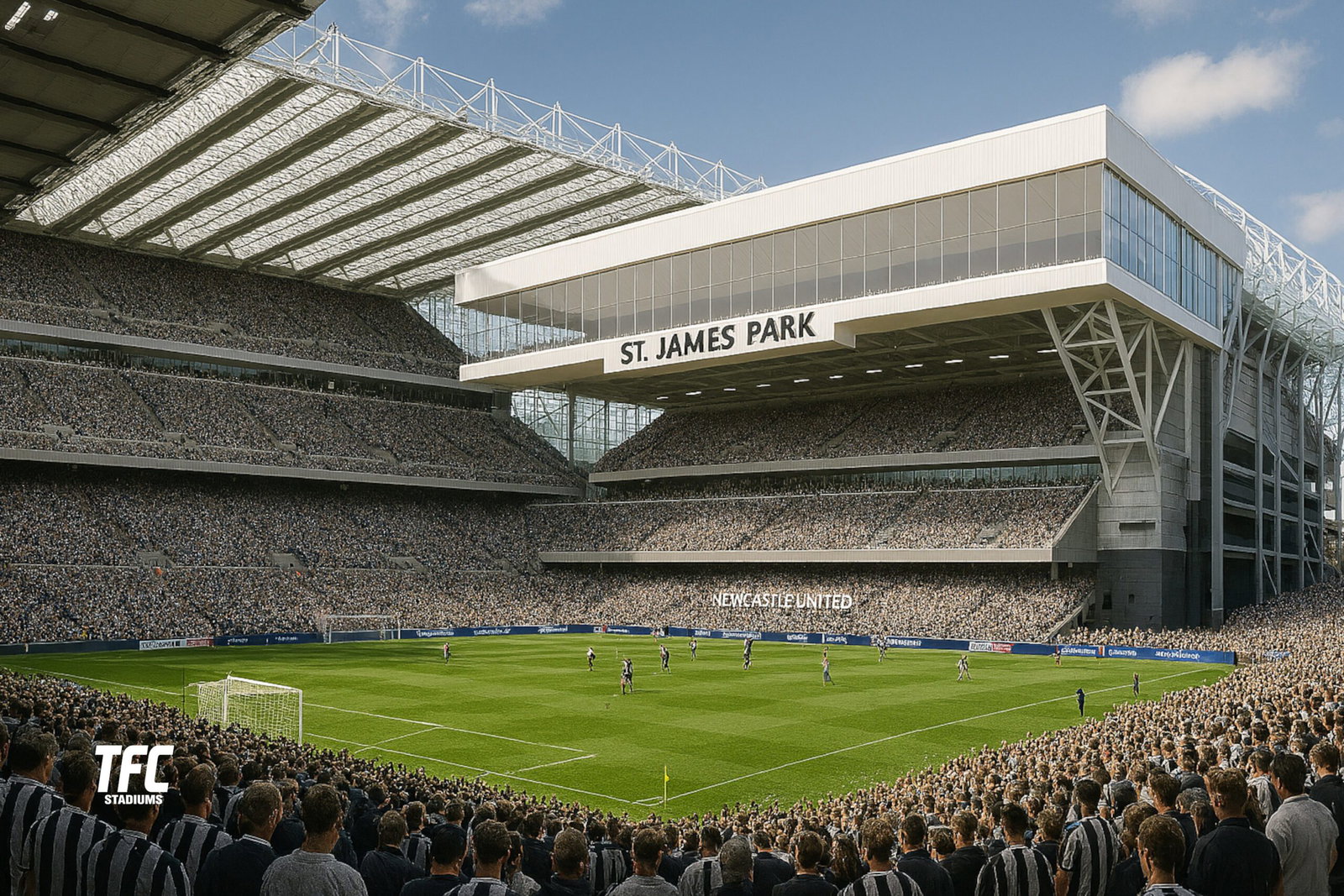
However, the stadium’s central location, flanked by listed buildings and urban infrastructure, makes large-scale expansion complicated. The East Stand, in particular, faces limitations due to the Grade I-listed Leazes Terrace directly behind it. Any vertical development would likely spark legal and heritage objections.
Potential for Expansion
Despite the constraints, there is a school of thought that suggests St James’ Park could be extended by building above or behind the current East Stand. It would require creative architecture, likely in the form of a cantilevered design or bridging structure to preserve the terrace behind.
Other areas of the stadium could also be reworked. Improvements in seating configuration, concourse use and digital infrastructure might allow for modest capacity increases while enhancing the overall matchday experience.
Yet all of this would come with considerable cost and disruption, potentially requiring the team to play elsewhere temporarily or accept long construction phases spread over multiple seasons.
Renovation and Modernisation
A less radical approach would focus on renovation rather than expansion. St James’ Park could retain its current footprint while receiving significant interior upgrades. This might include improved hospitality areas, revamped concourses, modern lighting and screen systems, and better accessibility provisions.
Such a strategy would preserve the ground’s heritage and city-centre presence while making it more commercially competitive with newer Premier League stadiums. But without adding seats, the club would still fall short of tapping into the full potential of its growing fanbase.
The Case for Relocation
Talk of relocation is always contentious. For Newcastle United, moving away from St James’ Park would be seen by many fans as sacrilege. The stadium is not just a venue; it is woven into the identity of the club and the city itself.
Yet if the club aspires to match the revenue and capacity of giants like Manchester United, Arsenal or Spurs, a new purpose-built ground might eventually become the only viable option. Relocation would open the door to a stadium with 65,000+ capacity, state-of-the-art facilities, and possibly space for a wider sports and entertainment complex.
Possible sites have been speculated, including areas along the banks of the River Tyne, but nothing concrete has emerged. Importantly, any such move would need to be handled with extreme care and sustained consultation with supporters.
Club Ownership and Strategic Vision
Since the Saudi-backed Public Investment Fund took majority ownership, Newcastle United’s ambitions have expanded beyond survival and mid-table respectability. Long-term success on the European stage and commercial growth are clear goals.
A stadium that reflects those ambitions will be central to the strategy, whether that means staying and building upwards, overhauling what’s already there, or starting afresh in a new location.
Chairman Yasir Al-Rumayyan and CEO Darren Eales have both acknowledged the scale of the challenge, noting that whatever decision is made will need to preserve the emotional connection fans have with the club’s home.
Fan Sentiment and Cultural Importance
Few grounds in world football are as culturally embedded as St James’ Park. It is visible from almost anywhere in the city and holds emotional meaning that goes far beyond capacity figures or hospitality revenue.
Surveys suggest that most fans favour remaining on the current site, with expansion or renovation as the preferred outcome. The club, aware of this, is unlikely to rush any major decision. Any final plan must strike a balance between commercial ambition and cultural preservation.
TFC Stadiums takeaway
The future of St James’ Park is still undecided, but the conversation has shifted. Expansion is not a theoretical exercise any more. Whether the club decides to build upon its historic foundations or break new ground elsewhere, the next chapter in Newcastle United’s stadium story will be one of the most defining in its modern history.
About the Author