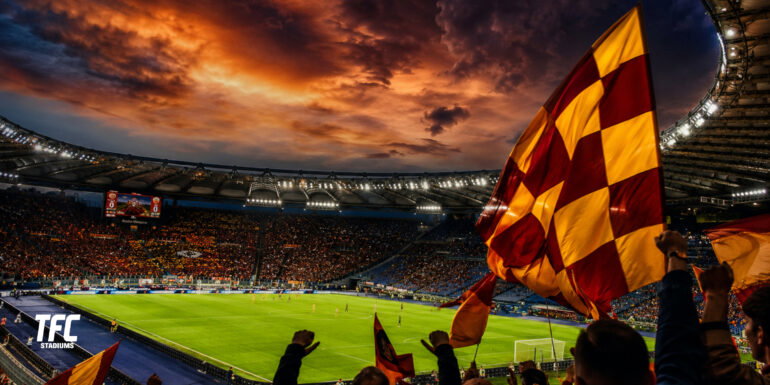
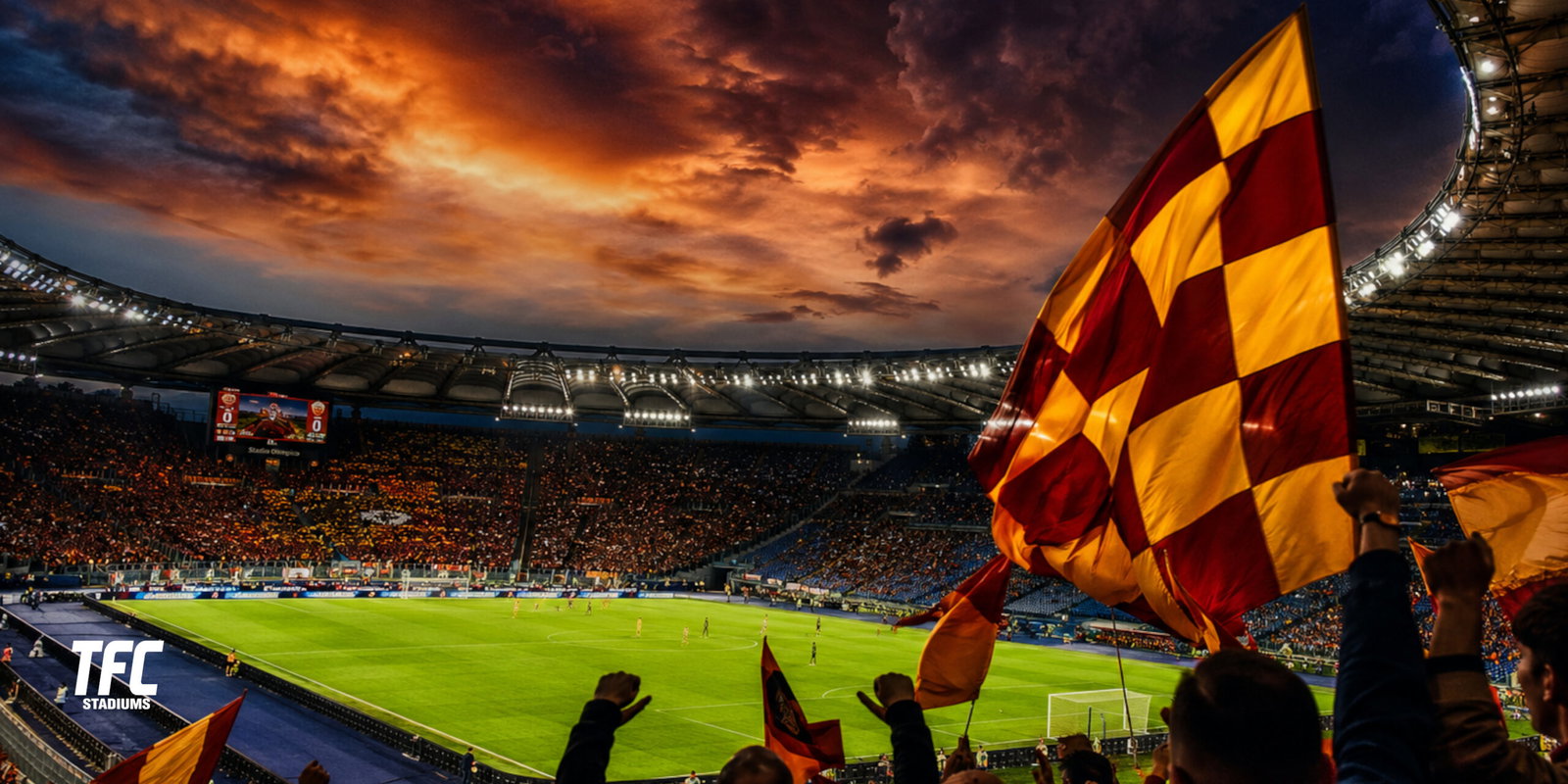
Rome is a city where almost every stone has a story. Visitors naturally flock to the Colosseum, the Pantheon and the Forum, yet another landmark quietly continues to shape the city’s identity every week. Stadio Olimpico may be modern by Roman standards, but it has earned its own place within the capital’s cultural landscape.
For millions of Italians, it represents far more than a football stadium. It is where generations have celebrated league titles, mourned heartbreaking defeats, watched Olympic heroes, listened to world-famous musicians and experienced moments that became part of national memory.
Unlike many stadiums built purely for commercial sport, Stadio Olimpico has become intertwined with Rome itself. It reflects the city’s passions, contradictions and remarkable ability to blend ancient history with contemporary life.
A Stadium Built for a New Italy
Opened in 1937 as the Stadio dei Cipressi before undergoing extensive redevelopment, the venue became the centrepiece of Rome’s preparations for the 1960 Summer Olympics.
The Olympic Games transformed the stadium into an international symbol of Italy’s post-war recovery. At a time when the country sought to present itself as modern, ambitious and outward-looking, the renovated Olimpico became one of the most visible examples of that confidence.
The stadium introduced millions of television viewers around the world to a different image of Italy. It was no longer defined solely by classical ruins or Renaissance art. It was also capable of hosting world-class sporting events with elegance and efficiency.
That Olympic legacy remains central to its identity today.
The Shared Home of Rome’s Football Rivalry
Few major stadiums successfully house two fierce rivals.
Stadio Olimpico does exactly that.
Both AS Roma and Lazio have called the stadium home for decades, creating one of European football’s most unusual arrangements.
The Derby della Capitale transforms the venue several times each season.
One week the Curva Sud is draped entirely in Roma colours.
A few weeks later the Curva Nord dominates with Lazio banners.
The same concrete structure somehow feels like two completely different stadiums depending on who is playing.
That dual identity reflects Rome itself.
The city has always contained competing histories, neighbourhoods and political traditions. The stadium mirrors that complexity rather than trying to simplify it.
Football as Roman Identity
Supporting Roma or Lazio is rarely viewed as a casual hobby.
For many families, allegiance stretches back generations.
Grandparents pass scarves to grandchildren.
Favourite seats become family traditions.
Stories from famous matches are repeated with the same enthusiasm decades later.
While many modern stadiums chase premium hospitality and corporate entertainment, Olimpico still places enormous value on collective experience.
The singing begins long before kick-off.
Entire sections move together.
The choreography created by supporters often rivals the football itself.
Visitors expecting a quiet afternoon soon realise they have walked into one of Europe’s loudest civic rituals.
More Than Club Football
The stadium has hosted almost every major event Italian football can offer.
Its honours include:
- FIFA World Cup matches in 1990
- UEFA European Championship fixtures
- UEFA Champions League Final
- Coppa Italia Finals
- Italian Super Cup matches
- Countless Italy national team fixtures
Every generation associates the stadium with different moments.
Some remember Roberto Baggio.
Others think of Francesco Totti.
Younger supporters recall dramatic European nights or Italy’s victories on the international stage.
The building becomes a shared memory bank for the country.
The Home of Italian Rugby
Football may dominate headlines, but rugby has carved out its own place at Olimpico.
Since Italy joined the Six Nations Championship, Rome has welcomed supporters from England, Scotland, Wales, Ireland and France every spring.
The atmosphere differs completely from football.
Instead of fierce rivalry, visiting supporters fill the city with colour, music and remarkable quantities of good humour.
Roman cafés, restaurants and bars benefit enormously from these weekends.
The stadium therefore represents another side of Italian sporting culture, one built around hospitality and international friendship.
Not every sporting rivalry needs to involve shouting at strangers. Sometimes it simply involves comparing whose national anthem is sung loudest before ordering another espresso.
A Stage for Global Music
The cultural influence of Stadio Olimpico extends well beyond sport.
Some of the world’s biggest performers have played here, including:
- U2
- Bruce Springsteen
- Rolling Stones
- Vasco Rossi
- Muse
- Coldplay
For many Romans, their most vivid memory of the stadium has nothing to do with football.
Instead, it is hearing eighty thousand people sing together beneath the evening sky.
Large concerts reinforce the stadium’s role as a civic gathering place rather than simply a sports venue.
Olympic Heritage Still Shapes Its Identity
Many modern venues eventually lose their connection with the events they were built for.
Olimpico has largely avoided that fate.
The memory of the 1960 Olympics still influences how Italians view the stadium.
Those Games produced several historic sporting moments, including Ethiopian marathon runner Abebe Bikila winning barefoot through the streets of Rome, one of the defining images in Olympic history.
Although much of that race unfolded beyond the stadium walls, Olimpico became forever associated with an event remembered as one of the most elegant Olympic Games ever staged.
That heritage gives the venue an importance extending far beyond domestic football.
Architecture That Reflects Its Era
Unlike futuristic stadiums wrapped in glass and LEDs, Stadio Olimpico feels grounded.
Its architecture combines practicality with monumental scale.
Continuous renovations have modernised seating, hospitality areas and facilities while preserving its recognisable profile.
Capacity today sits at just over 70,000 spectators, making it one of Italy’s largest sporting venues.
Rather than chasing architectural extravagance, the stadium succeeds through proportion.
It feels appropriately Roman.
Solid.
Confident.
Built to endure.
Perhaps not unlike many of the people filling its stands.
The Economic Impact on Rome
Every major event creates significant economic activity.
Visitors spend money on:
| Sector | Economic Benefit |
|---|---|
| Hotels | Increased overnight stays |
| Restaurants | Higher food and drink sales |
| Transport | Public transport and taxi demand |
| Tourism | Extended city visits |
| Retail | Merchandise and local shopping |
International matches and concerts often attract visitors who remain in Rome for several days.
That combination of tourism and entertainment generates millions of euros annually for the local economy.
The stadium therefore contributes not only culturally but financially to the capital.
Television’s Window Into Rome
For decades, aerial broadcasts from Olimpico have become instantly recognisable.
Television cameras regularly capture:
- Monte Mario overlooking the stadium
- The surrounding Foro Italico complex
- Rome’s distinctive skyline
- The evening lights of the Eternal City
These images reinforce the connection between the venue and its location.
Unlike stadiums isolated on industrial estates, Olimpico feels inseparable from Rome itself.
The city becomes part of every broadcast.
A Place Where Generations Meet
Perhaps the stadium’s greatest cultural strength lies in continuity.
Parents who attended matches in the 1980s now bring children of their own.
Supporters remember where they sat for famous victories decades earlier.
Family traditions survive despite changes in players, managers and competitions.
Modern football often changes at remarkable speed.
Managers last months rather than years.
Players move frequently.
Competitions expand.
Television coverage evolves constantly.
Yet supporters still return to the same stadium.
That consistency creates emotional attachment that cannot easily be replicated elsewhere.
Balancing History with Modern Expectations
Like many historic European stadiums, Olimpico faces ongoing debate about its future.
Roma have explored building a new stadium.
Lazio have also considered alternatives.
Supporters remain divided.
New stadiums offer:
- Increased commercial revenue
- Improved hospitality
- Better fan facilities
- Modern infrastructure
Yet leaving Olimpico would also mean leaving behind decades of shared memories.
That tension highlights the building’s cultural significance.
Few people argue passionately over anonymous stadiums.
They argue because Olimpico matters.
Why Stadio Olimpico Remains a Cultural Landmark
Italy possesses countless sporting venues, yet only a handful carry genuine national significance.
Stadio Olimpico stands comfortably among them because it represents far more than football.
It symbolises Olympic ambition, sporting excellence, civic pride and the remarkable emotional investment Italians place in shared public experiences.
Every generation adds another chapter.
Another final.
Another derby.
Another concert.
Another unforgettable night beneath the Roman sky.
Ancient Rome may be famous for amphitheatres built of marble and stone, but modern Rome has its own arena where history continues to unfold every week. Few stadiums capture the spirit of their city quite so completely, and fewer still remain as woven into the everyday life of a nation as Stadio Olimpico.
About the Author