San Mamés is not a stadium that shouts about its environmental credentials. It does something more interesting. It quietly bakes sustainability into the structure, the systems, and the matchday routine, then gets on with hosting football. In a city shaped by reinvention, from heavy industry to cultural capital, that feels entirely appropriate.
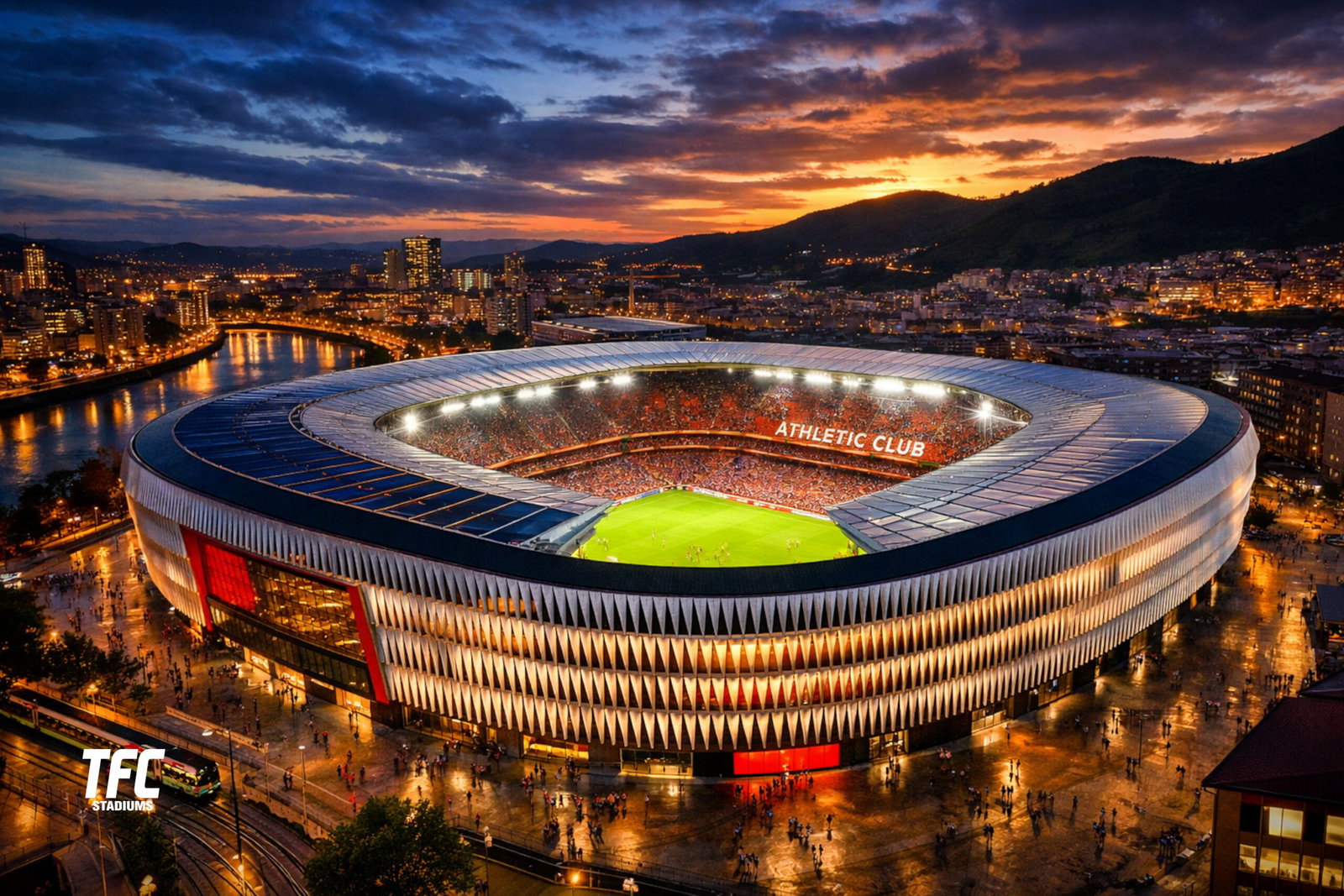
Home to Athletic Club, the stadium sits close to the Nervión River and the heart of Bilbao. Its design choices reflect that setting, practical, restrained, and rooted in long-term thinking rather than short-term spectacle.
A Stadium Designed to Use Less
From the outset, San Mamés was conceived as a replacement that needed to do better than its predecessor, not just look newer. The envelope of the building plays a major role. Its semi-translucent façade helps regulate temperature and daylight, reducing the need for artificial lighting and heavy climate control during daytime use.
Inside, circulation spaces are deliberately open and well-lit, cutting down on energy demand while making the stadium easier to navigate. It is a reminder that sustainability often starts with straightforward architectural decisions rather than flashy add-ons.
Energy Efficiency That Actually Matters
Lighting is one of the biggest energy drains in any large stadium, and San Mamés tackles this with efficient LED systems throughout the venue. These are not only lower in consumption but also easier to control and adapt to different events, from European nights to non-matchday functions.
Heating and ventilation systems are similarly tuned for efficiency, designed to serve occupied areas without over-conditioning the entire structure. The goal is targeted comfort, not blanket excess. It sounds obvious, but many older stadiums still struggle with this balance.
Water Use and Waste Reduction
Water management is another area where San Mamés shows quiet competence. Low-flow fixtures are standard across public and private areas, helping to curb consumption on matchdays when demand spikes dramatically.
Waste separation is built into the stadium’s operations rather than treated as an afterthought. Recycling points are clearly integrated into concourses, and food service partners are expected to follow guidelines that reduce unnecessary packaging. It does not eliminate waste entirely, but it makes poor habits harder to justify.
Built for the City, Not Just Matchday
One of the most sustainable choices San Mamés makes is how it connects to its surroundings. The stadium is firmly embedded in Bilbao’s public transport network, with metro, tram, and rail links all within easy reach. That significantly reduces reliance on car travel, especially compared to out-of-town arenas that force fans into long drives and parking queues.
On non-matchdays, the stadium remains active as a venue for tours, events, and community use. Keeping a building alive year-round is an environmental decision as much as a commercial one. Empty spaces are rarely efficient spaces.
Respecting Local Identity and Materials
Sustainability is not only about energy and water. It is also about cultural longevity. San Mamés reflects Basque identity through its materials, proportions, and restrained aesthetic. By avoiding gimmicks, the stadium has aged well in a short time, which matters more than it sounds.
A building that feels dated after a decade invites renovation or replacement. One that feels grounded is more likely to be maintained, adapted, and reused. Longevity is an environmental virtue that often goes unmentioned.
Where San Mamés Still Has Room to Improve
For all its strengths, San Mamés is not a perfect case study. On-site renewable energy generation is limited compared to some newer stadiums that lean heavily into solar arrays or visible green tech. Much of its sustainability impact comes from efficiency rather than production.
That said, this restraint fits the stadium’s character. San Mamés focuses on reducing waste and demand first, then layering improvements over time. It is a slower approach, but often a more durable one.
A Sensible Model for Modern Stadiums
San Mamés does not chase headlines with extreme claims or futuristic experiments. Instead, it offers a grounded example of how a major football stadium can be responsible without becoming preachy or impractical.
In many ways, it mirrors Athletic Club itself. Traditional, locally rooted, and quietly stubborn about doing things the right way. Sustainability here is not a branding exercise. It is simply part of how the stadium works, match after match, season after season.
About the Author