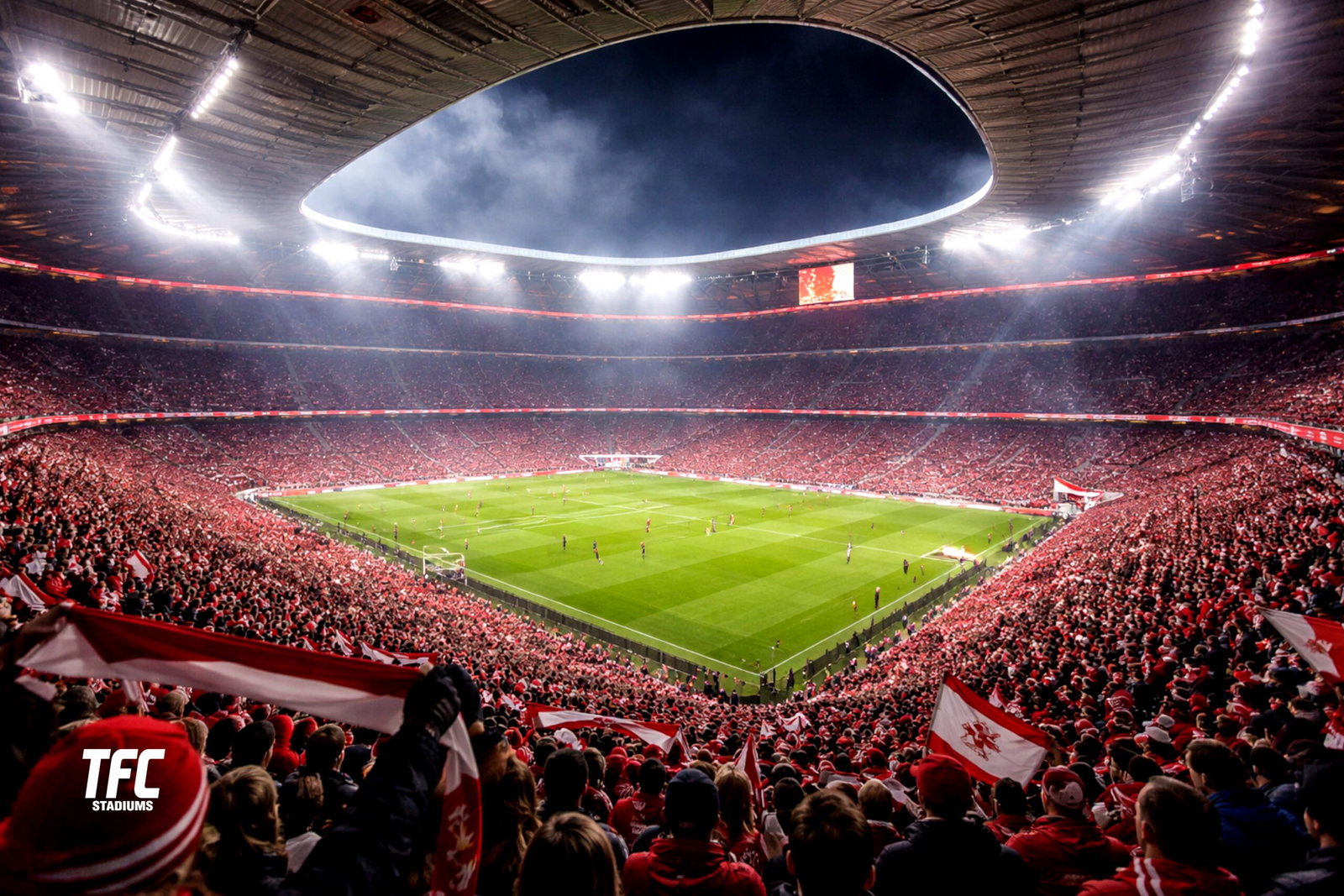
Step inside Allianz Arena on a cold Bavarian evening and the surprise is not the noise or the colour, but the air. It feels calmer, warmer, and more controlled than you expect from a 75,000 seat stadium. That is not accidental. The arena’s internal climate has been engineered as carefully as its iconic glowing shell, with comfort, pitch quality, and crowd energy all factored into the design.
Designed for Control, Not Cosiness
Allianz Arena is not sealed like a dome, yet it behaves more like an enclosed environment than a traditional open bowl. The steep seating tiers and continuous roof ring reduce exposure to wind and rain, creating a buffer against Munich’s unpredictable weather. Cold air does not whip through the stands, and heat generated by the crowd is retained rather than lost.
This approach avoids the stuffy feeling found in fully enclosed venues. Air still circulates naturally, but without the sudden temperature drops common in older stadiums. On matchdays, especially in winter, the difference is noticeable within minutes of taking your seat.
How the Roof Shapes the Atmosphere
The roof plays a quiet but decisive role in regulating conditions. It covers all seating areas while leaving the pitch open to the sky. This design traps warmth rising from the crowd and reflects sound back into the bowl, which raises both temperature and intensity.
Rain rarely reaches spectators, and snow is managed carefully to prevent cold air pooling in the lower tiers. The roof structure also limits direct wind exposure, one of the biggest factors in how cold a stadium feels. Even on freezing nights, conditions inside remain surprisingly stable.
Winter Matches and Cold Weather Performance
Munich winters are no joke, yet Allianz Arena handles them with impressive consistency. Undersoil heating keeps the pitch playable and prevents frost damage, which also reduces cold radiating upward into the stands. Combined with crowd heat and shelter from wind, the interior climate often feels several degrees warmer than the outside temperature.
This is one reason Bayern Munich’s winter home fixtures rarely descend into scrappy, weather driven affairs. The ball moves cleanly, players stay mobile, and fans are not counting down the minutes to halftime simply to escape the cold.
Summer Heat and Ventilation
In warmer months, the arena avoids the greenhouse effect that plagues some modern stadiums. Open corners and roof gaps allow hot air to rise and escape, while shaded seating limits direct sun exposure. Evening kick offs benefit most, with temperatures dropping quickly once the sun sets and airflow improves.
The result is a space that stays comfortable without relying heavily on mechanical cooling. It feels engineered, not artificial, which suits football far better than an overly climate controlled environment.
Crowd Density and Matchday Energy
A packed Allianz Arena generates its own microclimate. Tens of thousands of bodies raise the ambient temperature, while the steep stands concentrate noise and heat into the lower bowl. The effect is subtle but real. Matches with full attendance feel warmer and louder, even when the weather outside is grim.
This balance between comfort and intensity is one of the arena’s strengths. Fans are protected from the elements without losing the raw edge that makes European football feel alive.
A Stadium That Understands Its Climate
Allianz Arena succeeds because it respects Munich’s climate rather than fighting it. Instead of sealing itself off from the outside world, it moderates exposure and works with natural airflow, crowd heat, and structural design. The result is a stadium that feels reliable in winter, breathable in summer, and consistently welcoming across the season.
It may not be the first thing fans talk about after a big Champions League night, but the controlled climate inside Allianz Arena plays a quiet role in making those nights possible.
About the Author