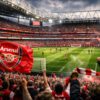
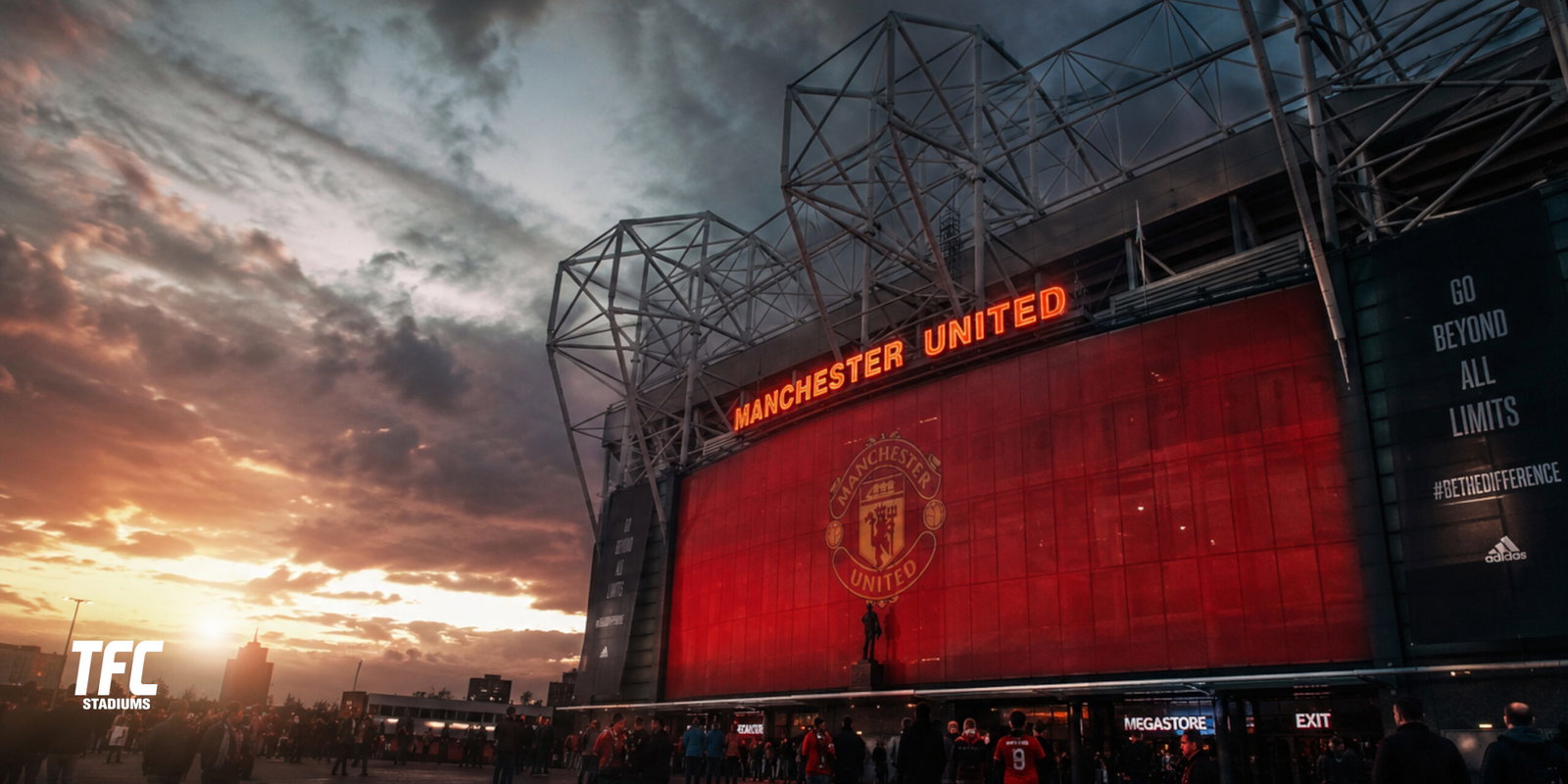
Few stadium nicknames have become as famous as Old Trafford’s “Theatre of Dreams.” It rolls off the tongue with just enough drama to make every match sound like Shakespeare with shin pads. Whether you support Manchester United or cannot stand them, chances are you’ve used the phrase without thinking twice.
Unlike many football nicknames that developed over decades through local folklore, this one has a clear origin. It came from one man whose opinion carried enormous weight and whose career was woven into the fabric of Manchester United itself.
Today, the phrase means far more than one famous quote. It represents decades of triumph, heartbreak, extraordinary players, impossible comebacks and millions of memories. It has also become a benchmark that modern Manchester United continue to chase.
Where Did the Theatre of Dreams Nickname Come From?
The nickname is widely credited to Sir Bobby Charlton.
Charlton described Old Trafford as the “Theatre of Dreams” while reflecting on his remarkable career with Manchester United. The phrase appeared in the title of his autobiography, My Manchester United Years: The Theatre of Dreams, published in 2007, although he had used the description long before then.
For Charlton, Old Trafford represented more than a football ground.
It was where:
- He recovered from the Munich Air Disaster that claimed eight teammates
- He became one of England’s greatest footballers
- Manchester United rebuilt under Sir Matt Busby
- The club won the European Cup in 1968
- Millions came to watch football played with style and ambition
If anyone had earned the right to name the stadium, it was Bobby Charlton.
A Stadium Built for Big Moments
Old Trafford first opened in 1910.
At the time it was one of Britain’s most advanced football stadiums, designed by renowned architect Archibald Leitch. Manchester United wanted a home worthy of becoming one of England’s biggest clubs.
Even before the nickname existed, Old Trafford had already built a reputation for hosting memorable occasions.
Some of football’s greatest names have played there across more than a century:
- George Best
- Denis Law
- Bobby Charlton
- Eric Cantona
- David Beckham
- Cristiano Ronaldo
- Wayne Rooney
- Ryan Giggs
- Paul Scholes
Every generation seemed to produce another player capable of creating magic beneath the famous Stretford End.
Eventually, calling it merely “Old Trafford” almost felt too ordinary.
Dreams for Players
Every footballer dreams of walking onto Old Trafford.
For Manchester United players, simply pulling on the red shirt carries enormous expectation. Some embrace it. Others discover that dreams can occasionally resemble nightmares with floodlights.
The stadium has witnessed careers transformed.
Young academy graduates have arrived as hopeful teenagers before becoming global superstars.
The list includes:
| Player | Academy Graduate | First Team Legacy |
|---|---|---|
| Ryan Giggs | Yes | Most appearances in club history |
| Paul Scholes | Yes | One of England’s greatest midfielders |
| David Beckham | Yes | Global football icon |
| Marcus Rashford | Yes | Debuted with two goals in Europe |
Old Trafford has always rewarded players brave enough to entertain.
Dreams for Supporters
For supporters, Old Trafford has provided memories that last a lifetime.
There have been title celebrations, dramatic late winners and unforgettable European nights.
Some of the most famous include:
The Treble Season
The 1998-99 campaign remains the club’s defining season.
Old Trafford became the stage where Manchester United marched towards an unprecedented Premier League, FA Cup and Champions League treble.
Even today, supporters speak about that season with the sort of nostalgic glow usually reserved for childhood holidays and pubs that somehow charged £2 a pint.
European Nights
Few stadiums generate an atmosphere quite like Old Trafford under the lights.
Champions League matches against clubs such as Barcelona, Juventus, AC Milan and Real Madrid have produced some of football’s most memorable evenings.
Players often speak about hearing the Champions League anthem echo around the stadium before kickoff.
For many, simply experiencing that atmosphere fulfils a lifelong ambition.
Famous Comebacks
Manchester United became synonymous with refusing to give up.
Sir Alex Ferguson’s teams developed a reputation for late goals that frustrated rivals and delighted home supporters.
The phrase “Fergie Time” entered football’s vocabulary because Old Trafford repeatedly witnessed dramatic finishes.
Statistics from Ferguson’s reign underline that mentality:
| Sir Alex Ferguson Record | Total |
|---|---|
| Seasons | 26 |
| Premier League titles | 13 |
| FA Cups | 5 |
| League Cups | 4 |
| European Cups | 2 |
| Major trophies | 38 |
Those numbers explain why dreams often became reality.
The Stretford End and Its Role
No discussion of Old Trafford feels complete without mentioning the Stretford End.
It has long been the emotional heartbeat of the stadium.
The loudest songs, biggest celebrations and harshest opinions generally originate there. Opposition goalkeepers have rarely considered it an especially relaxing place to spend ninety minutes.
Generations of supporters have helped create an intimidating atmosphere that has inspired players and unsettled visiting teams.
The connection between crowd and team became central to Old Trafford’s identity.
More Than a Football Stadium
Old Trafford has hosted far more than Manchester United matches.
It has staged:
- FA Cup semi finals
- England internationals
- Rugby League Grand Finals
- Rugby World Cup matches
- Concerts
- The London 2012 Olympic football tournament
Its capacity of around 74,000 makes it England’s largest dedicated club football stadium.
Millions of visitors tour the ground every year, making it one of the country’s most popular sporting attractions.
Why the Nickname Spread Across the World
Manchester United’s global success during the Premier League era transformed the phrase into part of football culture.
Television broadcasts reached hundreds of millions of viewers.
Commentators repeated “The Theatre of Dreams” so often that it became almost inseparable from the stadium itself.
Marketing helped too.
The nickname appeared on merchandise, documentaries, books and television programmes.
Today, people who have never visited Manchester still recognise the phrase immediately.
That is remarkable branding, even if Sir Bobby Charlton almost certainly wasn’t thinking about marketing when he first said it.
Does It Still Deserve the Name?
This question divides opinion.
Manchester United have experienced difficult seasons since Sir Alex Ferguson retired in 2013.
League titles have become elusive, managerial changes have become frequent and rivals have enjoyed greater success.
Critics sometimes joke that Old Trafford has become the “Theatre of Broken Dreams.”
There is an uncomfortable truth behind the humour.
Since Ferguson’s retirement:
- Multiple permanent managers have come and gone.
- Trophy success has become less consistent.
- The stadium itself has shown signs of ageing.
- Rivals such as Manchester City have set new standards on the pitch.
Yet football stadiums are defined by history as much as current form.
Wembley remains Wembley regardless of who wins there each season.
Anfield did not lose its mystique during Liverpool’s lean years.
Old Trafford still carries more than a century of football history through every tunnel, stand and seat.
The nickname survives because supporters believe another great chapter is always possible.
Hope is, after all, one of football’s most renewable resources.
How Old Trafford Compares to Other Famous Stadium Nicknames
| Stadium | Nickname | Why It Is Famous |
|---|---|---|
| Old Trafford | Theatre of Dreams | Legendary players and Manchester United history |
| Camp Nou | More Than a Club | Symbol of Catalan identity |
| Anfield | Fortress Anfield | Atmosphere and European nights |
| Santiago Bernabéu | The White House | Home of Real Madrid’s royal stature |
| Signal Iduna Park | Yellow Wall | Europe’s largest standing terrace atmosphere |
Old Trafford’s nickname is unique because it focuses on emotion rather than architecture or geography.
It promises possibility.
The Lasting Legacy of the Theatre of Dreams
The phrase has endured because it captures exactly what football should be.
Supporters arrive believing something memorable might happen.
Children dream of playing there.
Players imagine scoring there.
Managers hope to conquer it.
Some leave with medals. Others leave wondering how they somehow lost after leading until the eighty ninth minute. Football can be gloriously unreasonable.
That sense of anticipation is what Sir Bobby Charlton recognised all those years ago.
Old Trafford is not called the Theatre of Dreams because every dream comes true.
It is called the Theatre of Dreams because every person who walks through its gates arrives carrying one.
About the Author