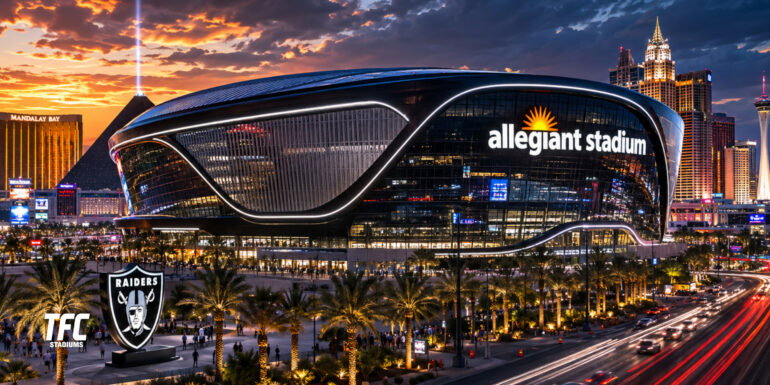
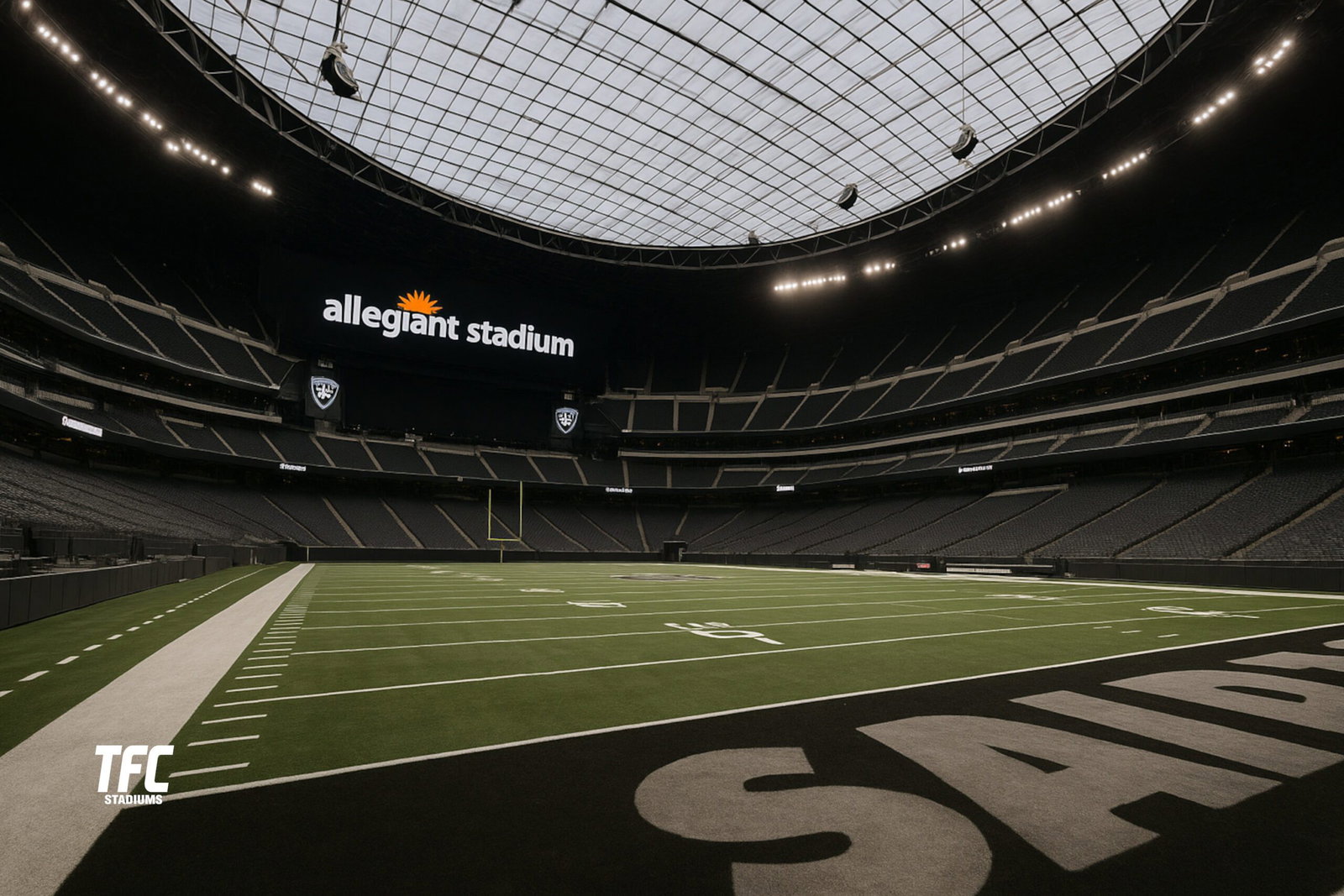
Allegiant Stadium, home to the Las Vegas Raiders and UNLV Rebels, stands as a multi-purpose venue with an emphasis on technological innovation and fan experience. Located near the Las Vegas Strip, it is one of the most modern and visually distinctive stadiums in the United States. This article breaks down the key numbers behind the structure, from capacity and video screens to structural features and field design.
Stadium Capacity
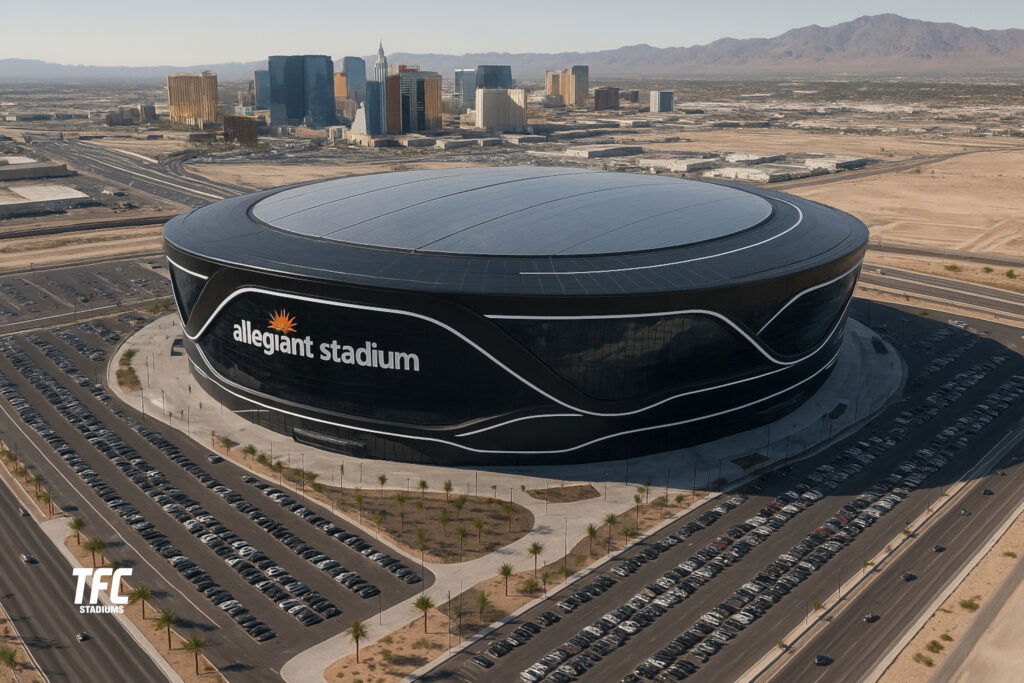
Allegiant Stadium is built to accommodate a wide range of events, from NFL games and college football to concerts and international fixtures.
- Standard capacity: 65,000
- Expandable for special events: Up to 71,835
- Suites: 128 total, including premium Loge Boxes and Owners’ Suites
- Club seating: Over 8,000 club seats
- Standing room and flexible layouts allow the venue to adjust to different types of events
Video Screens and Display Tech
Allegiant Stadium incorporates some of the most advanced display systems found in any sports venue.
- Main videoboard: Dual-sided 3D Oculus board above the north end zone
- Total square footage of video boards: Over 40,000 square feet
- Exterior video mesh: Wraps part of the stadium, used for team branding and light displays
- LED ribbon boards: Line the upper bowl, offering real-time stats, scores, and dynamic graphics
The Oculus is one of the stadium’s centrepieces, suspended from the roof and visible from nearly every seat. It offers 4K-capable resolution with vibrant contrast, enhancing replays and in-game presentation.
Structural and Design Specs
Beyond the fan-facing features, the stadium’s infrastructure is equally impressive.
- Construction cost: $1.9 billion
- Total site size: 62 acres
- Roof type: Semi-translucent ETFE (ethylene tetrafluoroethylene) domed roof
- Steel used: Approximately 28,000 tons
- Glass installed: 410,000 square feet of exterior black glass panels
- Number of escalators: 44
- Elevators: 22 total, including premium-level access
- Restrooms: More than 750 individual stalls to reduce queuing during events
The stadium’s roof lets in diffused daylight, maintaining an open feel while shielding the crowd from the intense Nevada sun.
Field System
The stadium includes a fully retractable natural turf field tray used for Raiders home games.
- Field tray weight: Approximately 19 million pounds
- Tray movement: Powered by 72 electric motors, takes 90 minutes to roll in or out
- Secondary surface: Permanent artificial turf for UNLV and non-NFL events
- Drainage and irrigation: Fully integrated into the retractable field base
- Dimensions: Regulation NFL field size (360 feet by 160 feet)
The dual-surface design allows the venue to switch between different sports and event types with minimal wear on the main turf.
Connectivity and Technology
Fans inside Allegiant Stadium have access to strong wireless infrastructure and digital amenities.
- Wi-Fi access points: More than 1,700
- Distributed antenna system (DAS): Delivers strong mobile signal throughout the venue
- 5G readiness: Fully compatible with current and future 5G services
- Concessions and entry: Fully digital ticketing and contactless payments available at all points
- Data backbone: Cisco-powered network with real-time fan and venue analytics
These systems make it one of the most digitally connected stadiums in the NFL, ensuring minimal disruption and high-speed access for fans and media.
Transport and Access
Despite its proximity to the Strip, Allegiant Stadium also had to address complex access challenges.
- Parking spaces on-site: Approx. 2,375
- Total parking available (off-site lots included): Over 35,000
- Pedestrian bridge: Connects the stadium to Mandalay Bay over Interstate 15
- Ride-share zones and public transport: Integrated with Las Vegas public transit planning
Though traffic can build up on event days, the infrastructure is designed to handle high turnover through multiple points of entry.
TFC Stadiums takeaway
Allegiant Stadium combines sheer scale with technological depth. From its giant screens and retractable field to its powerful data infrastructure, the numbers behind the design reflect a venue built not just for spectatorship but for adaptability, performance, and long-term use. It stands as a benchmark for future stadium construction, especially in hot-climate cities looking for enclosed, flexible arenas with entertainment at the forefront.
About the Author