
There are prettier stadiums in the NFL. There are newer ones too, packed with glowing glass walls, nightclub lounges, and enough LED screens to make Times Square feel shy. Then there is Arrowhead Stadium, sitting in Kansas City like a concrete warning label.
Arrowhead does not charm you. It stares at you.
Opened in 1972, the home of the Kansas City Chiefs has become one of the most recognisable stadiums in American sport, partly because of its atmosphere, partly because of its history, and partly because it looks like football should look. Massive. Steep. Loud. Slightly threatening.
The architecture of Arrowhead is not about elegance. It is about pressure. The entire place feels designed to squeeze noise downward until opposing quarterbacks start hearing phantom blitzes.
Honestly, if a thunderstorm became a sports venue, it would probably look a bit like Arrowhead.
A Stadium Designed for Football First
Arrowhead Stadium was developed as part of the Truman Sports Complex in Missouri, alongside nearby Kauffman Stadium. The idea was unusual at the time. Instead of forcing baseball and football into one awkward multi-purpose bowl, Kansas City built two separate stadiums side by side.
That decision aged beautifully.
Throughout the 1970s and 1980s, plenty of NFL teams played in stadiums where sightlines felt compromised by baseball dimensions. Fans in some venues needed binoculars and mild optimism to see the far sideline. Arrowhead avoided all of that.
The bowl was designed specifically for football viewing angles. Seats wrap tightly around the field, with a steep rake that keeps spectators visually connected to the action. Even from the upper deck, the field feels surprisingly close.
Architect Charles Deaton leaned heavily into functionality. Circular geometry dominates the design, helping contain both crowd energy and acoustics. The continuous seating bowl creates an enclosed feeling without needing a roof.
Which is important because Arrowhead does not need a roof to make noise. The crowd handles that part.
Why Arrowhead Feels So Loud
There is science behind the madness.
Arrowhead’s architecture traps and reflects sound back toward the field. The upper decks overhang portions of the lower bowl, helping keep crowd noise concentrated rather than letting it escape upward. Concrete surfaces amplify the effect further.
The result is chaos for visiting offences.
At its peak, Arrowhead once held the Guinness World Record for the loudest outdoor stadium, recording crowd noise above 142 decibels during a game against the New England Patriots in 2014.
For context, that is louder than a jet engine from close range. It is also probably louder than Rick Dalton after watching a prevent defence give up 18 yards on third-and-17.
Architecturally, the stadium creates a psychological effect as much as an acoustic one. The steep seating angles make fans feel stacked directly on top of the field. Players constantly mention how enclosed the venue feels compared to more open modern stadiums.
Some newer venues feel like entertainment districts with football attached. Arrowhead feels like football with civilisation reluctantly attached around it.
The Exterior, Pure Concrete Confidence
Arrowhead’s exterior is unapologetically old-school.
There is very little decorative fluff here. No giant sweeping glass shell. No futuristic curves pretending the building is a spaceship. The exposed concrete, repetitive structural rhythm, and broad circular footprint give the stadium a distinctly brutalist character.
And somehow, that works perfectly for Kansas City.
The exterior mirrors the personality of the fanbase. Tough, direct, and deeply unconcerned with trends coming out of Los Angeles or Miami. You arrive at Arrowhead knowing exactly what kind of football environment you are walking into.
Tailgating also shaped the architecture around the stadium. Vast parking lots surround the venue, creating one of the NFL’s most famous pre-game cultures. The stadium was built during an era when arriving by car was central to the American sports experience, and Arrowhead leans fully into that identity.
On game day, the complex feels less like a stadium district and more like a travelling food festival powered by barbecue smoke and emotional instability.
Renovations Without Losing Its Soul
One of the smartest things the Chiefs organisation ever did was resist the temptation to completely reinvent Arrowhead.
Many older stadiums either fell into neglect or underwent renovations so aggressive they lost their identity entirely. Arrowhead avoided both traps.
A major renovation completed in 2010 modernised the venue while preserving its intimidating bowl structure. The project upgraded concourses, suites, scoreboards, seating areas, and fan amenities without flattening the character that made the stadium famous.
The massive video boards transformed the visual experience inside the venue. Expanded concourses improved movement around the stadium. Premium hospitality areas brought the business side of the NFL into the modern age.
Yet from your seat, Arrowhead still feels unmistakably like Arrowhead.
That balance matters. Fans are surprisingly good at detecting when ownership turns a beloved stadium into an airport lounge with yard markers.
The Red Sea Effect
Colour plays a major role in the stadium’s visual identity.
When Arrowhead fills with Chiefs red, the architecture intensifies the effect. The continuous bowl design creates a wall of colour around the field, especially during night games. Television broadcasts capture this brilliantly. The red seating, red crowd layers, and enclosed structure combine into something visually aggressive.
Some stadiums feel corporate.
Arrowhead feels tribal.
That emotional connection is part of why the venue consistently ranks among the NFL’s toughest road environments. Architecture alone cannot create atmosphere, but it can absolutely magnify it. Arrowhead’s design amplifies fan behaviour instead of diluting it.
The stadium understands football’s emotional theatre better than many modern venues do.
Comparing Arrowhead to Modern NFL Stadiums
Modern NFL architecture often prioritises versatility.
Many newer stadiums are designed to host concerts, conventions, Final Fours, WrestleMania, monster trucks, international football, and probably the occasional moon landing if sponsorship money appears.
Arrowhead stays rooted in football identity.
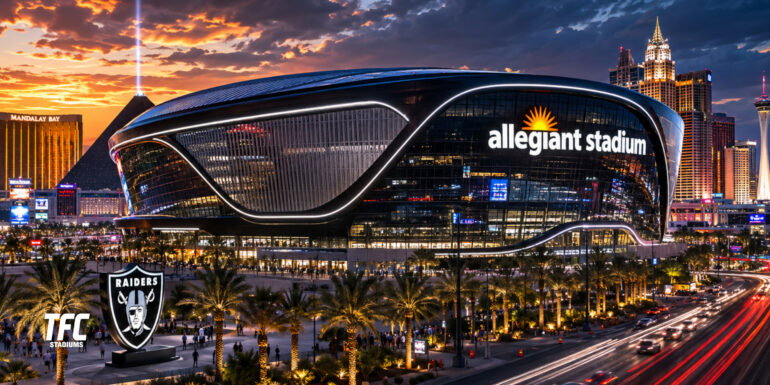
Compared to venues like SoFi Stadium or Allegiant Stadium, Arrowhead feels less polished but more authentic. Its imperfections actually strengthen the experience.
There is something refreshing about a stadium that does not constantly try to impress you with luxury branding language. Nobody walks into Arrowhead asking where the artisan cocktail terrace is located.
They are asking where the noise is coming from.
Usually the answer is everywhere.
The Future of Arrowhead Stadium
Questions about Arrowhead’s long-term future continue to surface as NFL franchises chase new stadium revenue opportunities. Yet replacing Arrowhead would be emotionally difficult for both the city and the fanbase.
The building remains deeply tied to the identity of Kansas City football.
Architecturally, it also holds up remarkably well for a stadium more than fifty years old. The seating bowl remains elite. Sightlines remain excellent. Atmosphere remains terrifying for visitors.
That is the thing about great sports architecture. It is not always about luxury or futuristic aesthetics. Sometimes it is about understanding exactly how fans want to feel.
Arrowhead makes fans feel loud.
It makes opponents feel trapped.
And after all these years, that concrete monster still knows exactly what it is.
About the Author