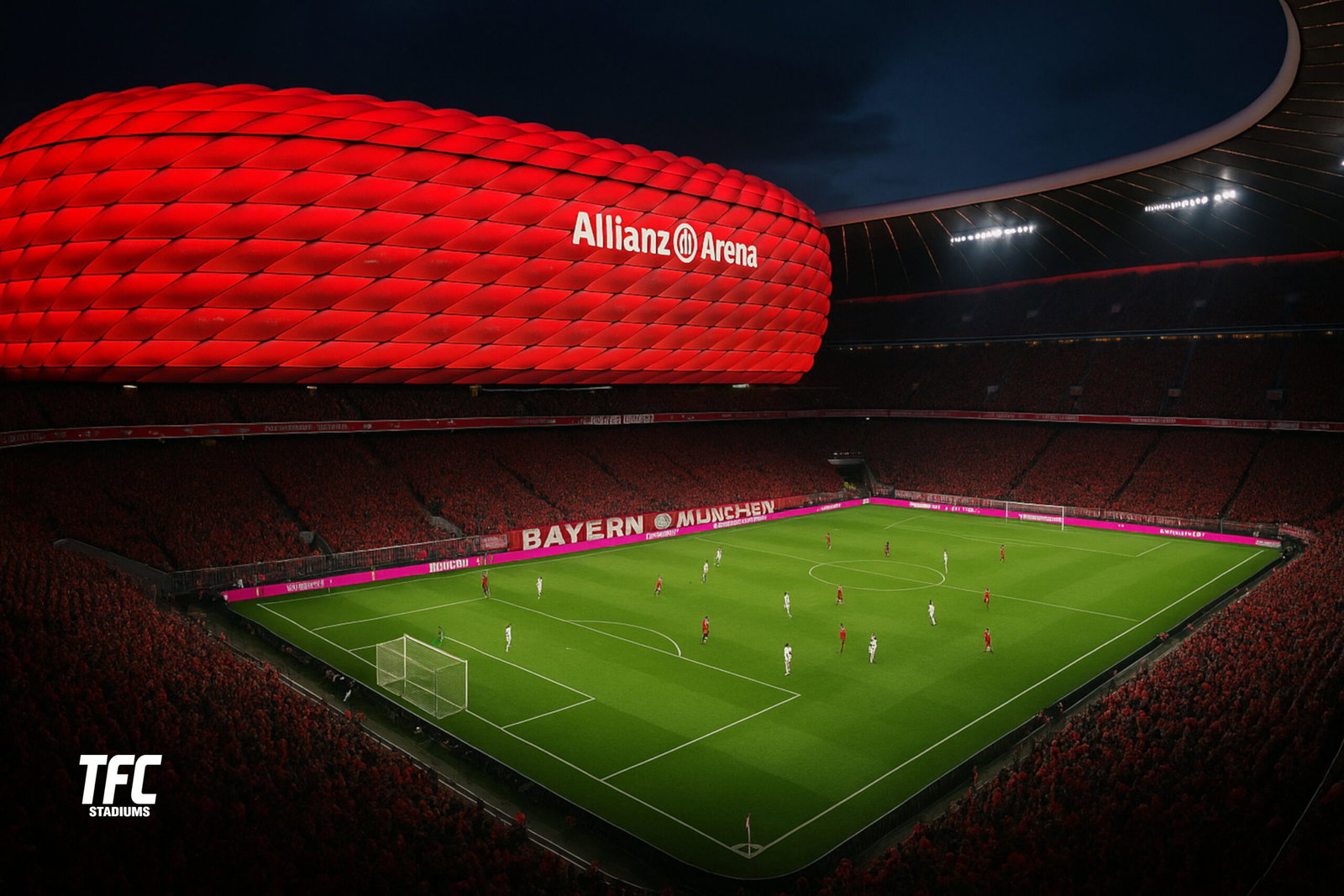
Since opening in 2005, the Allianz Arena has been more than a stadium for Bayern Munich. It has become a stronghold where opponents rarely find success, a stage where European nights and Bundesliga dominance converge. The combination of atmosphere, architecture, and a winning culture has cemented its reputation as one of the most formidable venues in world football.
The Design Advantage
The Allianz Arena’s architecture plays a central role in its reputation. The translucent façade, capable of glowing red on Bayern matchdays, creates both identity and intimidation. Inside, steeply banked stands keep fans close to the action. The acoustics amplify chants and songs, ensuring that players feel constant support and visiting teams face a wall of sound.
Home Form and Results
Bayern’s record at the Allianz speaks for itself. The club has enjoyed extended unbeaten runs in the Bundesliga on home soil and consistently produced dominant performances in the Champions League. The ground has hosted title-clinching matches, decisive semi-finals, and emphatic wins over Europe’s biggest clubs. This track record underlines the psychological edge Bayern hold when playing in Munich.
Fan Culture and Atmosphere
Supporters are at the heart of what makes the Allianz a fortress. The Südkurve, Bayern’s famous south stand, drives the energy across the entire stadium. Chants echo throughout matches, and the sense of unity between fans and players often translates into relentless pressure on opponents. For travelling teams, the roar of 75,000 supporters in synchrony can be overwhelming.
Tactical Superiority
Bayern Munich’s approach to football has always favoured attacking dominance. Managers from Ottmar Hitzfeld to Pep Guardiola and Julian Nagelsmann have used the Allianz as a stage for tactical control. High pressing, quick transitions, and clinical finishing thrive at home, where Bayern can impose their style more freely. The consistency of world-class squads has only reinforced this edge.
European Nights
The Allianz Arena is not just a Bundesliga fortress. Some of Bayern’s most memorable Champions League moments have unfolded here. Historic wins against Barcelona, Real Madrid, and Juventus have added to its reputation. While finals are rare at home due to UEFA’s neutral venue rules, the Allianz hosted the 2012 final, cementing its standing as a stage for European drama.
Legacy and Symbolism
For Bayern, the Allianz is more than bricks and seats. It represents modern dominance, financial power, and cultural pride. It embodies the club’s identity as a European superpower. For opponents, it is a destination often associated with defeat. That combination of meaning and reality makes it one of football’s genuine fortresses.
About the Author