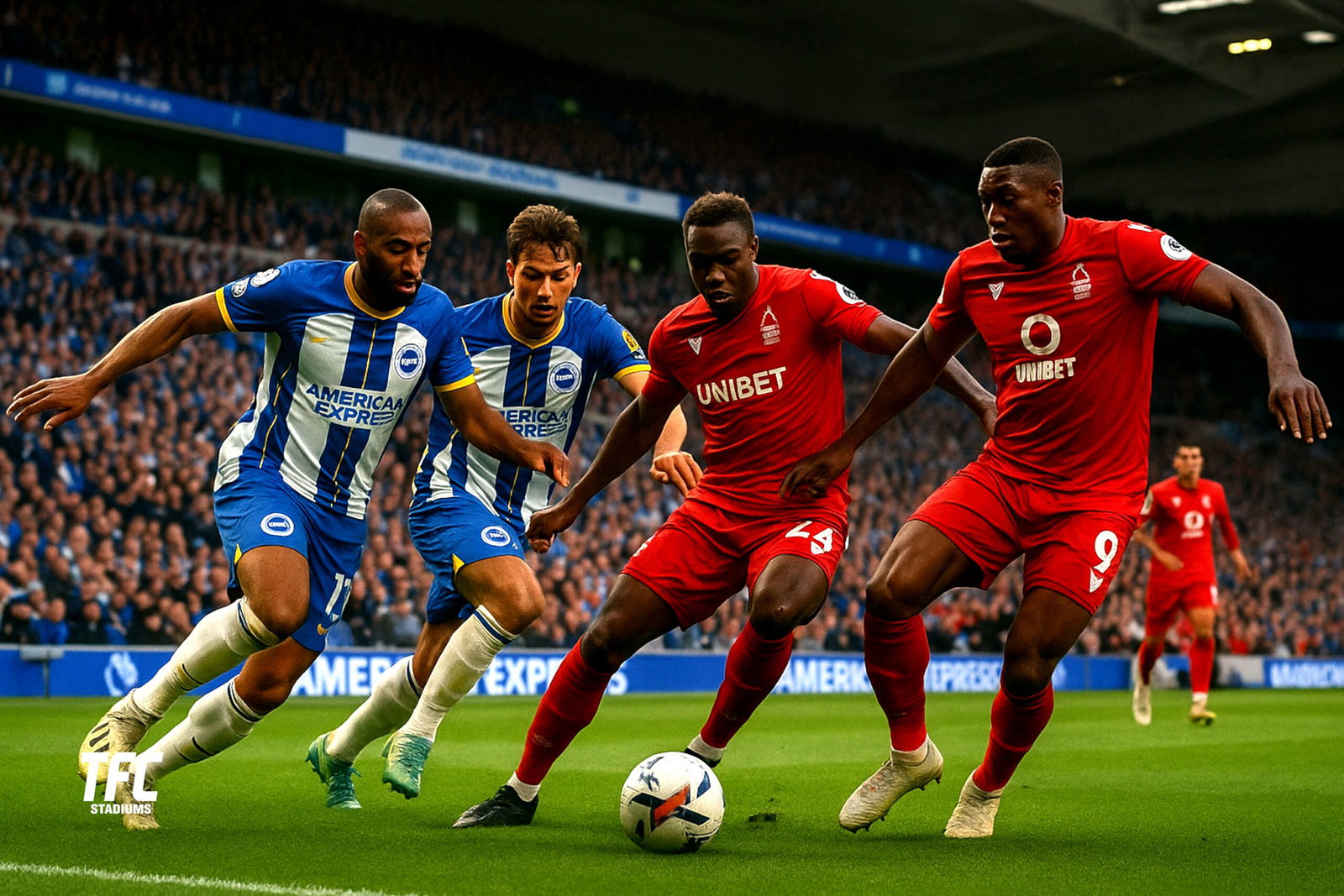
Brighton at home has its own rhythm. The Amex sits out toward Falmer with that wide bowl shape that traps noise on good days and lets it drift away on others. When Forest arrive, there is usually a slightly restless energy in the crowd. Part of it comes from Brighton fans expecting controlled possession and tidy movement. Part of it comes from Forest’s habit of leaning into direct surges and sudden breaks. Put the two together and you get matches that flick between calm patterns and sharp bursts of chaos.
The fixture has not carried the weight of the Premier League’s long established rivalries, yet it feels alive partly because both clubs have spent the past decade reinventing themselves. Brighton rebuilt through structure and clear planning. Forest returned to the top level and reacted with heavy squad turnover, constant tactical reshuffles and a sense that anything might happen. The contrast is great for neutral fans and slightly nerve wracking for anyone in the stadium who has chosen a side.
A short historical overview
Most meetings before the Premier League era came in the lower divisions where both clubs spent long stretches trying to recapture ambition. There were scrappy draws, narrow wins and the odd match that slipped completely out of control. The tone shifted once the Amex became Brighton’s home. Forest found it a difficult place to settle in some years, while Brighton used it as a launchpad during their rise under managers with very different approaches.
In the Premier League, Brighton’s possession game usually defines the pace. Forest often respond by dropping into compact zones, then springing forward once they steal the ball. This clash of tempos makes the fixture strangely unpredictable. You can have eighty minutes of control followed by one break that undoes the whole plan.
Tactical texture
Brighton build through the thirds with short passing, rotation between full backs and midfielders and patient probing. When they are confident, the moves look almost rehearsed. When they are not, they overplay and give Forest exactly the sort of turnover they look for.
Forest lean on individual dynamism. Quick wide players, strong runners from midfield and a willingness to play forward early. They may spend long spells without the ball, but they can cause damage in moments if Brighton’s structure slips.
Set pieces also matter more in this fixture than people admit. Both teams have conceded soft goals from dead balls at times, and the Amex has seen a few during this matchup that completely changed the tone of the game.
Players who usually shape the match
Brighton’s creators, often operating between the lines, determine how comfortable the home side feel. When they find pockets of space, Forest struggle. When Forest crowd those zones, Brighton end up funnelled wide and become predictable.
Forest’s danger usually comes from quick transitions and runners who do not give defenders time to settle. One well timed dribble or diagonal ball can expose Brighton’s high positioning.
Goalkeepers often play a bigger role than expected. Brighton’s distribution from the back can draw pressure. Forest’s shot stoppers tend to face long spells of waiting followed by one or two heavy moments that define the afternoon.
Atmosphere at the Amex
This fixture does not have the animosity of a traditional rivalry, but it does carry a steady tension. Brighton supporters expect their team to dictate the game at home. Forest fans travel with defiance and a sense of identity rooted in their club’s long story. What you get is a stadium that grows louder as chances build, then turns tight whenever Forest break free.
It also helps that Forest bring large away followings. Their colour adds something the Amex benefits from on these kinds of matchdays. You do not get hostility so much as a competitive edge that gives the match a sharper outline.
Recent patterns
Results have swung depending on form, availability and whoever settles into their style first. Brighton often start brighter. Forest often finish stronger. There have been scorelines that looked comfortable on paper but felt stretched in the stadium. There have also been tactical stalemates where neither side could quite find the spark.
What stands out most is that neither team ever seems fully safe. Brighton can create ten chances and still need a late recovery tackle. Forest can defend bravely for an hour only to be undone by a single lapse. The balance keeps supporters locked in even when the match slows.
Why this fixture works
There is an honesty to it. Brighton rely on clarity and patterns. Forest rely on rhythm shifts and direct bravery. When one style disrupts the other, you end up with sudden swings that feel far more dramatic than the pre-match odds suggest.
It is also a meeting of two fanbases that understand long rebuilds, triumphs snatched late and occasional heartbreak. That shared history shapes the atmosphere even when the teams take different paths on the pitch.
About the Author