For most fans, cold weather adds atmosphere to the game. The mist over the pitch, the players’ breath hanging in the air, the crowd stamping to stay warm, it is all part of the theatre. But some venues push endurance to its limits. These are the stadiums where the mercury plummets, the wind bites, and playing becomes as much a test of resilience as skill.
Lambeau Field (Green Bay, USA)
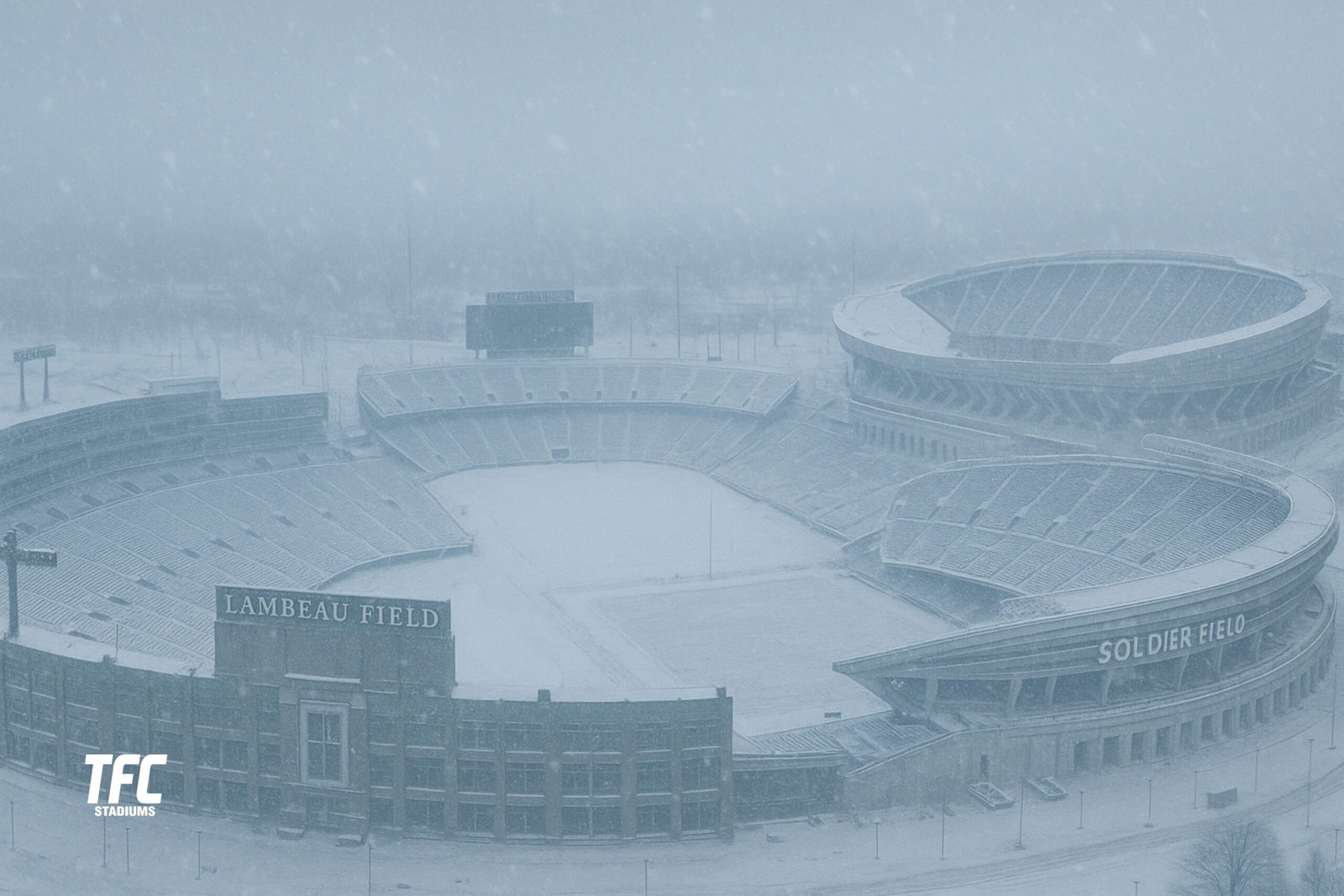
Few places embody cold-weather sport like Lambeau Field. Home to the Green Bay Packers, temperatures have dropped to −25°C (−13°F) during infamous playoff games. The “Ice Bowl” of 1967 remains the benchmark, a contest fought in air so cold referees’ whistles froze to their lips.
- Opened: 1957
- Capacity: 81,441
- Average Winter Temperature: −6°C
- Notable Moment: 1967 NFL Championship, “The Ice Bowl”
Lambeau is built for it, with heated turf, fans wrapped in thermal blankets, and a community that seems immune to frostbite.
Soldier Field (Chicago, USA)
Perched beside Lake Michigan, Soldier Field is battered by icy winds that make even a mild day feel brutal. The Chicago Bears have long turned this to their advantage, thriving in home games that send visiting teams into shivers.
- Opened: 1924 (renovated 2003)
- Capacity: 61,500
- Average Winter Temperature: −5°C
- Notable Moment: 1985 Bears home run under sub-zero conditions
Chicago’s “Windy City” tag is not just a cliché, it is a tactical factor. The wind can turn punts into chaos and make every pass a gamble.
TCF Bank Stadium (Minneapolis, USA)
Before U.S. Bank Stadium gave the Minnesota Vikings a roof, their temporary home at TCF Bank Stadium was merciless. In 2015, a Wild Card playoff game against Seattle recorded −21°C with wind chill, the coldest in franchise history.
- Opened: 2009
- Capacity: 50,805
- Average Winter Temperature: −10°C
- Notable Moment: 2015 NFC Wild Card, Vikings vs Seahawks
Players wore balaclavas, fans layered like mountaineers, and hot chocolate sales rivalled ticket sales.
Lokomotiv Stadium (Nizhny Novgorod, Russia)
Russia offers no shortage of icy arenas, but Lokomotiv Stadium stands out. Situated on the banks of the Volga, temperatures regularly fall below −15°C in winter league fixtures. The combination of snow, wind, and concrete stands makes for one of the least forgiving environments in European football.
- Opened: 1932 (renovated 1997)
- Capacity: 17,800
- Average Winter Temperature: −12°C
- Notable Moment: Multiple frozen matches during Russian Premier League winters
When fans joke that they can see their breath for the full ninety minutes, they are not exaggerating.
Saputo Stadium (Montreal, Canada)
Canadian football brings its own version of cold endurance. Saputo Stadium, home to CF Montréal, often opens its MLS campaign with temperatures barely above freezing. The early-season games turn the pitch into a sheet of frost, and players frequently warm up in the locker room between drills.
- Opened: 2008
- Capacity: 19,619
- Average Early-Season Temperature: 0°C
- Notable Moment: 2013 home opener in sleet and −3°C conditions
Montreal fans are hardy, they simply bring thicker scarves and louder voices.
Lerkendal Stadium (Trondheim, Norway)
In Norway, winter football comes with northern charm and biting air. Lerkendal, home to Rosenborg BK, sits near the Arctic Circle where snow is more reliable than sunshine. Even with undersoil heating, matches in March can test a player’s willpower.
- Opened: 1947
- Capacity: 21,421
- Average Winter Temperature: −4°C
- Notable Moment: Multiple Europa League fixtures in snow
The fans call it “football with frostbite,” though few would trade the atmosphere for a warmer seat.
Sapporo Dome (Hokkaido, Japan)
Japan’s northernmost stadium offers a rare hybrid of winter survival and modern comfort. The Sapporo Dome, used for football and baseball, features a retractable pitch that can move indoors to avoid snowstorms, a necessity given the −10°C winters of Hokkaido.
- Opened: 2001
- Capacity: 41,484
- Average Winter Temperature: −7°C
- Notable Moment: 2002 World Cup matches under artificial sky
If there were ever a stadium designed to outsmart the cold, this is it.
Lokomotiv Stadium (Novosibirsk, Siberia, Russia)
Yes, another Lokomotiv, but this one deserves its own category. Located deep in Siberia, Novosibirsk’s ground occasionally hosts matches in temperatures below −20°C. The turf often freezes despite heaters, and the ball itself becomes rock-hard.
- Opened: 1936
- Capacity: 12,500
- Average Winter Temperature: −15°C
- Notable Moment: Siberian Cup matches played in −18°C
Even for Russian footballers, it is a challenge few forget.
The Common Thread
From Green Bay’s frozen tundra to Siberia’s ice plains, these stadiums share a strange magnetism. They are places where endurance becomes legend, where supporters wear thermals like badges of honour, and where sport becomes something primal, a battle not just against the opponent but against nature itself.
Comparison Table: The Coldest Stadiums in World Sport
| Stadium | Location | Capacity | Coldest Recorded Temperature | Average Winter Temperature | Notable Moment |
|---|---|---|---|---|---|
| Lambeau Field | Green Bay, USA | 81,441 | −25°C (−13°F) | −6°C | 1967 NFL Championship “Ice Bowl” |
| Soldier Field | Chicago, USA | 61,500 | −15°C (wind chill) | −5°C | 1985 Bears home run under sub-zero conditions |
| TCF Bank Stadium | Minneapolis, USA | 50,805 | −21°C | −10°C | 2015 NFC Wild Card vs Seahawks |
| Lokomotiv Stadium (Nizhny Novgorod) | Nizhny Novgorod, Russia | 17,800 | −18°C | −12°C | Russian Premier League winter fixtures |
| Saputo Stadium | Montreal, Canada | 19,619 | −8°C | 0°C | 2013 home opener in sleet and frost |
| Lerkendal Stadium | Trondheim, Norway | 21,421 | −10°C | −4°C | Europa League snow fixtures |
| Sapporo Dome | Hokkaido, Japan | 41,484 | −10°C | −7°C | 2002 World Cup matches under artificial sky |
| Lokomotiv Stadium (Novosibirsk) | Siberia, Russia | 12,500 | −22°C | −15°C | Siberian Cup matches in extreme cold |
TFC Takeaway
Each of these grounds tells its own story of endurance. Some, like Lambeau Field, have become shrines to cold-weather sport. Others, like Sapporo or Novosibirsk, reflect how geography dictates design.
In these frozen fortresses, players do not just compete; they survive. Every pass, every kick, every cheer is a small act of defiance against the elements. And for those lucky or stubborn enough to sit in the stands, the memory of those bitter winds often outlasts the result itself.
About the Author