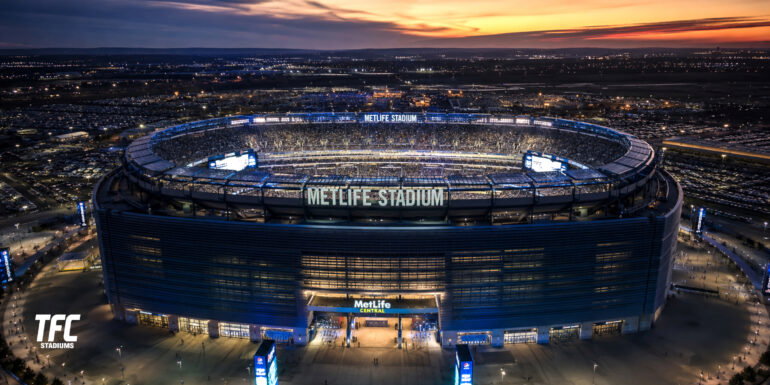
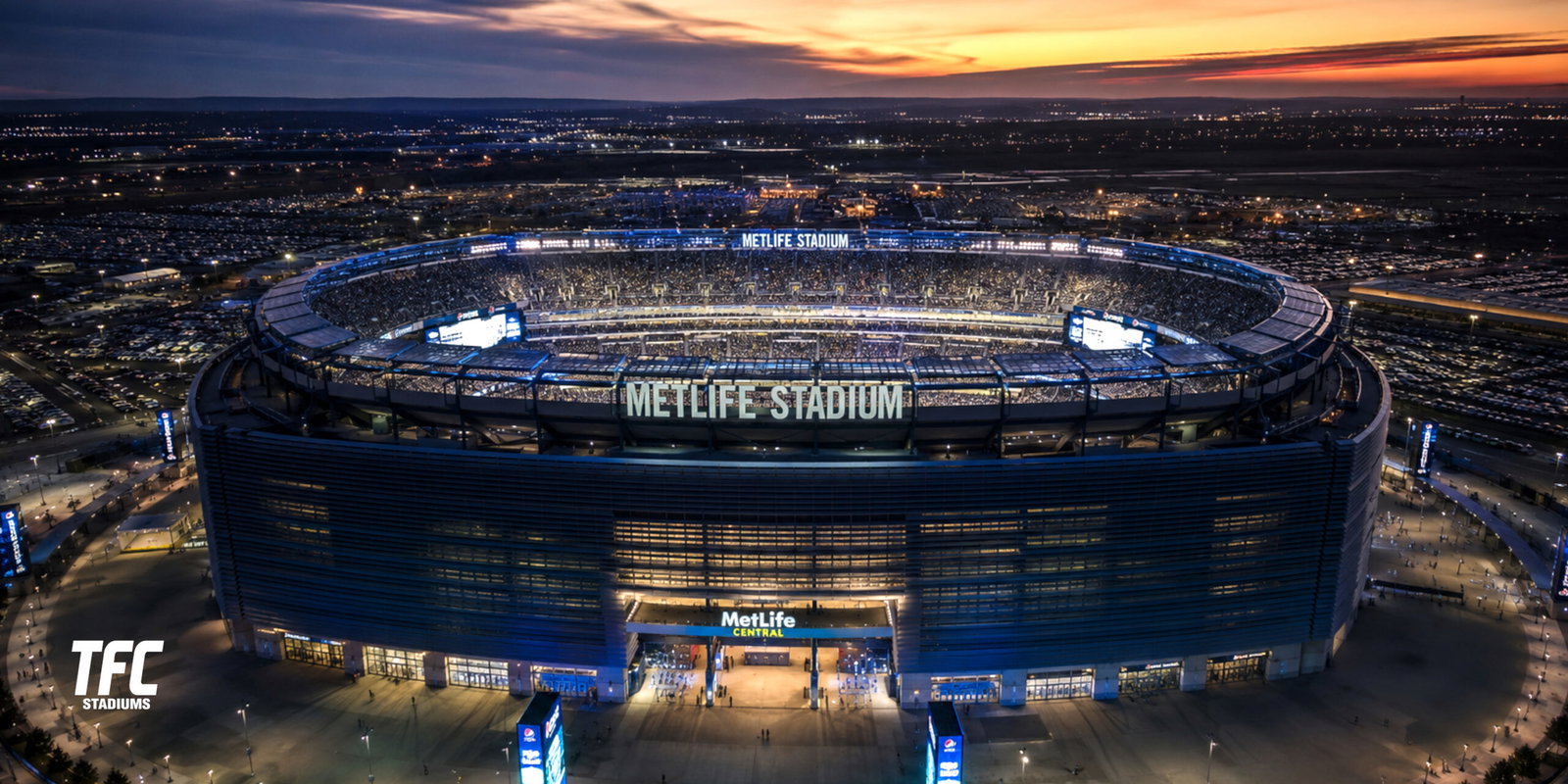
MetLife Stadium rarely gets the same architectural praise as SoFi Stadium’s sweeping roof or Allegiant Stadium’s futuristic black shell. It is easy to overlook because, on the surface, it looks practical rather than flashy.
That would be a mistake.
The home of the New York Giants and New York Jets is one of the most ambitious engineering projects ever completed in American sport. It had to satisfy two NFL franchises, withstand brutal East Coast winters, accommodate everything from international football to monster trucks, and safely welcome more than 82,000 fans several dozen times every year.
That is less about creating a pretty building and more about solving an endless series of engineering puzzles.
Sometimes the greatest engineering achievement is making something so reliable that people barely notice it.
Stadium Facts
| Feature | Detail |
|---|---|
| Opened | 2010 |
| Location | East Rutherford, New Jersey |
| Capacity | Approximately 82,500 |
| Construction Cost | Around $1.6 billion |
| Steel Used | Over 40,000 tons |
| Concrete | More than 500,000 cubic yards |
| Height | Approximately 145 feet |
| Architect | EwingCole, 360 Architecture, Rockwell Group |
| Structural Engineer | Thornton Tomasetti |
Built for Two NFL Franchises
Most stadiums are designed around one club’s identity.
MetLife Stadium had to satisfy two.
That sounds simple until you realise both organisations wanted the building to feel like home while sharing almost every piece of infrastructure.
Engineers developed systems allowing much of the stadium’s branding to change quickly.
These include:
- Digital signage
- LED lighting
- Field graphics
- Locker room branding
- Internal banners
- Sponsor displays
The building essentially transforms between Giants and Jets home games without requiring structural changes.
It is comparable to having two different houses sharing the same foundations while convincing both owners they live alone.
The Steel Skeleton
The most important part of MetLife Stadium is invisible once fans take their seats.
Its structural steel frame carries enormous loads generated by:
- More than 82,000 spectators
- Roof structures
- Giant video boards
- Lighting rigs
- Mechanical systems
- Wind loading
- Snow accumulation
Over 40,000 tons of structural steel were fabricated with remarkable precision.
Every beam had to align perfectly despite the enormous scale involved.
Steel remains the preferred material because it offers an excellent balance between strength, flexibility and long term durability.
Unlike concrete alone, steel allows controlled movement during changing weather conditions without compromising structural integrity.
Designing for East Coast Weather
New Jersey experiences almost every weather condition imaginable.
Summer heat.
Heavy rain.
Winter snowstorms.
Strong winds.
Freezing temperatures.
The stadium’s engineering accounts for all of them.
The roof canopy is designed to resist substantial snow loads while drainage systems quickly remove rainfall before excess weight becomes an issue.
Expansion joints throughout the structure allow materials to expand during summer and contract during winter without damaging the frame.
These tiny movements are measured in millimetres, yet they prevent millions of pounds worth of future repairs.
Wind Engineering
Large stadiums effectively create their own weather.
Air flows around curved walls, through entrances and beneath roof structures in unpredictable ways.
Before construction, engineers used computational modelling and wind tunnel testing to understand airflow around the stadium.
This influenced:
- Roof geometry
- Façade openings
- Entrance placement
- Cladding design
The result reduces uncomfortable wind gusts while protecting structural elements from unnecessary stress.
It also improves comfort for spectators sitting near the upper levels.
An Aluminium Skin That Changes Personality
Unlike many concrete stadiums, MetLife Stadium features an outer skin made from aluminium louvres.
These lightweight panels serve several purposes.
They reduce the apparent mass of the building.
They improve ventilation.
They create changing visual effects depending on sunlight.
At night, integrated lighting transforms the entire exterior.
Giants blue.
Jets green.
Concert colours.
International event branding.
The aluminium system weighs significantly less than comparable solid cladding while requiring relatively little maintenance.
It is engineering quietly pretending to be architecture.
Foundations Built for Heavy Loads
Supporting a stadium weighing hundreds of thousands of tons is no small challenge.
Before the first steel column appeared, engineers carefully analysed soil conditions across the Meadowlands site.
Deep foundations distribute the enormous loads safely into stable ground beneath the surface.
Settlement monitoring continued throughout construction to ensure every section behaved exactly as predicted.
Even slight movement could have affected structural alignment.
Fortunately, the stadium has performed exceptionally well since opening.
Sightlines That Required Structural Precision
One overlooked engineering achievement is simply ensuring everyone can see the action.
Designing uninterrupted sightlines requires careful coordination between:
- Seating angles
- Structural columns
- Roof supports
- Broadcast equipment
- Video boards
Large steel trusses carry roof loads without blocking spectators’ views.
Every seat was modelled digitally before construction began.
It sounds obvious now, but achieving clear views for more than 82,000 people simultaneously requires extraordinary precision.
Massive Video Boards
The stadium’s giant HD video displays weigh many tons.
Supporting them involves much more than hanging screens from steel beams.
Engineers had to account for:
- Dead loads
- Dynamic wind forces
- Maintenance access
- Electrical infrastructure
- Future upgrades
The supporting framework allows components to be replaced without major structural modifications.
Technology evolves much faster than buildings, so flexibility matters.
Moving Nearly 83,000 People Efficiently
One of the biggest engineering challenges has nothing to do with football.
It is moving tens of thousands of people safely.
MetLife Stadium includes:
- Wide concourses
- Hundreds of entry points
- Multiple stair towers
- Escalators
- Passenger lifts
- Carefully modelled circulation routes
Computer simulations helped predict crowd movement during:
- Kick-off arrival
- Half-time
- Emergency evacuation
- Full-time departures
Good crowd engineering often goes unnoticed.
Bad crowd engineering becomes tomorrow’s headline.
Building for Every Type of Event
NFL games only occupy part of the calendar.
The venue regularly hosts:
- International football
- Concerts
- WrestleMania
- College football
- Ice hockey events
- Festivals
The playing surface, utilities and loading infrastructure were designed to adapt quickly between events.
Heavy trucks can access the stadium efficiently.
Temporary stages can be assembled safely.
Broadcast compounds connect into permanent communications infrastructure.
That versatility generates revenue throughout the year while reducing downtime.
Sustainability Through Practical Engineering
MetLife Stadium was designed before sustainability became a marketing buzzword, yet many engineering choices continue to deliver environmental benefits.
These include:
- High efficiency mechanical systems
- Water conservation measures
- Recycling programmes
- Energy efficient lighting upgrades
- Durable construction materials with long service lives
Perhaps the greatest sustainability achievement is longevity.
Buildings that remain useful for decades avoid the environmental cost of replacement.
Sometimes the greenest building is simply the one that keeps doing its job.
Preparing for the FIFA World Cup
Hosting matches during the 2026 FIFA World Cup has required further engineering improvements.
Infrastructure upgrades have focused on:
- Broadcast technology
- Security systems
- Communications networks
- Hospitality facilities
- Operational efficiency
Rather than rebuilding the stadium, engineers have modernised existing systems while preserving the structural framework.
That flexibility was built into the original design.
Safety Behind the Scenes
Modern stadium safety depends on thousands of systems working together.
MetLife Stadium incorporates:
| System | Engineering Purpose |
|---|---|
| Fire suppression | Rapid emergency response |
| Smoke control | Safe evacuation |
| Backup power | Essential services during outages |
| Structural monitoring | Long term performance assessment |
| CCTV integration | Crowd management |
| Public address systems | Emergency communication |
Most visitors never notice these features.
Engineers consider that a compliment.
Construction by the Numbers
| Statistic | Approximate Figure |
|---|---|
| Capacity | 82,500 |
| Cost | $1.6 billion |
| Steel | 40,000+ tons |
| Concrete | 500,000+ cubic yards |
| Suites | More than 200 |
| Club Seats | Approximately 10,000 |
| Construction Period | 2007 to 2010 |
These numbers illustrate the remarkable scale of the project.
Every component had to be delivered, assembled and inspected within a tightly managed construction programme.
How It Compares with Modern NFL Stadiums
| Stadium | Engineering Focus |
|---|---|
| SoFi Stadium | Giant canopy roof and integrated campus |
| Allegiant Stadium | Retractable natural grass field |
| Mercedes-Benz Stadium | Retractable petal roof |
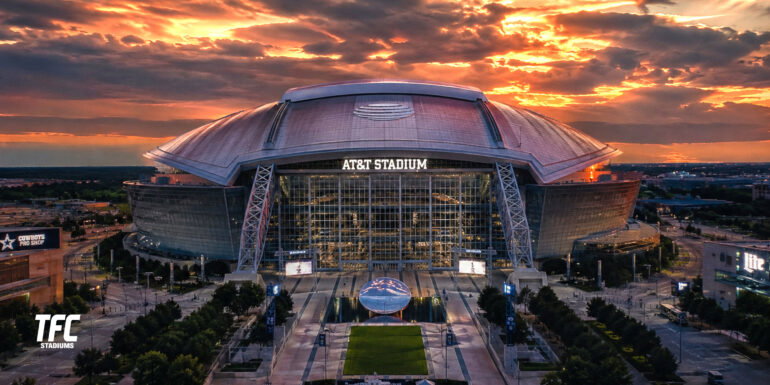
| AT&T Stadium | Massive retractable roof and giant video board |
| MetLife Stadium | Durability, flexibility and dual franchise operation |
MetLife deliberately avoided engineering extravagance.
Instead, it focused on reliability, adaptability and operational efficiency.
That philosophy has aged remarkably well.
Takeaway
MetLife Stadium may never win awards for architectural drama, and perhaps that is part of its charm.
It is the engineering equivalent of the dependable pickup truck parked beside a line of luxury sports cars. It might not attract the first glance, but when the weather turns ugly and the workload gets serious, it quietly gets on with the job.
Designing a stadium for two NFL franchises, nearly 83,000 spectators and an endless calendar of major events demanded practical thinking at every level. The steel frame, adaptable infrastructure, resilient foundations and carefully planned circulation systems have allowed the venue to host everything from Super Bowls to global concerts with remarkable consistency.
As newer stadiums push the limits of spectacle, MetLife continues to prove that lasting engineering is not always about chasing headlines. Sometimes it is about creating a building that performs so well people forget how complicated it really is. That might not be the flashiest achievement in modern sport, but engineers everywhere will probably appreciate it the most.
About the Author