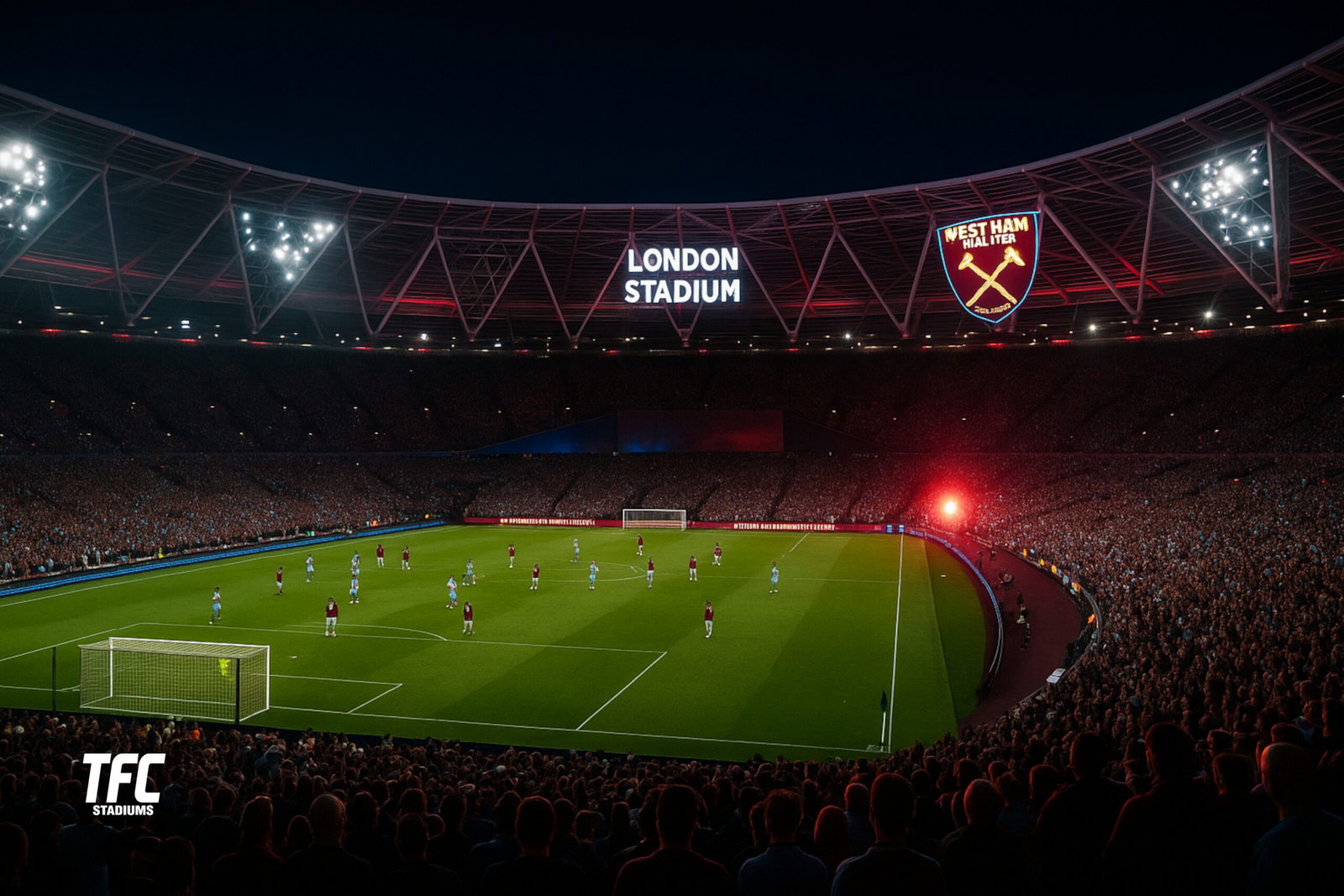
When West Ham United walked out at London Stadium for the first time, it was more than a football match. It was a statement of intent, a symbolic step from their Upton Park past to a future built on modern scale and ambition. The date was 4 August 2016, the opponent was NK Domžale, and the atmosphere was a mix of nostalgia, anticipation, and just a touch of disbelief.
The move from the Boleyn Ground to the former Olympic venue divided supporters, but that night, the noise that filled the 60,000-seat bowl made one thing clear: West Ham had arrived.
Setting the Stage
After 112 years at Upton Park, London Stadium represented a new era. The club’s tenancy deal followed the London 2012 Olympics, transforming the athletics venue into a Premier League arena. Critics questioned whether it could ever feel like home, whether the running track would sap atmosphere, or whether fans could recreate the intimacy of the old East End terraces.
But on that August evening, as claret and blue flags waved under the floodlights, it was hard not to feel the occasion’s magnitude.
The Match
Date: 4 August 2016
Competition: UEFA Europa League Qualifier (Third Round, Second Leg)
Opponent: NK Domžale (Slovenia)
Score: West Ham United 3–0 NK Domžale (West Ham won 4–2 on aggregate)
The Hammers, led by Slaven Bilić, needed to overturn a first-leg deficit. Goals from Cheikhou Kouyaté (two) and new signing Sofiane Feghouli sealed a commanding win, sending the crowd into raptures.
It was not just about progression in Europe, it was proof that football could belong in this new cathedral.
The Atmosphere
Supporters described the night as electric. Tens of thousands streamed through the Olympic Park, many arriving early just to take it all in. The club’s anthem, I’m Forever Blowing Bubbles, echoed off the stands with a fresh resonance.
While the stadium’s sightlines and acoustics drew mixed reviews early on, there was no questioning the passion. The team’s performance helped. So did the sense of history being made.
What It Meant
The debut at London Stadium marked a clean break from the Boleyn Ground era. It represented a club expanding its horizons, stepping into a venue capable of hosting Champions League nights (one day, perhaps) and large-scale events beyond football.
The move wasn’t without its teething problems, fan protests, seating disputes, and a loss of traditional matchday atmosphere followed in later months, but that first night was pure optimism.
For many fans, it was both an ending and a beginning: the final verse of an East End story, rewritten in the heart of Stratford.
Legacy
Nearly a decade later, that opening night still stands out as a turning point in West Ham history. The club has since grown into its new skin, hosting European nights that would have been unthinkable a generation earlier.
London Stadium may never fully replace the Boleyn in the hearts of older supporters, but it has carved its own identity, one built on ambition, resilience, and the roar of 60,000 voices finding a new home.
About the Author