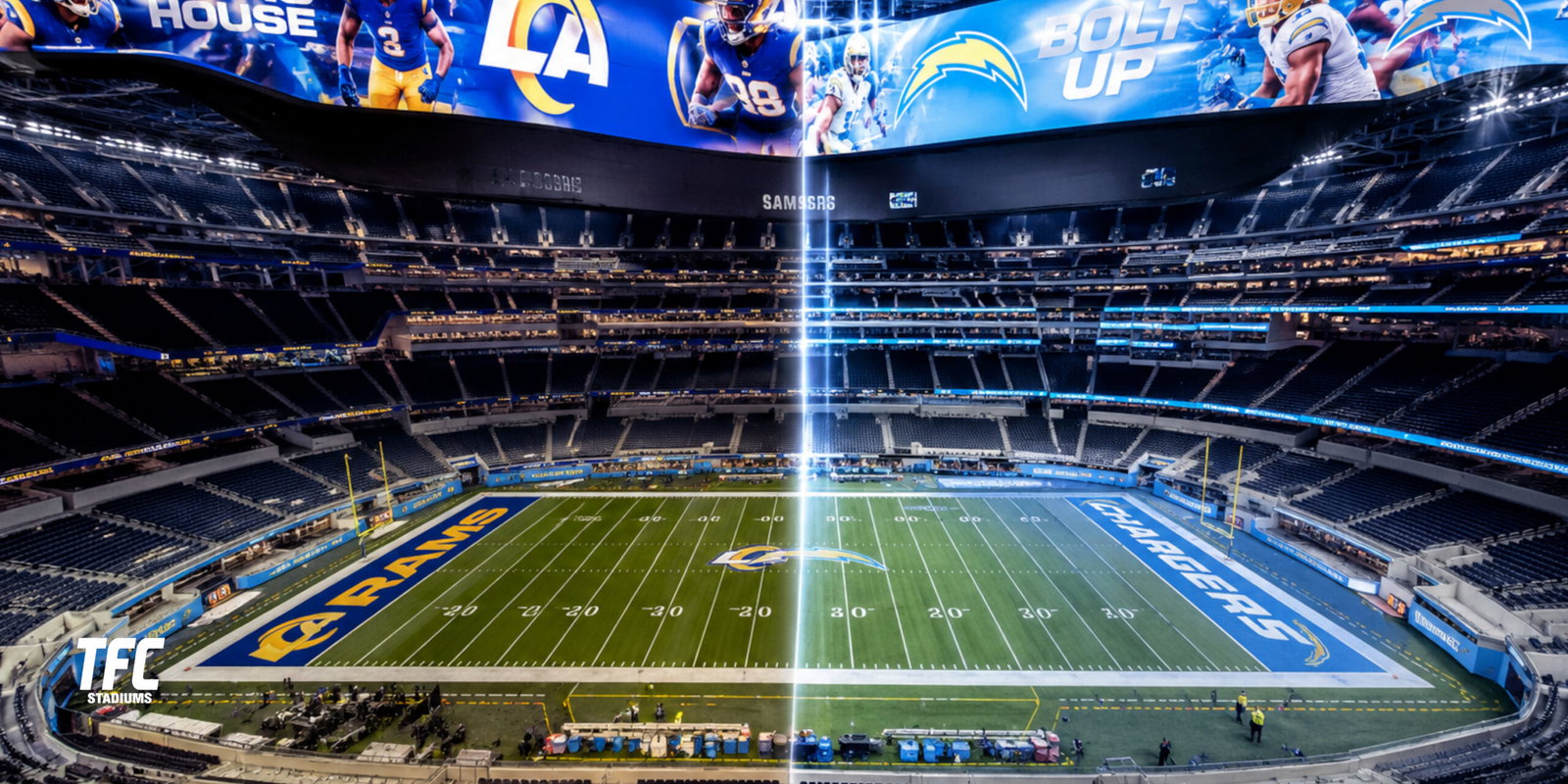
There are stadiums that host football games. Then there is SoFi Stadium, which occasionally feels like a giant Transformer built by engineers who got bored with normal construction projects.
One weekend you have the Rams charging out through blue-and-yellow smoke. A few days later the Chargers are warming up on powder blue branding. Then suddenly the whole place is hosting WrestleMania, a Taylor Swift concert, a College Football Playoff game or an international football match with barely a trace of the previous event left behind.
To fans sitting in the stands, the change looks effortless. It is not effortless. It is controlled chaos, backed by crews working overnight shifts, military-level planning and enough cable management to make your average office IT department burst into tears.
The field conversion process at SoFi is one of the most impressive behind-the-scenes operations in modern sport.
The Stadium Was Built for Constant Change
Unlike older stadiums that were designed around one team and one purpose, SoFi was created as a multi-event machine from day one.
The stadium hosts:
- Los Angeles Rams games
- Los Angeles Chargers games
- NFL Playoffs
- College football
- International football
- Concerts
- WWE events
- Corporate events
- Major ceremonies
That means the field itself has to transform constantly, often within days.
The challenge is not just swapping logos. Everything changes:
- Turf markings
- End zones
- Sideline branding
- Goalposts
- Bench layouts
- Media setups
- Lighting configurations
- Protective flooring
- Camera positions
It is basically a full theatrical production disguised as a sports venue.
Rams to Chargers, The Overnight Swap
The most common transformation is the switch between Rams and Chargers home games.
At first glance the teams share the same field dimensions, so you might assume the process is simple. It is not.
The stadium crew removes and replaces:
- End zone graphics
- Midfield logos
- Sponsor branding
- Wall coverings
- LED ribbon graphics
- Locker room details
- Exterior digital signage
The turf system itself is modular. Sections can be removed and replaced without rebuilding the entire surface. Crews work overnight to prepare the stadium for television broadcasts that expect every detail to look pristine.
And television cameras miss absolutely nothing. One crooked stencil line would end up dissected online like the Zapruder film.
The Turf System Is Smarter Than Most Apartments
SoFi uses an artificial turf system designed for durability and visual consistency.
That matters because the field takes an absolute beating throughout the year.
Unlike outdoor grass stadiums that can recover naturally through sunlight and weather, SoFi’s enclosed design requires heavy maintenance planning. Crews constantly monitor:
- Surface temperature
- Turf wear
- Paint adhesion
- Cushioning levels
- Drainage systems
- Seam integrity
The field has to look perfect under brutal 4K television lighting while also surviving linemen who weigh roughly the same as a vending machine.
Not an easy balance.
Concert Mode Completely Changes the Stadium
Concert conversion is where things get really interesting.
When SoFi hosts massive music events, the field often disappears beneath layers of protective flooring. Crews install staging systems, lighting rigs, speaker towers and backstage infrastructure across huge sections of the stadium.
The process can take days.
Heavy-duty flooring panels protect the turf underneath from thousands of fans, equipment carts and staging components. Massive cranes and rigging systems move into position while entire sections of seating and production space are reconfigured.
By the end of the transformation, the place barely resembles an NFL stadium.
Then a few days later it all gets reversed again, usually while somebody from operations survives entirely on coffee and stubbornness.
The Video Board Adds Another Layer of Complexity
The enormous Infinity Screen hanging above the field changes with every event too.
That giant double-sided display is not just showing replay clips. It becomes part of the atmosphere.
Different events require:
- Custom graphics packages
- Team branding
- Concert visuals
- Sponsor integration
- Lighting coordination
- Camera feed adjustments
The production crews running the screen essentially create a brand-new visual identity every time the stadium changes modes.
And because the board is so enormous, mistakes are impossible to hide. Accidentally leaving Rams branding visible during a Chargers introduction would probably cause an entire section of sports radio to explode.
International Football Creates a Different Look Entirely
When international football arrives at SoFi, the stadium undergoes another transformation.
The NFL markings disappear. The pitch dimensions shift. Advertising boards change positions. Technical areas are adjusted to fit FIFA or tournament requirements.
Even the atmosphere changes.
American football stadiums tend to feel segmented and theatrical. International football demands cleaner sightlines and a more continuous visual flow around the pitch.
The conversion teams essentially rebuild the stadium experience to match the sport being played.
That flexibility is part of why SoFi has become such a major destination for global sporting events.
The Hidden Army Behind the Scenes
The real stars of the operation are the conversion crews.
These teams work long overnight hours with incredibly tight deadlines. Weather, scheduling delays and broadcast demands leave almost no room for mistakes.
A typical conversion involves:
- Turf specialists
- Electricians
- Painters
- Logistics staff
- Grounds crews
- Broadcast technicians
- Cleaning teams
- Event coordinators
Most fans never think about them. They should.
Without these crews, modern stadium schedules would collapse within about two weeks.
Why SoFi Represents the Future of Stadium Design
Older stadiums were often permanent homes for one identity. SoFi is built around flexibility.
That is where modern sports business is heading.
Venues now need to function as:
- Sports arenas
- Concert venues
- Entertainment districts
- Media production hubs
- Corporate event spaces
The ability to completely reshape the field and stadium presentation is no longer a bonus feature. It is essential.
SoFi might be expensive, flashy and occasionally absurdly Hollywood, but it represents the direction stadium engineering is moving worldwide.
And honestly, if you are going to build a multi-billion-dollar stadium in Los Angeles, subtlety was probably never going to be part of the plan anyway.
TFC Takeaway
The field changes at SoFi Stadium are not just cosmetic touch-ups. They are massive logistical operations happening under brutal deadlines with millions of viewers ready to notice every mistake.
What fans see on game day is the polished final product. What they do not see is the overnight work, engineering precision and organised chaos required to make it happen.
It is one of the hidden spectacles of modern sport.
Right up there with NFL referees confidently explaining penalties nobody in the stadium actually understood.
About the Author