Modern MLB stadium design has moved well past concrete bowls and token nostalgia. Today’s best parks think about climate, technology, sightlines, neighbourhood integration, and what fans actually do between innings. Some get it right. Some try very hard and still feel like an airport terminal with foul poles.
This ranking focuses on architecture, materials, innovation, and how the building functions on game day. History matters, but this is about modern thinking rather than sentimental value. Written with the eyes of someone who has watched too many games from too many awkward angles.
Tier One. The Modern Standard Bearers
Globe Life Field
This is the future whether purists like it or not. Climate controlled, massive, unapologetically modern. Globe Life Field is built for Texas summers and October baseball, not postcard shots. The retractable roof actually works, the sightlines are clean, and the concourses feel engineered rather than improvised.
It does not try to charm you with exposed brick or nostalgia. It wants you comfortable, fed, and able to see a slider break at 95 mph. Mission accomplished.
Truist Park
Truist Park nailed the mixed use blueprint that half the league now wants to copy. The stadium itself is sharp and modern without being sterile, and The Battery turns game day into an all afternoon affair.
Architecturally, it balances tradition and modern design better than most. Brick where it makes sense, steel and glass where it matters. It feels like a ballpark that knows exactly what it is.
Oracle Park
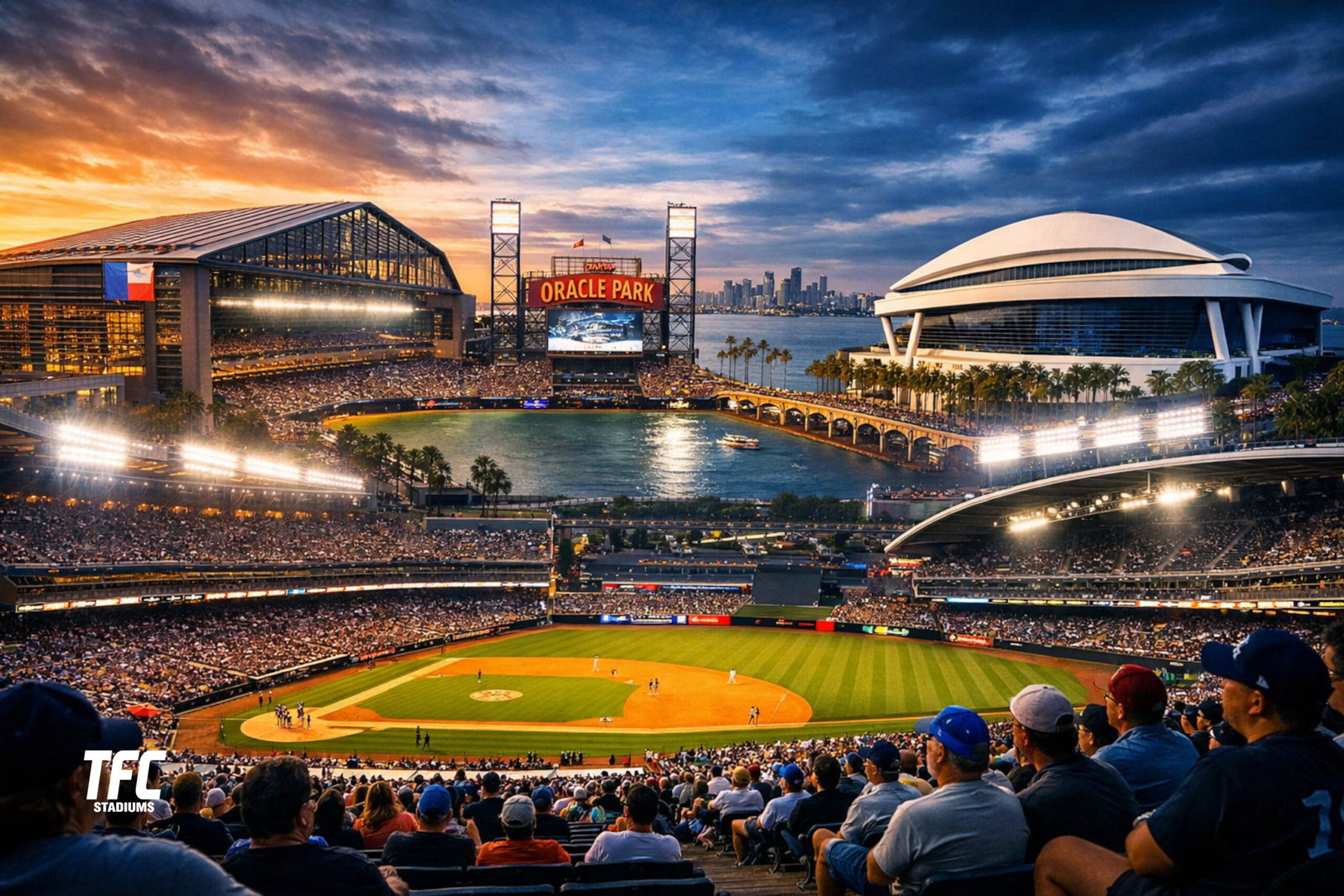
Technically older than some on this list, but still leagues ahead in intelligent design. Oracle Park integrates its environment better than any stadium in baseball. The views, the materials, the way the park opens to the city, it all feels intentional rather than ornamental.
This is modern design done with restraint. No gimmicks, just confidence.
Tier Two. Smart, Bold, With Minor Quirks
loanDepot park
Retractable roof, contemporary lines, and a layout built for heat and humidity. loanDepot park is cleaner and more modern than its reputation suggests. The interior sightlines are strong, the technology is solid, and it functions well as a year round venue.
Its biggest flaw is atmosphere, not architecture. Empty seats are not the building’s fault, no matter how often it gets blamed.
Target Field
Target Field is understated modernism done properly. Clean lines, thoughtful materials, and a layout that feels practical rather than flashy. It respects the game without drowning in retro cosplay.
Cold weather limits how adventurous it can be, but within those constraints, it delivers one of the league’s most coherent designs.
Tier Three. Modern Ideas, Mixed Results
Yankee Stadium
Expensive, imposing, and technically modern, but emotionally distant. The design prioritises scale and luxury over intimacy. From an architectural standpoint, it is impressive. From a fan experience standpoint, it can feel more corporate than communal.
A marvel of engineering that sometimes forgets baseball thrives on proximity and noise.
Citi Field
Citi Field improved significantly after early corrections. Modern amenities, strong concourses, and better sightlines than its predecessor. It works well, but lacks a defining architectural statement.
Solid, sensible, and occasionally forgettable.
Tier Four. Playing Catch Up
Dodger Stadium
Yes, it is iconic. No, it is not modern by design standards. Recent renovations have helped, especially in fan spaces and circulation, but the core structure remains a product of another era.
I love it more than I should. That does not make it cutting edge.
Fenway Park
A national treasure, an architectural time capsule, and an absolute nightmare if you care about symmetry, consistency, or legroom. Fenway survives on character, not modern design logic.
Great place to watch baseball. Poor place to study contemporary architecture.
TFC Takeaway
Modern stadium design is not about copying Camden Yards forever or building luxury boxes until the soul evaporates. The best parks understand climate, technology, urban context, and how fans actually move through space.
The league is slowly learning that comfort and clarity matter more than nostalgia cosplay. When the building disappears and the game takes over, that is when design has done its job.
About the Author