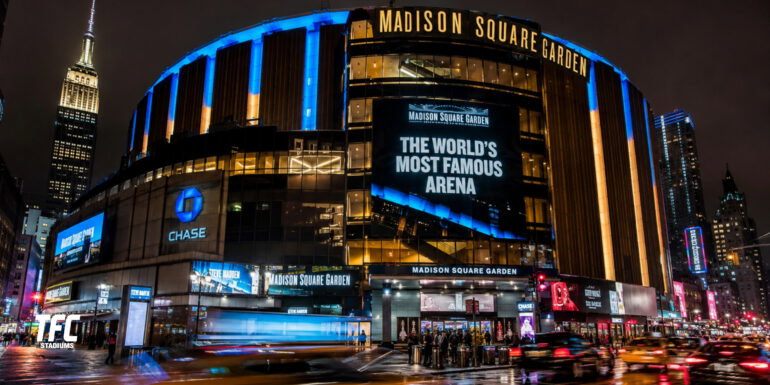
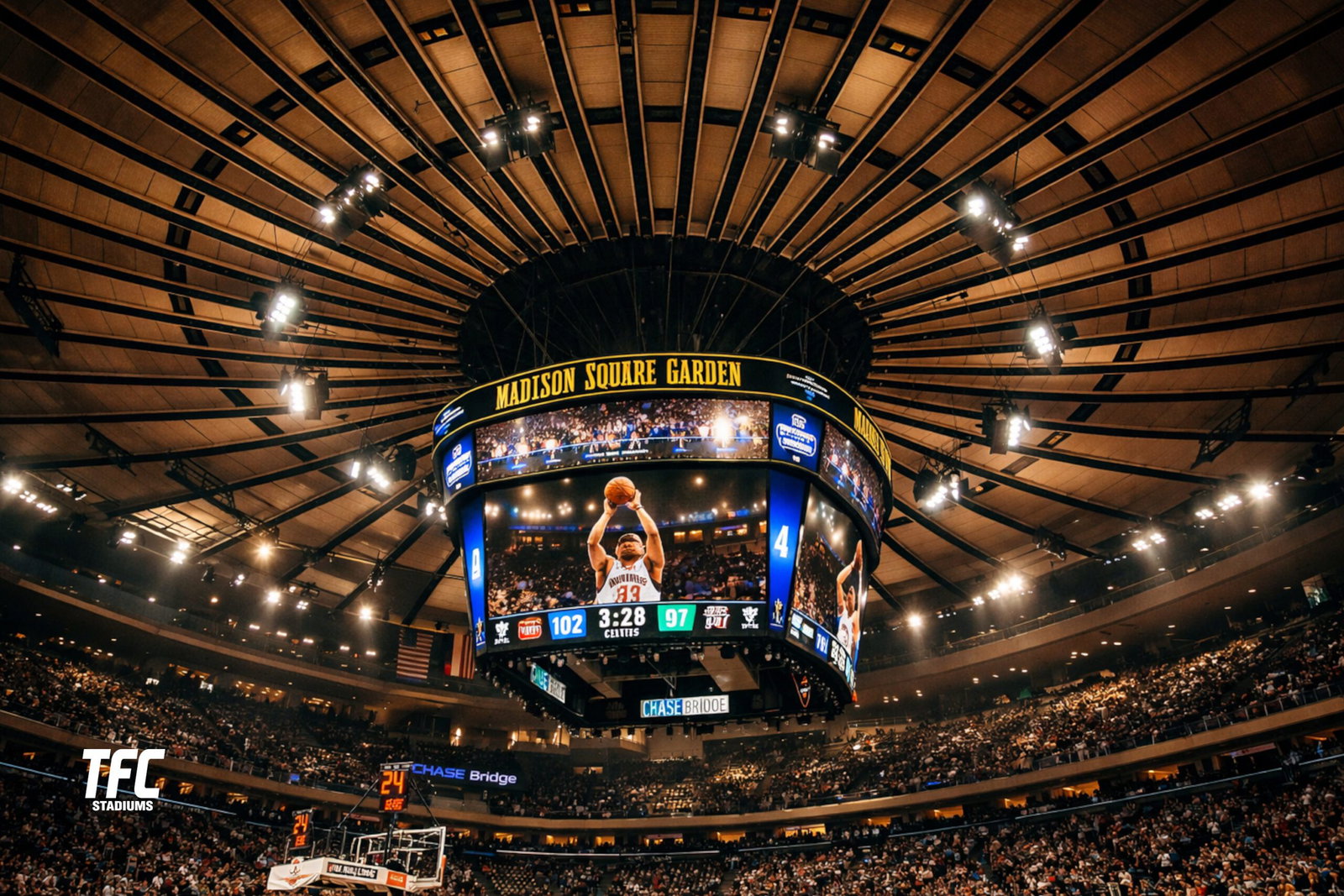
Madison Square Garden sits above Penn Station like a defiant shrug to conventional architecture. It is loud, busy, slightly awkward, and deeply New York. The roof is a huge part of that story. Fans notice it the moment they look up, players feel it the moment a shot goes up, and broadcasters have spent decades trying to explain it without sounding confused.
The Garden’s roof is not just a cover. It shapes sightlines, acoustics, lighting, and even the psychology of games played underneath it. If arenas had personalities, this one would be leaning forward, arms crossed, daring you to doubt it.
Why Madison Square Garden Needed a Different Roof
When the current Madison Square Garden opened in 1968, it was built on top of an active rail hub. That single fact dictated everything.
Traditional arenas rely on interior columns or perimeter supports. MSG could not. The tracks below needed clear space, which meant the roof had to carry itself without internal supports dropping down into the arena bowl.
The solution was ambitious. Engineers designed a suspended roof system that hangs from a compression ring rather than resting on columns. It was daring at the time and still unusual now.
This is why there are no obstructed views inside MSG. No poles. No support beams. Just a wide open bowl and a roof doing the heavy lifting like a veteran centre who never gets the credit.
How the Suspended Roof Actually Works
The roof is held up by a massive steel compression ring that sits around the top of the arena. From that ring, steel cables suspend the roof structure downward, rather than propping it up from below.
Think of it less like a lid and more like a chandelier turned upside down.
The roof weighs thousands of tonnes, yet its load is distributed outward and downward through tension. That design keeps the interior clear while allowing the arena to sit where it does.
It also explains why Madison Square Garden feels enclosed without feeling cramped. The ceiling is relatively low compared to modern NBA arenas, but it is uninterrupted, which keeps the space visually clean and acoustically intense.
The Famous Low Ceiling and Its Impact on the Game
Players talk about the Garden’s ceiling the way golfers talk about tricky greens. It is not actually low enough to interfere with play, but it feels close. That matters.
Shots arc differently under pressure, and depth perception can feel tighter than in newer, cavernous arenas. Visiting players have mentioned that jump shots can feel rushed, especially early in games.
For fans, the low ceiling traps sound. When the Knicks are good, or when a playoff crowd senses blood, the noise hits you from every direction. It does not float upward. It stays put and rattles around.
This is why Madison Square Garden can feel louder than arenas that are technically larger. Acoustics are not about size alone. They are about containment.
Lighting, Scoreboards, and the Modern Upgrades
The roof has been upgraded repeatedly, especially during the major renovations completed in 2013.
Modern LED lighting systems are integrated into the roof structure, providing even coverage without glare. That matters more than it sounds. Consistent lighting helps players track the ball and helps broadcasts avoid shadows that make viewers squint.
The famous centre-hung scoreboard also works in harmony with the roof. It hangs cleanly without overwhelming the space, a small miracle given its size and resolution. Unlike some arenas where the screen feels like it is descending on the court, MSG’s setup feels balanced.
This balance keeps the roof relevant rather than retro. It looks classic, but it functions like a modern arena should.
Why the Roof Adds to the Garden Mystique
Madison Square Garden mythology is built on moments. Buzzer beaters. Playoff runs. Boxing nights that felt like street fights in suits.
The roof plays a role in all of it. The enclosed feel keeps energy inside. Sound bounces back onto the court. Lights focus attention downward. There is nowhere for a moment to escape to.
Players often say the Garden feels different. This is part psychology, part history, and part architecture. When the roof traps 19,000 voices and points them at you, subtlety goes out the window.
You either rise to it or you get swallowed.
A Roof That Would Never Be Approved Today
It is worth saying this plainly. If Madison Square Garden were proposed today, someone would try very hard to talk everyone out of it.
Building an arena on top of an active train station, suspending a roof from a compression ring, and keeping a relatively low ceiling would raise more than a few eyebrows. Probably lawsuits too.
But that is the charm. The Garden is a product of a specific era, when bold ideas were more likely to be built than value engineered into beige submission.
The roof is not perfect. It creaks. It feels old school. It does not pretend to be futuristic. It just works, night after night, carrying the weight of history and a lot of very loud opinions.
Final Thoughts from the Cheap Seats
Madison Square Garden’s roof is not flashy, retractable, or covered in gimmicks. It does not open to the sky or glow like a spaceship. What it does is shape the experience in a way few arenas can.
It keeps the noise in. It keeps the focus tight. It reminds players that this is not just another stop on the schedule.
Some ceilings disappear. This one looms. And in New York, looming feels about right.
About the Author