A Roof Built for Atmosphere
When Brighton & Hove Albion moved into the American Express Community Stadium in 2011, the design brief was not just about capacity. The club wanted a ground that felt like home, one that held the sound of the supporters and carried it onto the pitch. The roof design became central to that ambition.
Curved, Not Boxed In
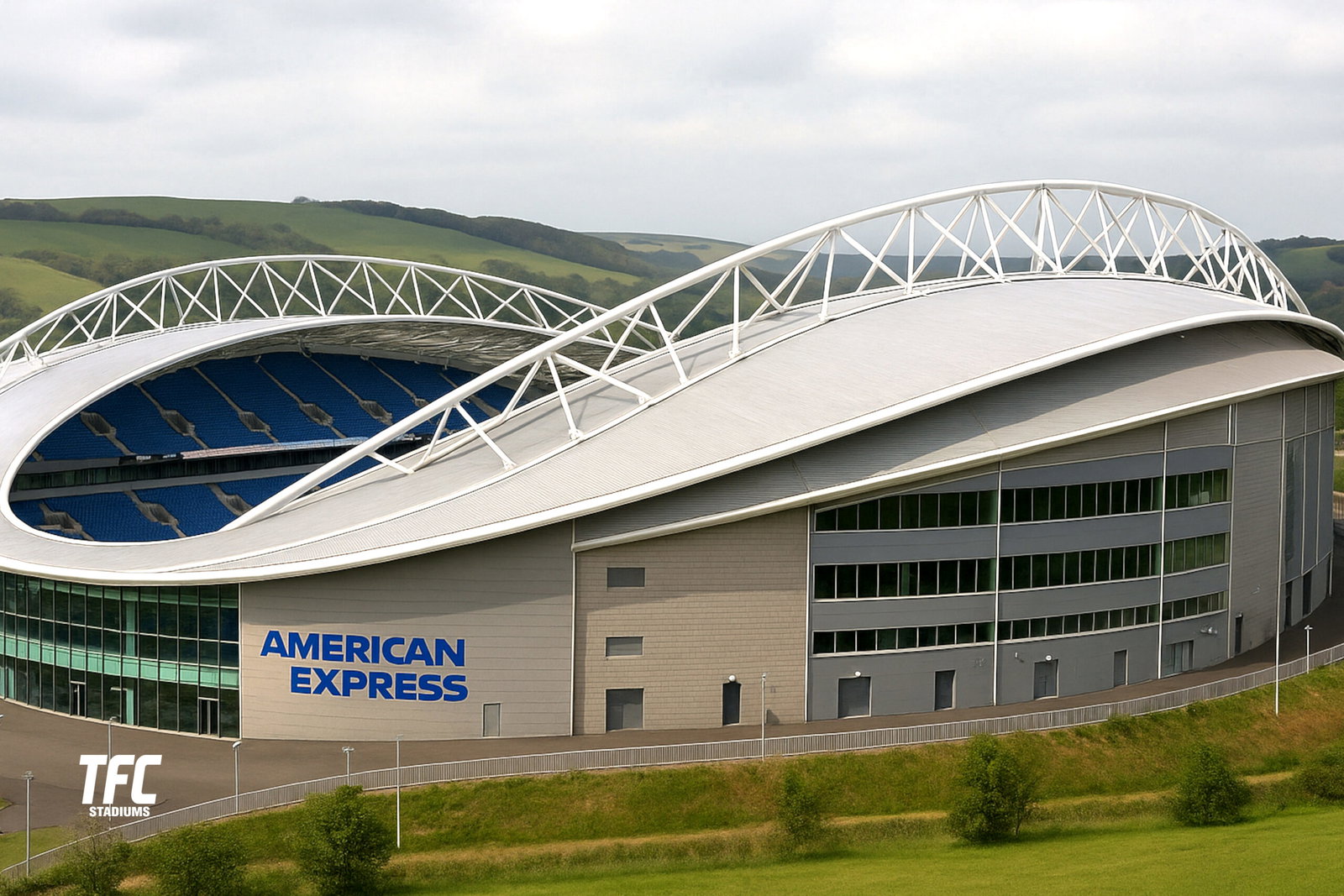
Unlike many modern stadiums that opt for boxy stands with flat coverings, the Amex features sweeping, asymmetric roofs that rise and dip in elegant arcs. The east stand, with its higher curve, creates a distinct profile visible from the nearby South Downs. It avoids the sterile feel of identikit stadiums and gives Brighton’s ground an identity of its own.
Engineering Meets Acoustics
The roof is clad in a translucent material that allows natural light to flood the stands while shielding fans from the elements. Its cantilever structure eliminates the need for obstructive pillars, leaving clear sightlines across the pitch. More importantly for atmosphere, the curvature traps and rebounds crowd noise, creating an intimidating soundscape despite the relatively modest capacity compared to Premier League giants.
Blending with the Landscape
Nestled on the edge of the South Downs National Park, the stadium had to meet strict planning conditions. The roof plays its part by reflecting local topography: its arcs echo the rolling hills around Falmer. From a distance, the structure feels less like an industrial blot and more like something that belongs in its setting.
A Platform for Growth
The design also built in flexibility. The north stand roof was extended in 2012 to accommodate extra seating, proving the structure could adapt without breaking the stadium’s aesthetic. With football’s demands ever evolving, the Amex roof shows how foresight in design pays off.
About the Author