Why Mestalla Matters
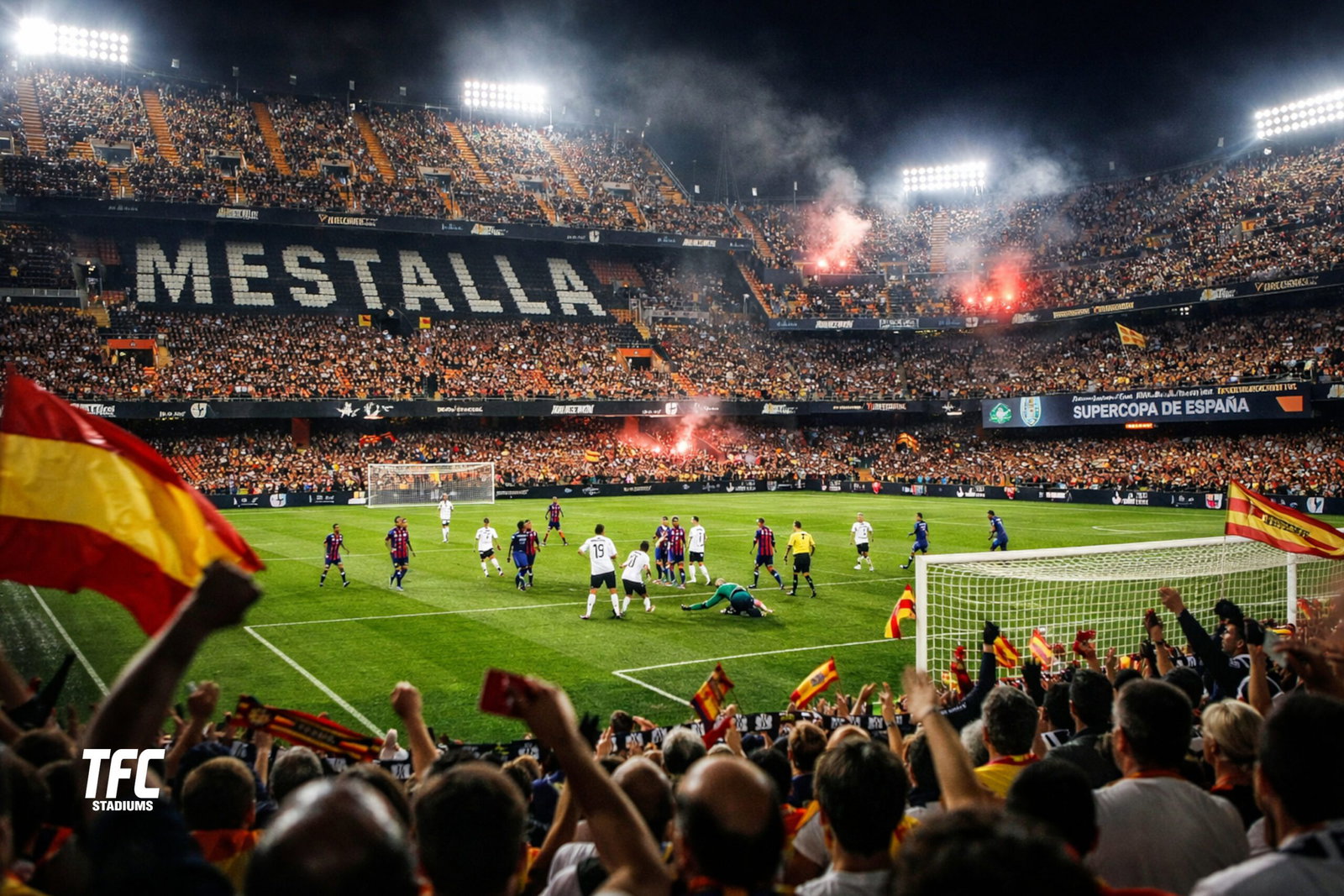
Mestalla Stadium is not a neutral venue in spirit, even when it is neutral on paper. Built in 1923 and packed tightly into the city, it feels more like a pressure chamber than a modern showpiece. Steep stands loom over the pitch, noise rebounds off concrete, and visiting players often discover that the crowd is much closer than television suggests.
For the Spanish Super Cup, that intimacy changes the tone. This is not a glossy exhibition curtain raiser. At Mestalla, it feels like a proper contest, one where reputation counts for less than nerve.
The Spanish Super Cup in Context
The Spanish Super Cup traditionally pits league champions against Copa del Rey winners, a neat summary of domestic dominance versus knockout grit. Before the tournament adopted overseas venues and expanded formats, matches held at grounds like Mestalla carried a sharper domestic edge. Fans knew the stakes. So did the players.
At Mestalla, the Super Cup has often felt less like a celebration and more like a statement. Win here and you earn more than silverware. You earn credibility.
Atmosphere on Super Cup Nights
Mestalla is loud on an ordinary league weekend. On a Super Cup night, it turns personal. The crowd does not simply support, it interrogates. Every loose touch gets a reaction. Every referee decision is treated as a personal insult.
This intensity suits teams willing to lean into chaos. It can unnerve sides expecting a polite opening fixture. Players talk about the noise coming in waves, not a constant hum but sharp bursts that hit just as concentration wavers.
Memorable Moments and Matchups
While the Spanish Super Cup has rotated venues and formats over the years, appearances at Mestalla have consistently delivered edge and bite. Matches here tend to be scrappy, emotional, and occasionally ill tempered. That is not an accident. The pitch dimensions, the proximity of the stands, and the crowd’s impatience all push games toward confrontation.
For neutrals, it is compelling. For players, it is exhausting. For supporters, it is exactly how a Super Cup should feel.
The Stadium Experience for Fans
Mestalla offers little in the way of modern luxury, and that is part of the appeal. Sightlines are excellent, even high up. You feel involved rather than entertained. Concessions are basic, queues are long, and nobody seems to care because the football comes first.
On Super Cup days, the city leans into the occasion. Bars fill early, scarves appear in shop windows, and by kick off the ground feels primed rather than prepared.
Mestalla Versus Modern Neutral Venues
Compared to newer stadiums or overseas hosts, Mestalla lacks polish but compensates with character. There are no distractions, no half time light shows, no sense of football as a product launch. The Spanish Super Cup here feels rooted in rivalry and pride, not branding.
That contrast is why many fans still look back fondly on Super Cups staged at grounds like this. They felt real.
Legacy of the Super Cup at Mestalla
Mestalla’s role in the Spanish Super Cup reinforces its broader reputation as one of Spain’s most demanding football arenas. It is not always comfortable. It is rarely forgiving. But it leaves a mark on matches and memories alike.
When the Super Cup comes to Mestalla, it stops feeling like a formality and starts feeling like a test. And in Spanish football, that still counts for something.
About the Author