Few stadium experiences can match the intensity of Borussia Dortmund’s Südtribüne. Known to the world as the Yellow Wall, this vast single terrace in the Signal Iduna Park has become a cultural and sporting landmark in its own right. It is not simply a stand; it is the voice, rhythm, and heartbeat of a club deeply intertwined with its community.
The Structure Behind the Sound
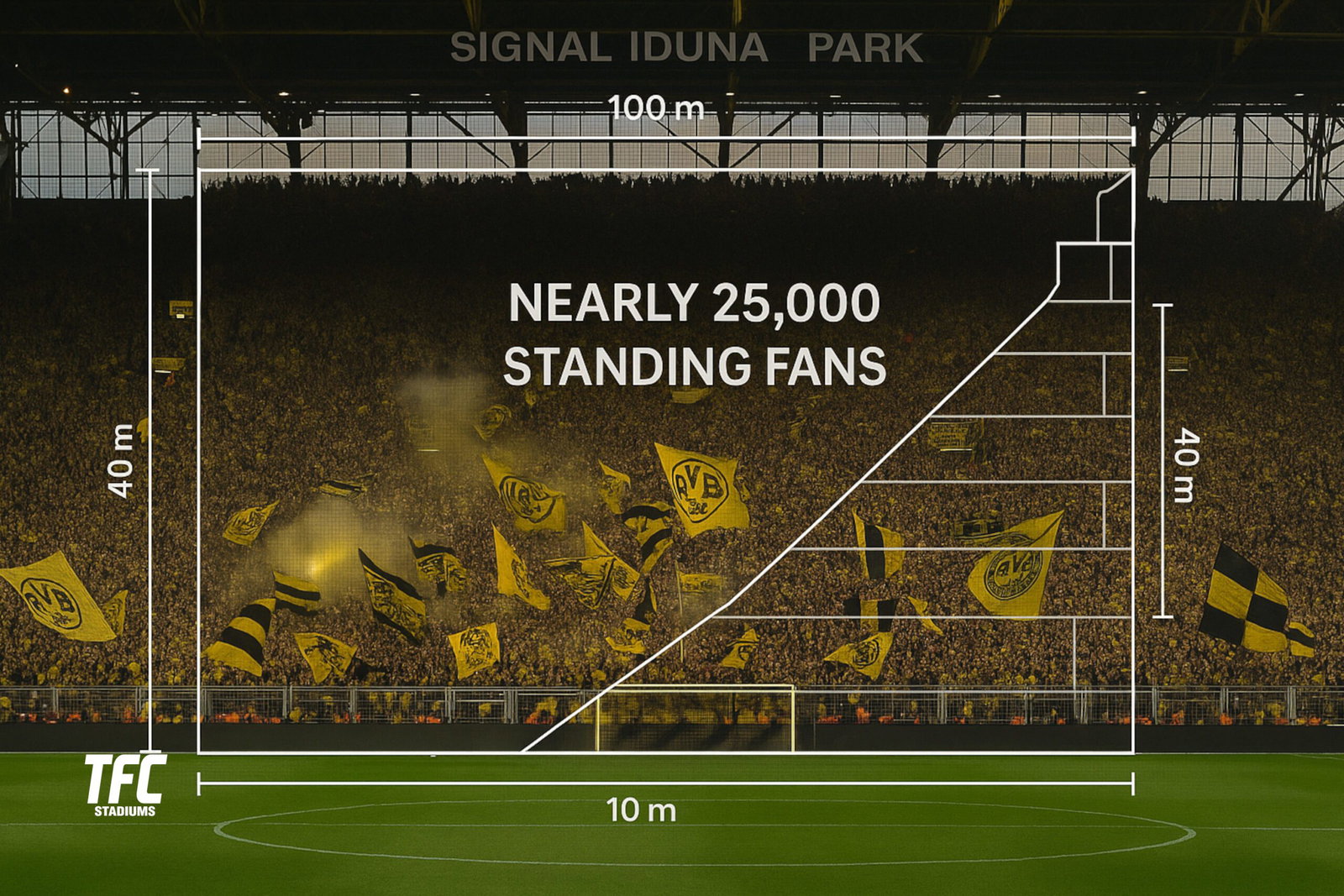
At 100 metres wide and 40 metres high, the Südtribüne holds nearly 25,000 standing fans, making it the largest terrace in European football. The acoustics of the stand amplify every chant, drumbeat, and collective roar, transforming Dortmund’s home matches into a sensory storm.
The steep gradient ensures that even those at the top feel close to the pitch. Every movement in the crowd seems to ripple down the yellow sea, especially during the famous pre-match anthem “You’ll Never Walk Alone,” when scarves stretch out in synchrony and the entire wall seems to breathe as one.
Tradition and Culture
The Südtribüne is not a place of spectators but of participants. Fans there view themselves as part of the match itself, influencing momentum through noise, rhythm, and unwavering presence. Generations of families occupy the same sections, and friendships form through years of shared tension, triumph, and despair.
The culture of Echte Liebe – “true love” – underpins the atmosphere. It is more than a slogan; it reflects an unspoken code among supporters to stand, sing, and never leave early, no matter the scoreline.
Matchday Rituals
The build-up begins long before kick-off. The pubs and streets surrounding the Westfalenstadion pulse with chants, flags, and smoke. Fans walk to the ground as a collective procession, drums echoing through the Ruhr air. Inside, the rhythm builds steadily until the first whistle, when the Südtribüne erupts in unison.
Certain fixtures, especially against rivals Schalke 04 or Bayern Munich, reach near-mythic levels of intensity. The stand becomes a wall of coordinated movement and song, with ultras leading chants from the centre and the wider crowd responding like an orchestra.
A Symbol of Identity
For Dortmund, the Südtribüne is a living emblem of resilience. The city’s industrial roots and working-class heritage resonate through the chants and banners. Many see the Yellow Wall as the purest form of football fandom left in the modern game, unfiltered passion untainted by corporate polish.
Visiting players and managers often speak of the stand with a mix of awe and intimidation. Jürgen Klopp famously described it as “the most beautiful wall in the world,” while others liken the experience of facing it to “playing against a wave of emotion.”
The Legacy and Influence
The Südtribüne has inspired similar fan sections across Europe and beyond, yet none have quite replicated its authenticity. Its influence is visible in supporter culture, stadium design, and club marketing, but its essence remains impossible to manufacture, born from decades of local loyalty and shared purpose.
Even during difficult seasons, the wall remains full. The fans sing for the badge, not the moment. That steadfastness has become part of Dortmund’s identity: a reminder that in football, atmosphere is not built by architecture alone, but by collective spirit.
TFC Takeaway
To witness the Südtribüne in full voice is to understand football at its most elemental, a place where song, sweat, and steel combine into something transcendent. It is not just where Dortmund plays. It is where Dortmund lives.
About the Author