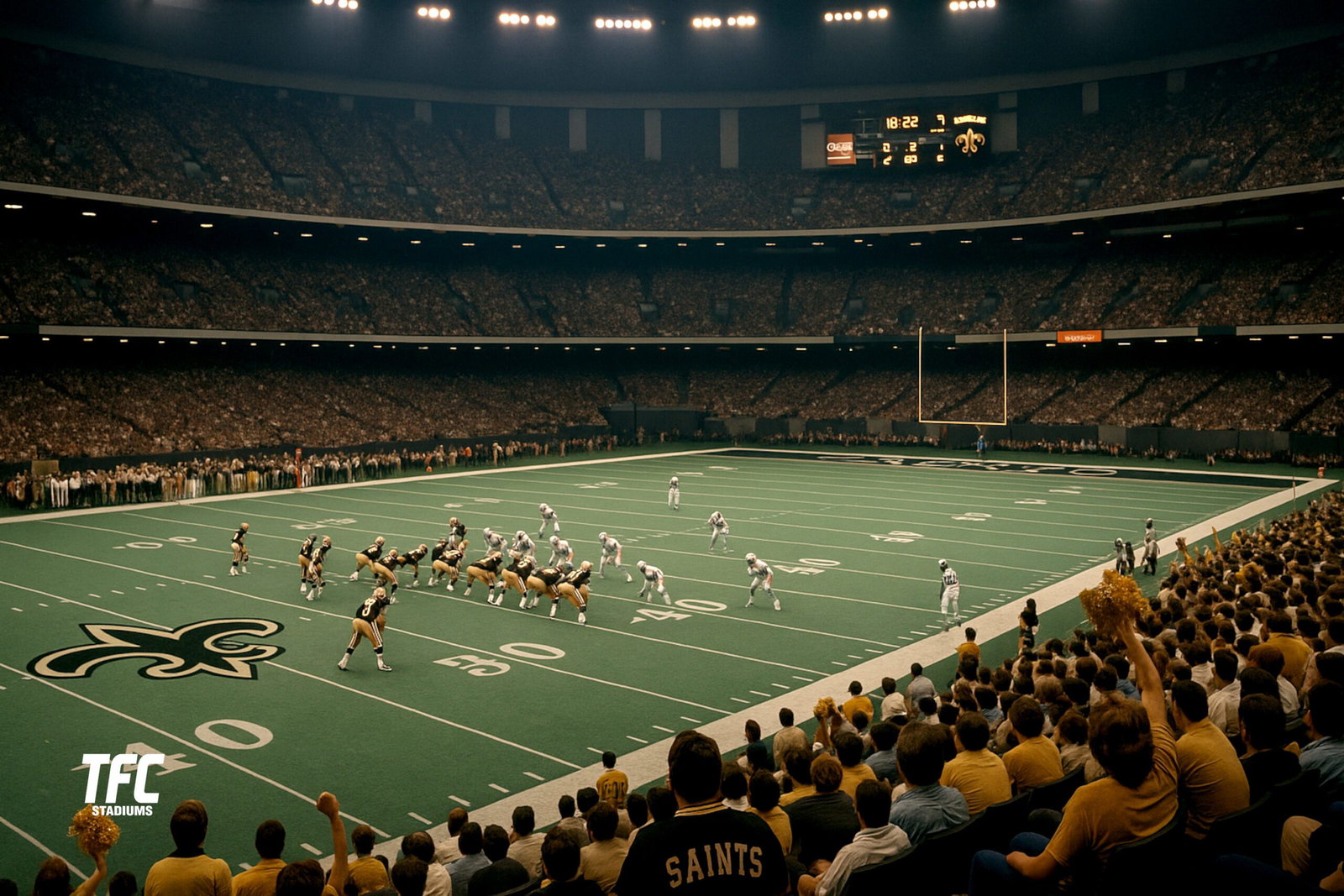
When the New Orleans Saints first ran out onto the field at the Louisiana Superdome on August 9, 1975, it wasn’t just a preseason exhibition. It was a declaration that the city was ready to play on the big stage. After years of heat-drenched Sundays at Tulane Stadium, the Superdome felt like stepping into the future. The air conditioning worked, the lights blazed like a movie set, and fans could finally enjoy football without melting into their seats.
A Dome Built on Hope
The Superdome was a bold idea even by the wild standards of the 1970s. At the time, no NFL stadium matched its size, style, or ambition. This was New Orleans’ moon landing, a massive, gleaming dome built in a city better known for brass bands and beignets. It cost about $134 million to complete, which was a fortune back then, and it instantly became one of the league’s most recognisable venues.
When the Saints hosted the Houston Oilers that first night, more than 72,000 fans packed the stands. The place roared like it had been waiting decades to exhale. Fans wore everything from gold jackets to Mardi Gras beads, and the band blasted “When the Saints Go Marching In” like it was a national anthem.
The Game Itself
The Saints didn’t get the fairytale start they were hoping for. The Oilers won 13–7, led by quarterback Dan Pastorini, who probably didn’t appreciate that the crowd booed him every time he touched the ball. Saints quarterback Archie Manning, the city’s golden boy, gave them reason to cheer with a few strong drives, but the team couldn’t quite close the deal.
Still, nobody left disappointed. The new dome had turned a sweltering August evening into something close to a celebration. The echoes of the cheers bounced off the curved roof, and it was clear this wasn’t just a venue. It was a promise that football in New Orleans had found a permanent home.
The Atmosphere
Ask anyone who was there and they’ll tell you the same thing: it was electric. Not polished, not perfect, but full of energy. The sound carried differently inside the dome, louder and more focused. You could feel the bass from the band and the crowd rumbling under your shoes. Even the vendors were into it, hollering out for hot dogs and cold beer like they were calling plays.
The halftime show included a local brass ensemble that strutted out as if they were leading a second line through the French Quarter. That blend of football and New Orleans culture would become a defining feature of the Superdome experience.
What It Meant
That night didn’t just open a building. It marked the start of a new era for the Saints and the city. Over the decades, the Superdome would host everything from Super Bowls to college championships to concerts that shook its roof. It would also become a symbol of resilience, especially after Hurricane Katrina, when it turned into both a shelter and a monument to survival.
But back in 1975, it was simply about football. A city that had long lived on charm and improvisation had finally built something monumental. The Saints might have lost, but New Orleans had already won.
About the Author