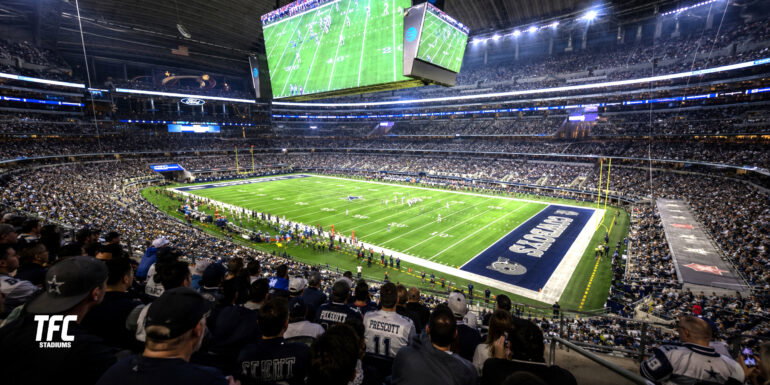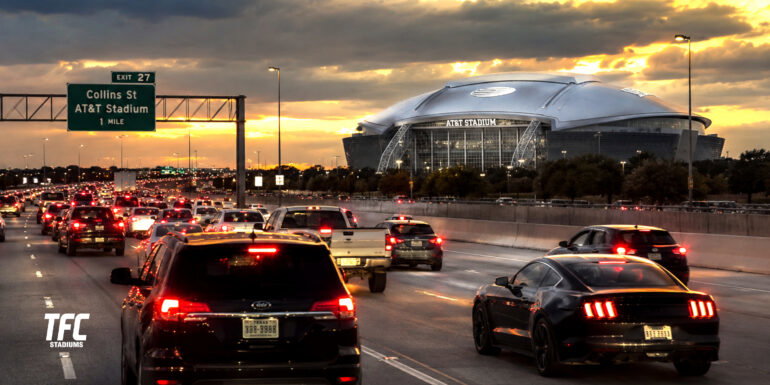
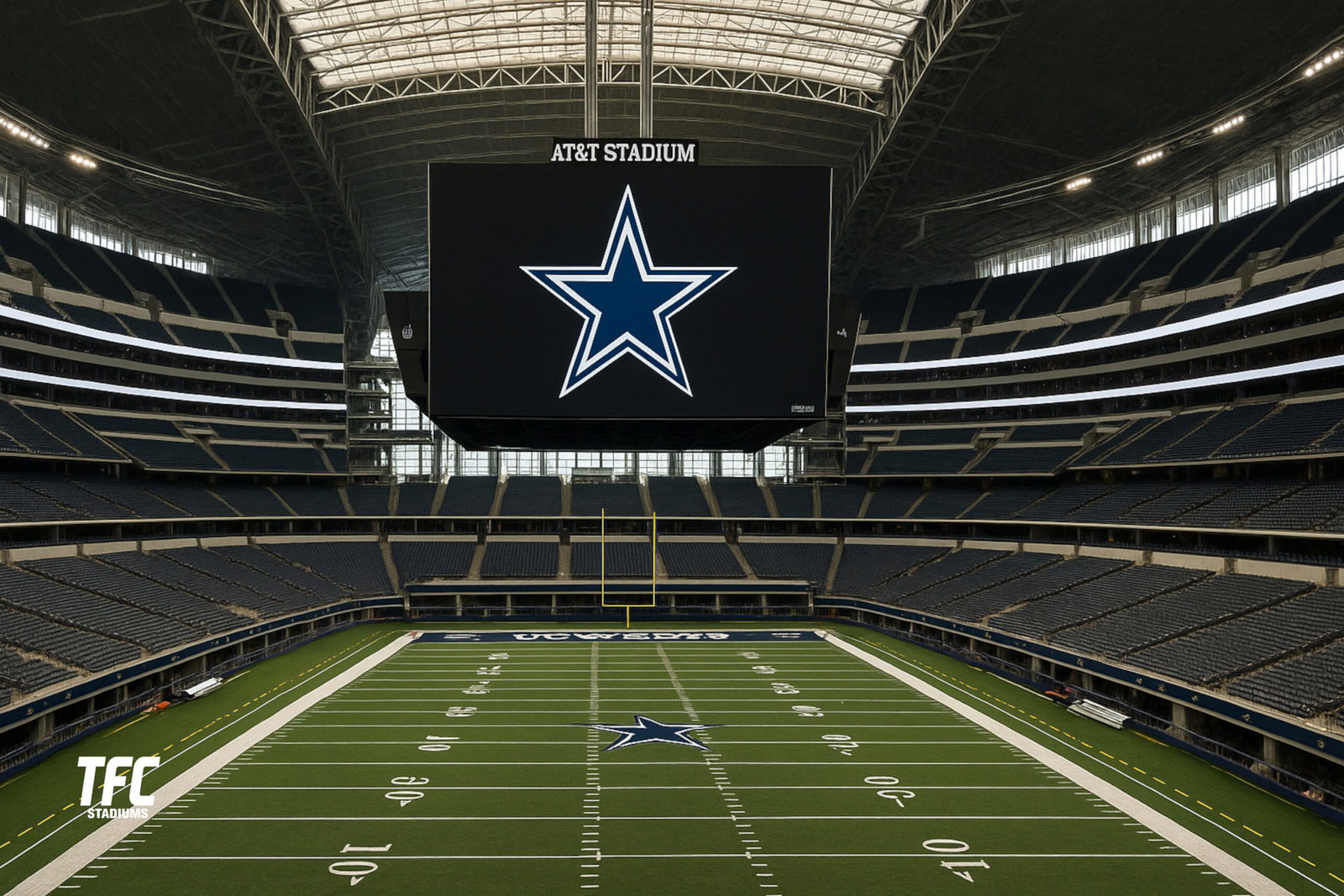
The video board was part of the stadium’s original concept. Jerry Jones, the Dallas Cowboys’ owner, was instrumental in pushing for a centrepiece that would be “larger than life”, something that would put AT&T Stadium at the forefront of both sport and entertainment.
Manufactured by Mitsubishi Electric, the screen cost around $40 million and was completed in time for the stadium’s 2009 opening. Its dual-sided main displays stretch between the 20-yard lines, with additional end-zone facing panels to ensure fans throughout the stadium remain immersed in the action.
At the time of its debut, it was not only the largest video board in the NFL but also larger than some cinema screens. It shifted expectations for what modern stadiums could deliver.
Design Challenges and Engineering
Suspending a million-pound structure from the roof presented serious engineering challenges. The solution came through a collaboration between HKS Architects and structural engineers who designed the stadium’s signature steel arches to support not just the roof, but the central screen itself.
These arches span over 1,225 feet (374 metres), acting as the structural backbone for both the retractable roof and the video board. A sophisticated pulley and cable system allows for adjustment if needed, a key feature after early concerns about the board’s clearance during punts.
Controversy and Adaptation
Shortly after its unveiling, the screen drew headlines for an unexpected reason: punters occasionally hit it during high kicks. This prompted the NFL to establish a unique rule allowing replays of kicks that strike the board, a first in league history.
Despite this, most players and fans embraced the screen. Over time, it has become a defining part of the AT&T Stadium experience, not an obstacle, but a central figure in the theatre of modern American football.
Use Beyond the NFL
The screen has hosted more than touchdowns. It’s been a centrepiece for:
- College football championships
- WrestleMania and boxing events
- Concerts (including U2, Taylor Swift, Beyoncé)
- Basketball Final Fours
- Esports and rodeos
It adapts to each event with tailored visuals and custom content, turning the stadium into a dynamic venue for immersive experiences.
Legacy and Influence
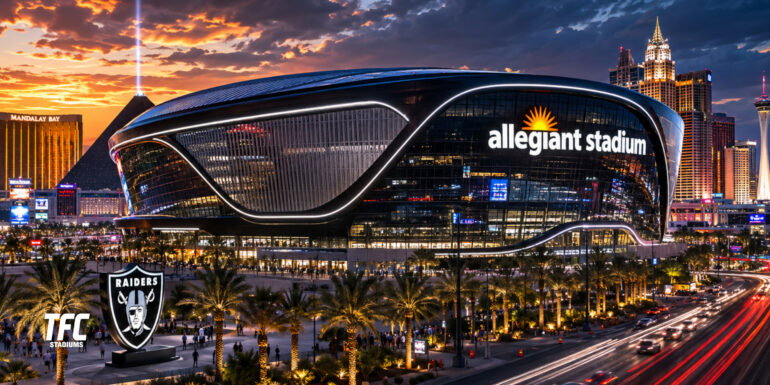
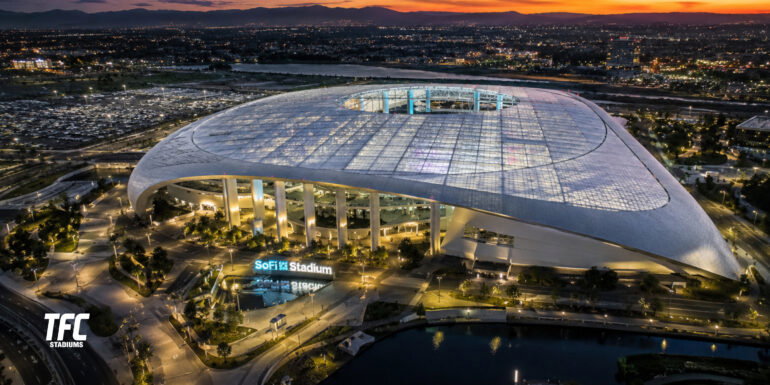
Since its debut, the AT&T Stadium screen has influenced stadium design globally. Venues such as SoFi Stadium in Los Angeles and Allegiant Stadium in Las Vegas have followed the trend of centre-hung or immersive LED installations. These boards are now integral to the fan experience, enhancing replays, stats, sponsorships, and live entertainment in ways that go far beyond static scoreboards.
While other stadiums have now surpassed it in size and resolution, AT&T Stadium’s board remains iconic. It wasn’t just the largest; it was the first to make the screen a centrepiece, not an afterthought.
TFC Takeaway
The giant HD screen inside AT&T Stadium is a statement of intent. It reflects a bold vision for how sport, architecture, and entertainment can collide in a single space. More than a decade on, it continues to inspire awe and set standards for what fans expect when they walk into a stadium.
About the Author