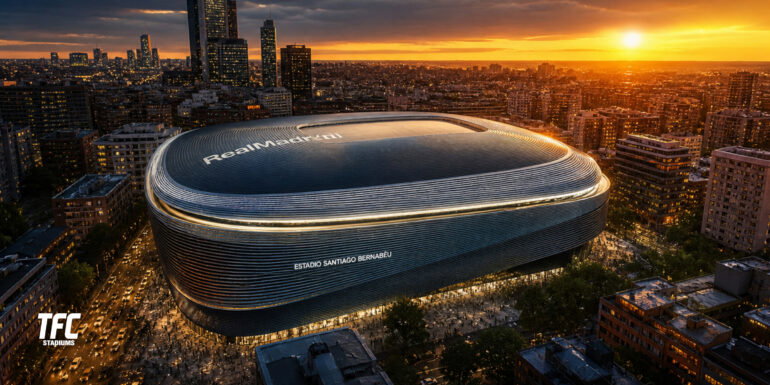
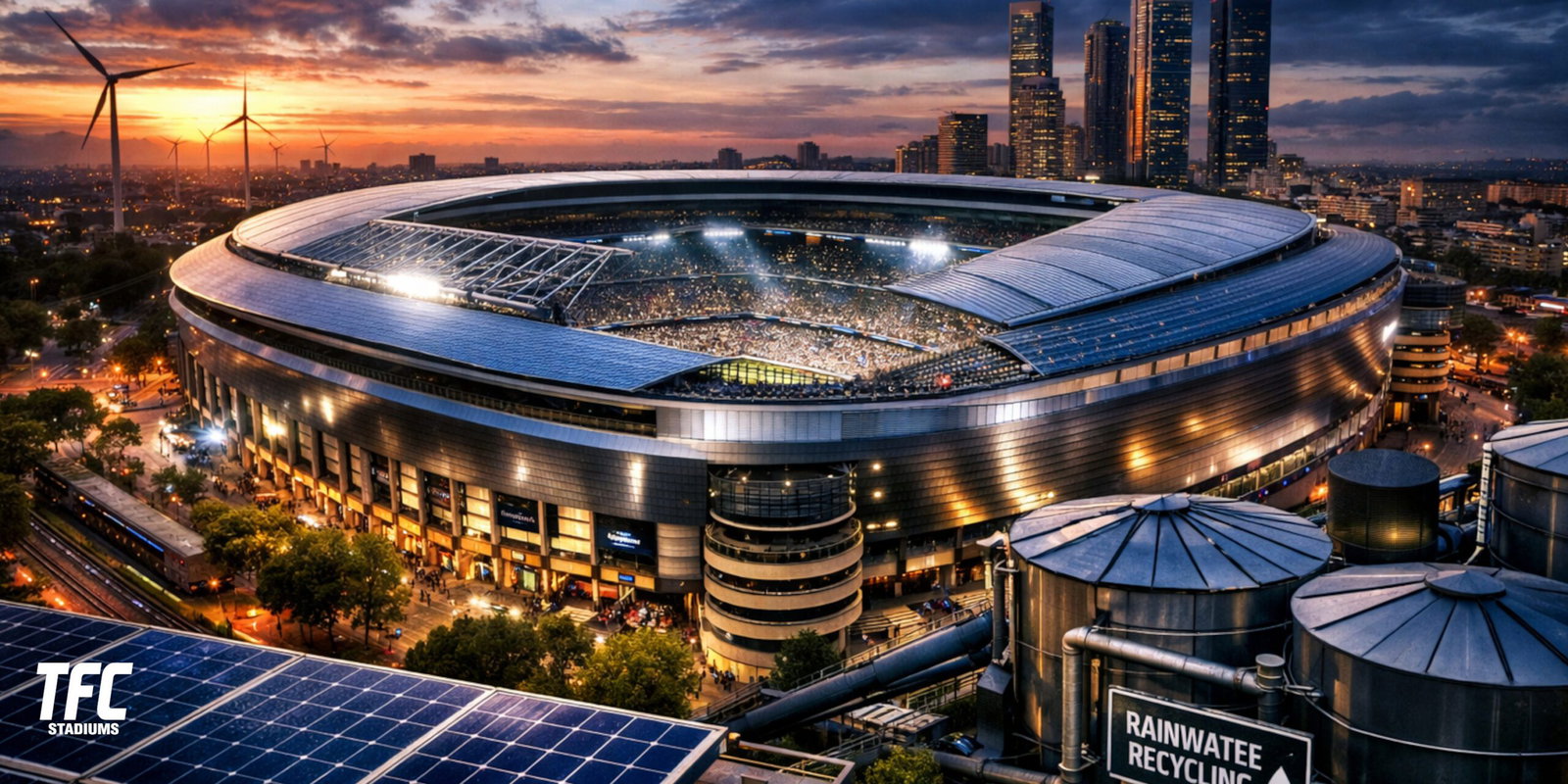
The rebuilt Bernabéu is many things. A cathedral of football, a futuristic events machine, and now, slightly to the surprise of traditionalists clutching their scarves, a serious case study in sustainability. This is not greenwashing or a few token solar panels bolted on for press photos. The stadium’s overhaul baked environmental thinking into the structure itself, quietly and efficiently, like a well drilled midfield.
Energy efficiency, done the hard way
The most visible change is the retractable roof, which does more than keep Madrid rain off expensive haircuts. It helps regulate temperature inside the stadium, reducing the need for heavy climate control during events. Less energy burned, more comfort gained. A rare win win.
Lighting has also been dragged firmly into the modern era. The Bernabéu now runs on high efficiency LED systems that cut energy use while improving visibility for fans and broadcasters. It is brighter, cleaner, and far less power hungry. Think less floodlight hangover, more surgical precision.
Behind the scenes, building management systems constantly monitor energy demand across the stadium. Power is used where it is needed, when it is needed. No more lighting up empty corridors like it is a ghost match.
Water use, because Madrid is not Manchester
Water efficiency matters more in Madrid than in most football cities, and the Bernabéu’s redesign treats it with the respect it deserves. Rainwater collection systems feed irrigation and maintenance needs, easing pressure on municipal supplies. Pitch watering is tightly controlled, using modern distribution systems that minimise waste while keeping the surface match ready.
Low flow fixtures throughout the stadium reduce everyday consumption without fans even noticing. Which is the point. Sustainability that interrupts the matchday experience tends to get booed.
Materials, logistics, and building smarter
A big part of green technology is not what you see, but how the place was built. The renovation prioritised durable materials designed for long life cycles. Less replacement means less waste over time, and fewer trucks rumbling through the city delivering parts that should have lasted longer in the first place.
Construction planning also focused on reducing on site waste and improving logistics efficiency. It is not glamorous, but it matters. Sustainability is often decided in spreadsheets, not photo ops.
Multi use design, fewer empty days
One of the most sustainable things a stadium can do is stay busy. The Bernabéu’s transformation into a multi event venue means it hosts concerts, exhibitions, and non football events year round. More use from the same footprint, less need to build elsewhere.
From an environmental standpoint, this is huge. From a business standpoint, it is even bigger. Empty stadiums are romantic in photos. They are terrible for carbon maths.
Transport and the bigger picture
While not all transport decisions sit with the club, the Bernabéu benefits from strong public transport links, which reduce reliance on car travel for matchdays and events. Encouraging fans to arrive by metro instead of SUV is not flashy, but it does more for emissions than a thousand sustainability slogans.
The club has also aligned the stadium with broader city and European environmental standards, ensuring the Bernabéu does not operate in isolation from Madrid’s long term planning.
The verdict, from a sceptic
Green technology at the Bernabéu works because it does not try to be the star of the show. It sits underneath the spectacle, doing its job quietly while the football, concerts, and drama take centre stage.
This is sustainability with a backbone. Practical, integrated, and unapologetically modern. Like a great utility player, you only notice it when it is missing. And once you see how much it contributes, you wonder how the old way ever made sense.
About the Author