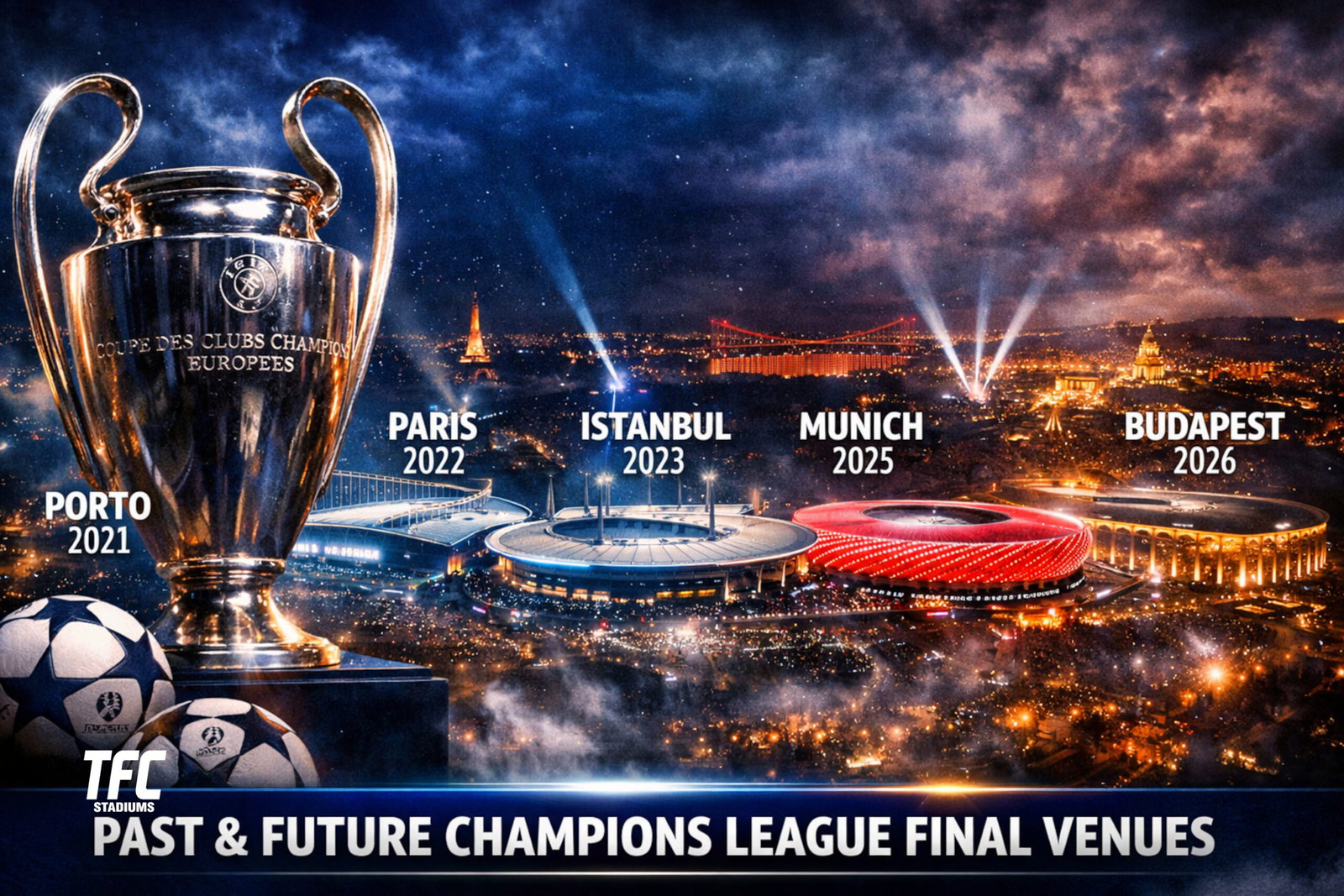
The UEFA Champions League final is not just about the teams. The stadium matters. These venues are chosen years in advance, judged on capacity, transport, security, media facilities, and whether they can handle a global football audience that descends for one very long weekend. Some grounds become repeat hosts and almost feel like part of the competition’s identity, while others get a single night in the spotlight and make the most of it.
Below is a clear, up to date look at where finals have been played, why certain stadiums keep getting the call, and how UEFA tends to think when picking the stage for European football’s biggest night.
The Most Iconic Champions League Final Stadiums
Wembley Stadium, London
Wembley is the heavyweight. It has hosted more European Cup and Champions League finals than any other stadium. The modern rebuild kept its prestige and added comfort, technology, and scale. When UEFA wants certainty, experience, and a global backdrop, Wembley is an easy decision.
San Siro, Milan
Few stadiums carry atmosphere like San Siro. Its concrete towers and steep tiers make finals here feel intense and raw. It has hosted several finals across different eras, each with a slightly different version of the stadium as it evolved.
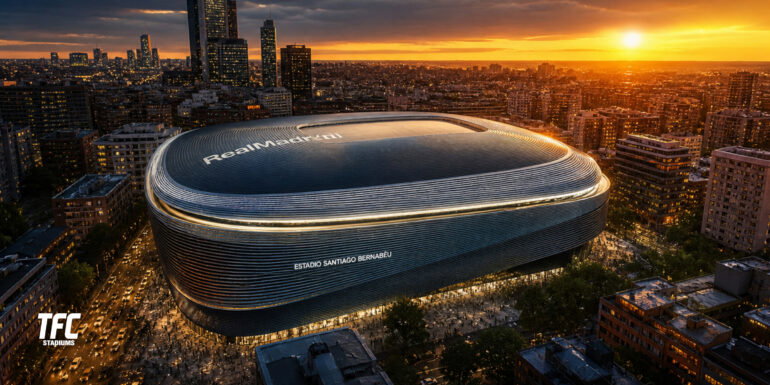
Santiago Bernabéu, Madrid
Madrid’s flagship stadium combines history with modern upgrades. The Bernabéu’s ability to reinvent itself has kept it relevant, and finals here often feel polished rather than chaotic, with everything running to the minute.
Olympiastadion, Munich
Set inside an Olympic park, this stadium delivered classic finals during the European Cup era. It remains one of the most recognisable former hosts, even as Munich has moved on to newer venues.
Modern Era Regulars and Statement Venues
Atatürk Olympic Stadium, Istanbul
Forever linked with the 2005 final, the Atatürk has become UEFA’s go to venue in Türkiye. Its vast capacity and symbolic location between continents give finals here a different flavour, even if transport logistics can be demanding.
Allianz Arena, Munich
A modern showpiece with flawless infrastructure. The Allianz Arena offers perfect sightlines, efficient access, and a clean broadcast look. It represents UEFA’s preference for newer, purpose built stadiums.
Stade de France, Saint-Denis
Built for the 1998 World Cup, the Stade de France remains a reliable final venue. It is neutral ground in every sense and capable of handling huge crowds with minimal fuss.
Estádio da Luz, Lisbon
Lisbon has become a trusted Champions League host city. Estádio da Luz balances size, atmosphere, and accessibility, and it proved its value again during UEFA’s pandemic era planning.
One Off Finals and Regional Firsts
UEFA also uses finals to test new markets or reward major infrastructure investment.
Stadiums such as NSC Olimpiyskiy in Kyiv, Aviva Stadium in Dublin, and Friends Arena in Solna have all hosted finals as part of a broader strategy to spread prestige across Europe. These nights tend to feel special precisely because they are rare.
How UEFA Chooses Final Venues
Capacity is the headline figure, but it is only the start. UEFA looks closely at transport links, hotel availability, security planning, media infrastructure, and the ability to create controlled fan zones. Political stability and local government support matter more than most fans realise.
Recent trends suggest UEFA prefers modern stadiums between 60,000 and 75,000 seats, in cities with proven experience of hosting large international events. Romance is nice, logistics win.
Venues That Feel Due a Return
Wembley and Istanbul will always be in the rotation. Beyond them, expect more finals at grounds like the Allianz Arena and Estádio da Luz, while newer stadiums in Spain, Germany, and potentially Italy will push for inclusion once redevelopment projects are complete.
UEFA likes familiarity, but it also likes a fresh broadcast look. That balance shapes every decision.
The Last Five Champions League Final Venues
Below is a clean snapshot of the most recent finals, focusing on where they were played, how many the stadiums hold, and who actually made it onto the pitch. It is a useful way to see UEFA’s current preferences in action.
| Season | Stadium | City | Capacity | Finalists |
|---|---|---|---|---|
| 2021 | Estádio do Dragão | Porto | 50,033 | Chelsea vs Manchester City |
| 2022 | Stade de France | Saint-Denis | 80,698 | Real Madrid vs Liverpool |
| 2023 | Atatürk Olympic Stadium | Istanbul | 74,753 | Manchester City vs Inter |
| 2024 | Wembley Stadium | London | 90,000 | Real Madrid vs Borussia Dortmund |
| 2025 | Allianz Arena | Munich | 75,000 | Finalists decided after semi finals |
A couple of patterns stand out. UEFA has leaned heavily into large national or flagship club stadiums, and London, Paris, Istanbul, and Munich keep appearing for a reason. These cities know how to absorb a Champions League weekend without falling apart at the seams.
The Champions League Final Venue for 2026
The 2026 final will be played at the Puskás Aréna in Budapest.
The stadium holds just over 67,000 spectators and represents UEFA’s continued push into Central Europe. It is modern, centrally located, and purpose built for major international events. Expect a slightly different atmosphere from the usual Western European rotation, with a crowd that treats the final as a rare, city defining occasion rather than another item on a crowded sporting calendar.
What This Tells Us About UEFA’s Direction
Recent choices show a clear preference for reliability over nostalgia. Capacity still matters, but so does transport, security planning, and broadcast polish. Wembley and Munich are safe hands. Istanbul offers drama. Budapest signals expansion without taking unnecessary risks.
If you are looking for variety, UEFA is giving it in measured doses. If you are looking for chaos, that part is still left to the players.
About the Author