A New Era Begins in Santa Clara
When the San Francisco 49ers finally left Candlestick Park behind, it felt like closing a door that had been creaking for years. History, wind, and bad memories of freezing night games were all part of the charm, depending on who you asked. The move to Levi’s Stadium promised something very different. Sleek lines, tech-first thinking, and a location that made more sense if you worked in Silicon Valley rather than the docks.
The first game was never going to be subtle. This was the debut of a stadium meant to signal modern success, not just nostalgia. Fans arrived curious, excited, and quietly wondering if the soul of the old place had made the trip south.
The Matchup, Familiar Faces and a Statement Game
The honour of christening the stadium went to the Chicago Bears, a team with enough history of their own to make the night feel properly ceremonial. For the San Francisco 49ers, this was more than a home opener. It was a chance to prove that the building worked, that the crowd could still bring noise, and that the franchise had not lost its edge along the way.
The 49ers did not ease into it. They came out sharp, physical, and clearly intent on owning the moment. From the opening drives, it felt less like a cautious debut and more like a statement that this stadium belonged to them now.
The Game Itself, Football Under a Blazing Sun
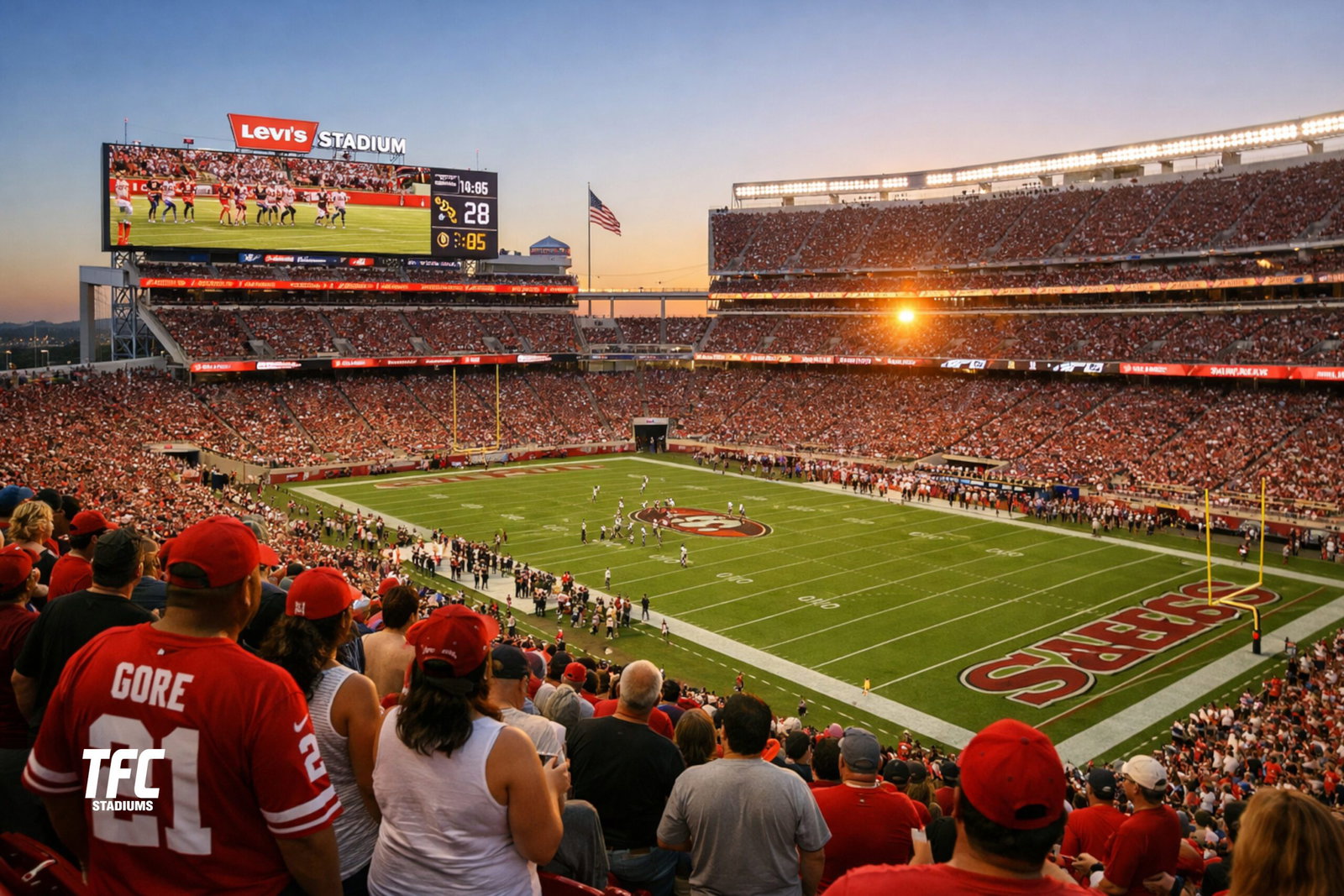
If there was one thing nobody missed from Candlestick, it was the cold. Levi’s Stadium introduced its own challenge instead. Heat. Relentless, unshaded heat that baked parts of the stands and had fans fanning themselves with anything that was not bolted down.
On the field, the 49ers were ruthless. They ran, hit, and controlled the tempo, pulling away as the game wore on. By the final whistle, a 28 to 20 win felt almost understated. It could have been uglier. For a first impression, it was about as clean as a debut gets.
Somewhere between touchdowns and sunburn, the crowd settled into the idea that this place might actually work.
First Impressions of Levi’s Stadium
Architecturally, Levi’s Stadium looked the part. Wide concourses, clear sightlines, and screens everywhere you turned. It felt built for an era where fans expect constant information and minimal inconvenience. The trade-off was atmosphere, at least early on. The noise came in waves rather than the constant roar people remembered from Candlestick.
That said, big moments still landed. When the defence forced stops or the offence broke through, the sound was there. It just echoed differently, sharper and cleaner, less chaotic. Think modern arena rather than old-school cauldron.
And yes, everyone noticed the sun. It became the night’s unplanned headline act.
What That First Night Really Meant
Looking back, the first game at Levi’s Stadium was not about perfection. It was about transition. A proud, sometimes stubborn franchise stepping into a future built on glass, Wi-Fi, and premium seating.
The football delivered, the fans showed up, and the stadium survived its trial by fire, quite literally. Over time, tweaks would come. Shade structures, fan routines, and new memories layered over the initial awkwardness.
Every stadium has a first night. This one was hot, loud in bursts, and quietly significant. Not bad for a franchise learning how to live in the present without forgetting where it came from.
About the Author