How Brighton’s home ground is quietly leading the sustainability charge in English footbal
When the American Express Community Stadium opened in 2011, it was hailed for its striking design and hospitality. What’s less talked about is how quietly revolutionary it’s been for sustainability in sport. Brighton & Hove Albion have turned their home ground into a living example of how football clubs can balance fan passion with environmental responsibility.
The Amex isn’t just a football stadium, it’s a blueprint for how modern sport can evolve without losing its soul.
Sustainable Design and Operations
From the ground up, the Amex was built with the environment in mind. Its structure incorporates locally sourced materials, energy-efficient lighting, and a water-saving irrigation system. The stadium’s roof design maximises natural light and minimises heat loss, reducing overall energy consumption throughout the year.
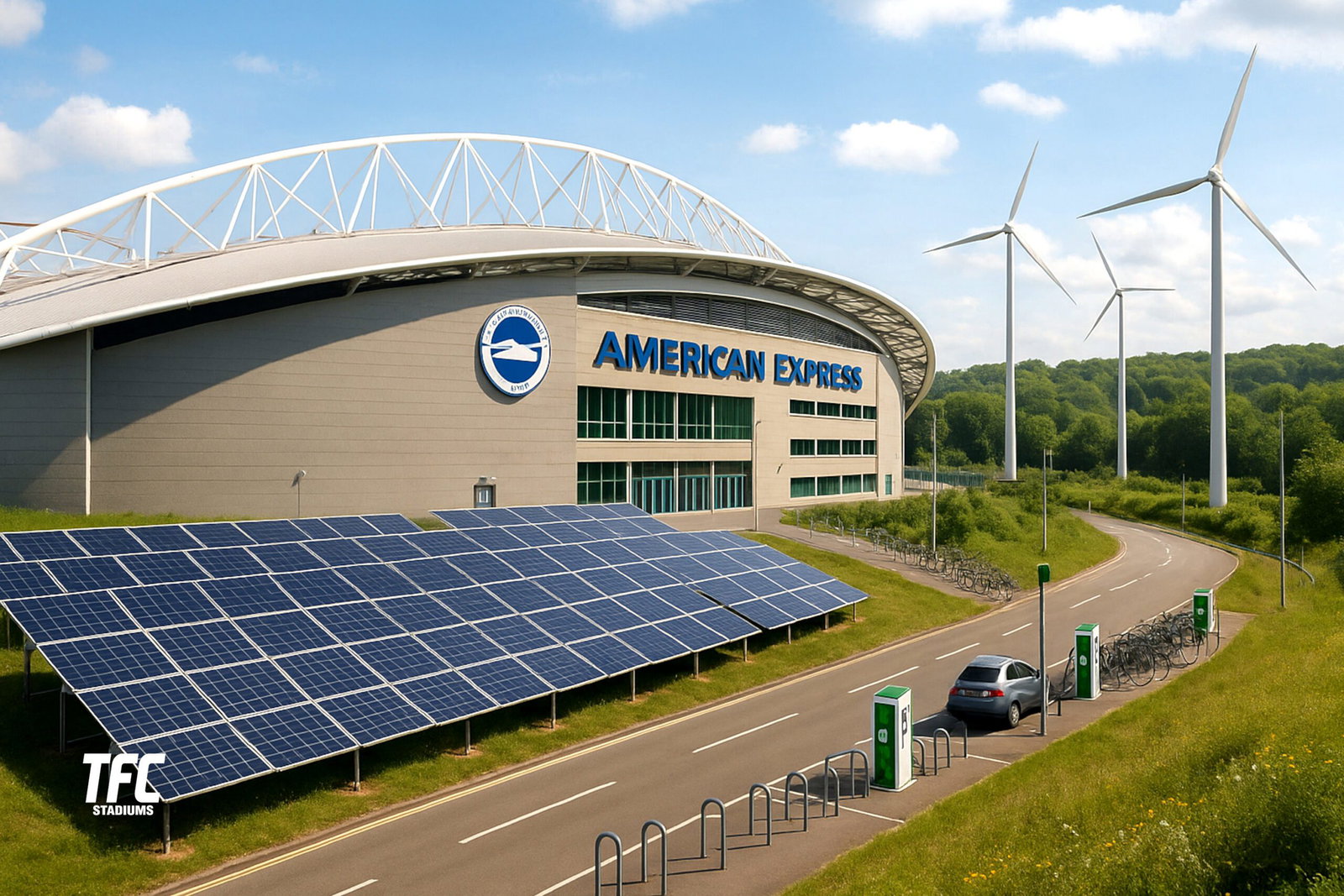
- Energy Use: The stadium uses 100% renewable electricity, with much of it generated through solar and wind energy partnerships.
- Water Conservation: Rainwater is harvested and reused for pitch irrigation and toilet systems.
- Waste Management: Recycling stations throughout the stadium help divert a large proportion of matchday waste from landfill.
Even the grass is greener in more ways than one, with a hybrid pitch maintained using sustainable fertilisers and organic management practices.
Eco-Friendly Travel and Fan Access
Transport is one of the biggest sources of emissions in football, but Brighton’s model stands out. Matchday tickets include free public transport within the local area, encouraging fans to use trains, buses and park-and-ride services instead of driving.
There are bike racks for those who prefer pedal power, and electric vehicle charging points for the growing number of eco-conscious supporters.
This approach has become a benchmark for other clubs looking to reduce their carbon footprint while keeping fan experience front and centre.
Local Sourcing and Sustainable Catering
It’s not just about what powers the stadium, it’s about what feeds it. The Amex sources much of its food and drink from local Sussex suppliers. From craft ales to farm-fresh produce, the catering teams prioritise short supply chains and ethical sourcing.
Menus are adjusted seasonally to cut down on food waste, and plant-based options have become a regular feature on matchdays. For a football ground, that’s progress worth cheering.
Community and Environmental Outreach
Brighton’s identity has always been tied to its coastal setting, and the club has leaned into that. The Albion in the Community foundation runs local sustainability programmes, from beach clean-ups to energy awareness campaigns.
The club also partners with local schools to promote environmental education and hosts events that spotlight green technologies in sport.
In many ways, the Amex has become more than a stadium, it’s a hub for change.
Legacy and Future Goals
The Amex Stadium’s green credentials are not a marketing gimmick but a long-term commitment. Brighton continues to assess and reduce its carbon output with yearly sustainability reports. The club has pledged to achieve net-zero emissions in line with national climate targets, and early signs suggest they’re on track.
For fans, it’s a reminder that football can be both exciting and responsible. The roar of the crowd doesn’t have to drown out the sound of progress.
TFC Takeaway
The Amex Stadium is proving that sustainability doesn’t have to mean compromise. It can enhance the matchday experience, strengthen community ties, and set an example for others.
Brighton’s home isn’t just a place to watch football, it’s where the future of the game is being built, one solar panel and recycled pint cup at a time.
About the Author