Tottenham Hotspur Stadium and the Etihad compared on design, experience, innovation and cultural value
When it comes to modern football stadiums in England, two venues sit at the pinnacle of design and ambition: Tottenham Hotspur Stadium and the Etihad Stadium. While they belong to clubs with very different historical arcs, both stadiums represent cutting-edge investments aimed at delivering not just elite football but a commercially robust, technologically forward, and globally engaging experience.
Architecture and Design
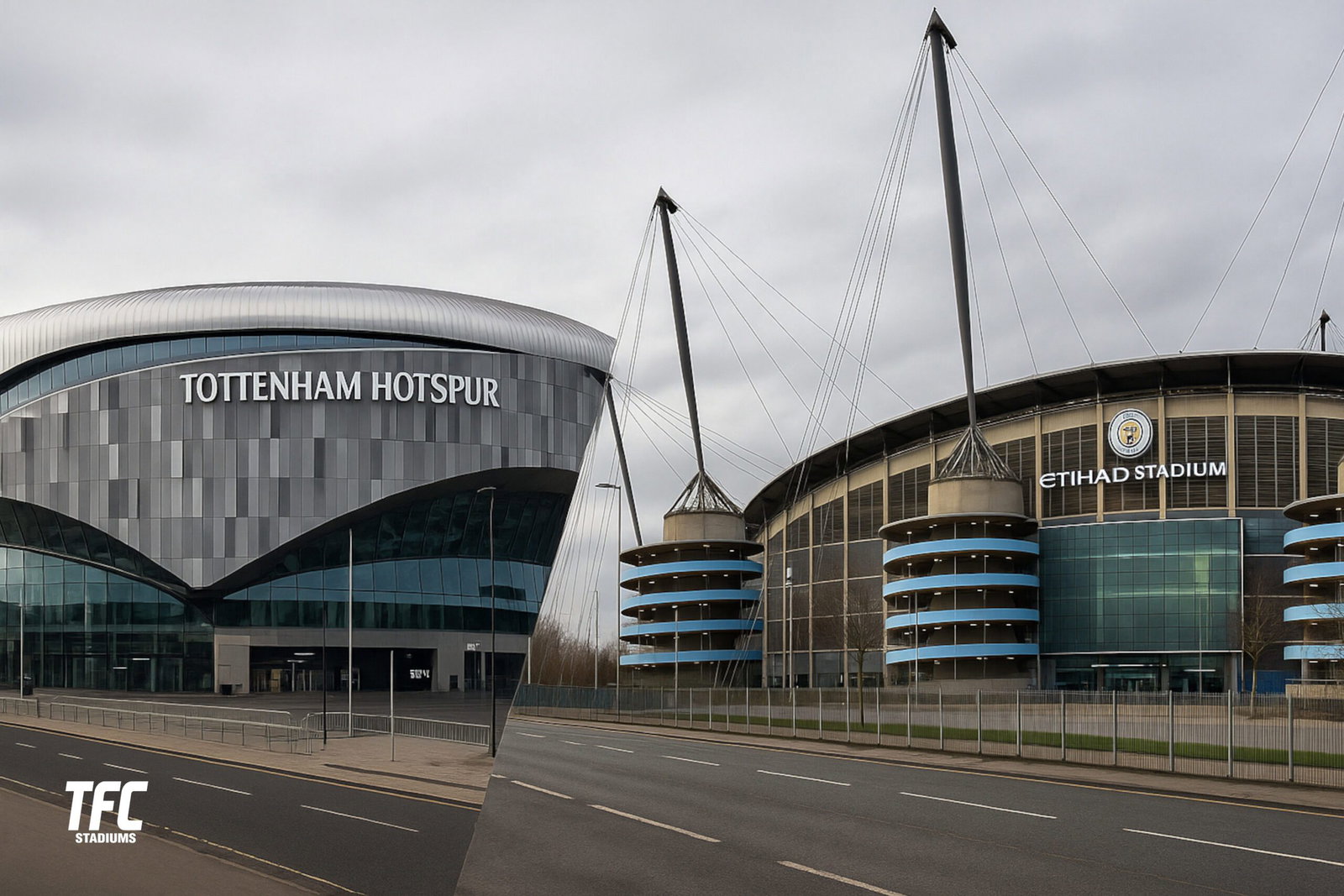
The Tottenham Hotspur Stadium, opened in 2019, was built with a clear intention to do more than just host football matches. Designed by Populous, the ground is a multi-purpose behemoth, capable of switching between a football pitch and an NFL field in under 24 hours. It combines sleek exterior cladding with a striking single-tier South Stand that draws inspiration from Dortmund’s Yellow Wall.
In contrast, the Etihad Stadium, initially constructed as the City of Manchester Stadium for the 2002 Commonwealth Games, was later converted into Manchester City’s home. The venue has since seen multiple expansions and upgrades. It features a more oval-shaped bowl, split-level roofing, and a more classic visual structure compared to Spurs’ sharper, more vertical profile.
While the Etihad has evolved over time, Tottenham’s stadium was conceived as a modern colossus from the outset.
Capacity and Facilities
| Stadium | Capacity | Opened | Retractable Pitch | Roof Design | Hospitality Spaces |
|---|---|---|---|---|---|
| Tottenham Hotspur Stadium | ~62,850 | 2019 | Yes | Cantilevered | Premium boxes, Tunnel Club |
| Etihad Stadium | ~53,500 | 2003 | No | Cable-stayed | Cityzens Lounge, Tunnel Club |
Tottenham edges ahead in capacity, but it’s the versatility of its infrastructure that really sets it apart. With a separate surface for NFL games, it can double as a premier American football venue. The Etihad, however, has focused on atmosphere and expansion, with a major North Stand redevelopment underway aiming to lift capacity above 60,000.
Fan Experience and Matchday Atmosphere
Spurs’ stadium is a sensory experience from entry to exit. The acoustics of the South Stand generate a condensed wall of sound, and the proximity to the pitch ensures an intense atmosphere. Features like the in-house microbrewery and high-quality food options add to its reputation as one of Europe’s best fan experiences.
The Etihad has battled perceptions of a less animated crowd at times, though this is often overstated. The club has taken steps to improve matchday atmosphere through safe standing areas and revamped fan zones. Once its new stand opens, it will include an integrated sky bar, stadium roof walk, and hotel, signalling a more immersive offering in the future.
Technology and Innovation
Tottenham leads in this category. Its retractable pitch technology, massive integrated video screens, dedicated media facilities, and advanced lighting systems make it one of the most technologically advanced stadiums in the world.
Manchester City’s tech integration focuses more on sustainability and digital connectivity. Their smart ticketing system, environmental initiatives, and in-stadium app features reflect a different, more eco-conscious kind of innovation. The upcoming expansion will further integrate immersive fan tech and hospitality offerings.
Location and Broader Legacy
The Etihad forms part of the wider Etihad Campus, including the City Football Academy and additional training infrastructure. It has played a central role in the regeneration of East Manchester and remains a cornerstone in City Football Group’s global strategy.
Tottenham’s stadium sits in the heart of North London and has been a central pillar in the area’s economic regeneration plans. The club’s ambition to transform the stadium into a year-round entertainment hub, including boxing, concerts, and esports, is part of a long-term vision to redefine what a football stadium can offer.
TFC Verdict
Both stadiums reflect the ambitions of their respective clubs, but they do so in different ways. Tottenham Hotspur Stadium pushes boundaries in multi-functionality and fan-first experiences. The Etihad focuses on evolving within a sustainable, community-led framework, soon to be amplified by a major expansion.
One feels like the stadium of the future already built; the other is becoming it, piece by piece. Neither is just a ground. They are both blueprints for the next era of football infrastructure—tailored to their identity, and to the long-term global aspirations of their clubs.
About the Author