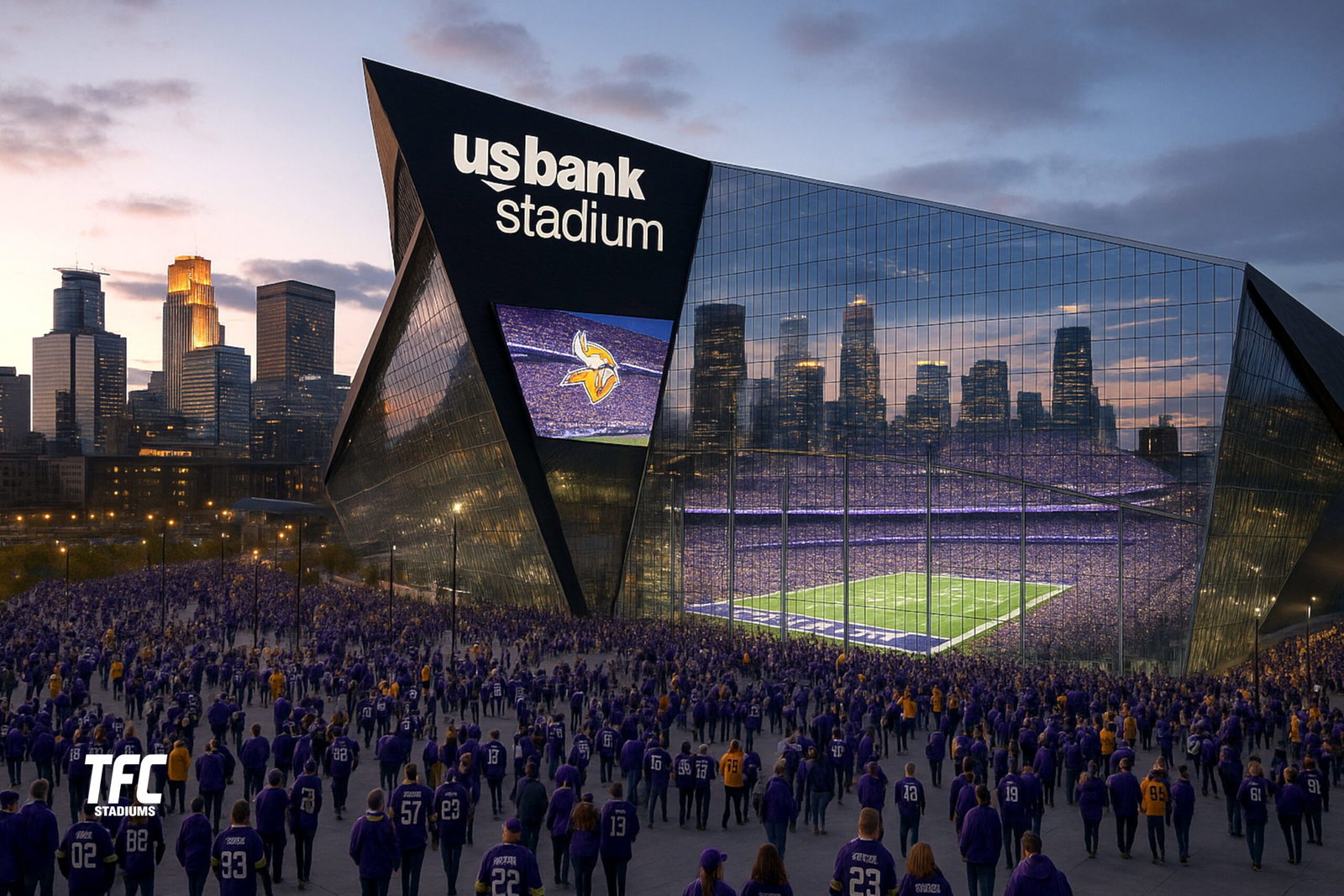
When U.S. Bank Stadium opened in 2016, it was the new home for the Minnesota Vikings. It was a statement of intent. A monument to modern engineering and Nordic pride, the stadium redefined what an NFL venue could mean to its city and fanbase. Located in the heart of downtown Minneapolis, the 66,000-seat arena has become both an architectural landmark and a fortress for one of football’s most passionate fan communities.
From the Metrodome to Modern Marvel
For over three decades, the Vikings played inside the Hubert H. Humphrey Metrodome. Though beloved, it was showing its age. The roof collapsed in 2010 under heavy snow, forcing the team to seek a more permanent and ambitious solution. What followed was a public-private effort between the Vikings organisation, the state of Minnesota, and the city of Minneapolis to build a stadium worthy of the team’s stature.
Construction began in late 2013, with an estimated cost of over $1.1 billion. Three years later, U.S. Bank Stadium stood complete. Its angular design, inspired by Nordic longboats and Minnesota’s icy landscape, reflected the team’s Viking identity perfectly.
Design and Architecture
U.S. Bank Stadium’s design is unapologetically bold. The transparent ETFE roof allows natural light to flood the interior, giving fans an outdoor feel even in the depths of winter. The giant pivoting glass doors on the west side, some of the largest in the world, open to reveal the Minneapolis skyline.
The building’s sharp, sloping form mimics the prow of a ship cutting through ice. Inside, the steeply tiered seating creates an intense, vertical atmosphere that traps noise. The stadium was designed by HKS Architects, who blended Scandinavian minimalism with modern American ambition.
The Fan Experience
Every detail of U.S. Bank Stadium was built with fans in mind. The sightlines are exceptional, even from the upper levels. Wi-Fi coverage and digital screens are among the best in the league. The Vikings’ “Gjallarhorn” tradition echoes through the stadium before every game, blending spectacle with heritage.
On game day, the building feels alive. Purple lighting floods the interior, Norse imagery dominates the concourses, and the Skol Chant unites tens of thousands of voices in rhythmic defiance. It is both theatre and temple.
Economic and Cultural Impact
Beyond the gridiron, U.S. Bank Stadium has been a catalyst for downtown Minneapolis. It has hosted Super Bowl LII, the NCAA Final Four, major concerts, and countless community events. The surrounding area has benefited from new infrastructure, restaurants, and hotels.
For many locals, the stadium has become a source of civic pride. Its design connects Minnesota’s identity, weather, and resilience in one powerful symbol.
Legacy and the Future
Nearly a decade after its opening, U.S. Bank Stadium has solidified itself as one of the premier venues in American sport. It balances technological sophistication with cultural authenticity. The Vikings have made it their true home, and its influence stretches far beyond football.
Future upgrades will focus on sustainability and digital integration, but its core spirit will remain. It stands as a reminder that stadiums can be more than places to watch a game. They can embody the heart of a region.
TFC Takeaway
U.S. Bank Stadium was built to inspire. From the roar of the crowd to the shimmer of its glass walls, it represents the soul of Minnesota football. The Vikings may have traded the Metrodome’s inflatable roof for a cathedral of steel and light, but the essence of the North has never been stronger.
About the Author