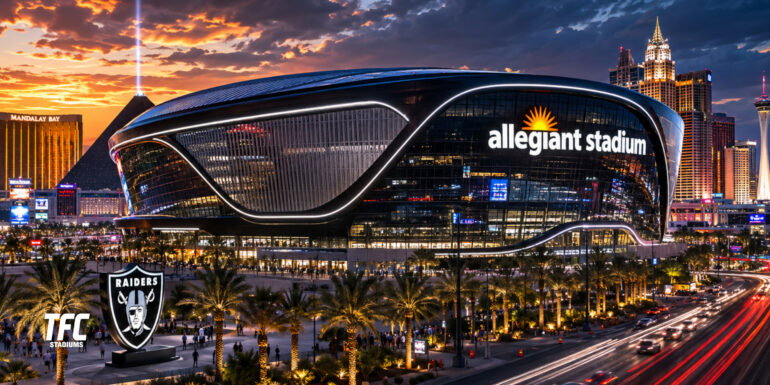
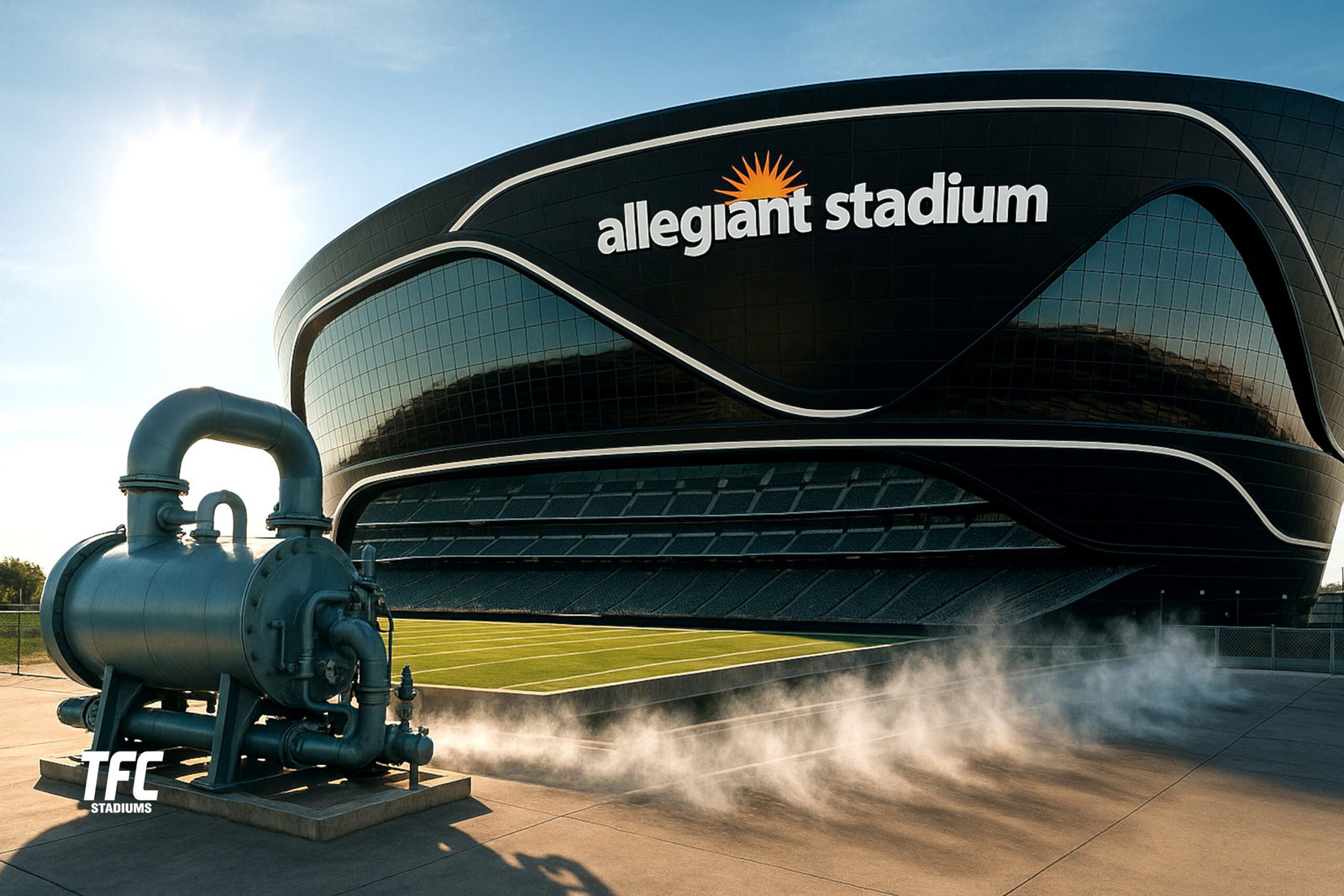
Allegiant Stadium sits in the middle of the Mojave Desert like a futuristic space pebble that decided it would rather host football than aliens. Every time I walk past it, I think, this place should melt. It does not. In fact, it stays cool enough for fans to forget that Las Vegas can fry an egg on a manhole cover by breakfast. That does not happen by accident. The building hides some clever engineering under all that silver and black swagger, the kind of tech that quietly saves your day while you are busy yelling about a missed holding call.
The Vegas Heat Problem
Las Vegas in summer feels like walking into an oven that is also judging your life choices. Allegiant Stadium needed a system that could fight those temperatures without turning the field into a wind tunnel or fogging up the glass walls. The architects understood that, so they built the place like a giant insulated cooler, only with more seats and fewer questionable picnic sandwiches.
How The Cooling System Actually Works
The heart of the stadium’s cooling setup is a central chiller plant that pumps cold water through miles of pipes. That chilled water travels through coils that cool the air before it enters the bowl. Think of it like the world’s most elaborate iced coffee system. The results are not caffeinated, but they are refreshing.
Air gets circulated from behind and beneath the seating bowl, then rises naturally as it warms. This keeps air moving without blasting fans with cold gusts. The system avoids that awkward moment where you bundle up indoors during a 43 degree day outside. The goal is comfort, not cryo training.
Another trick is the building’s insulated roof. It blocks out the punishing sunlight, letting the tech do its job instead of fighting a daily celestial death beam. Even the dark exterior panels help by absorbing and redistributing heat outward rather than letting it cook the interior.
The Perks For Fans
Walk into Allegiant on a hot day and you feel the difference immediately. The seating bowl stays steady, the concourses do not turn into saunas and the indoor air stays surprisingly clear considering 60 thousand people are yelling about a single blown coverage. The system is tuned to keep humidity low as well, because no one wants to watch fourth quarter football in the same environment as a steam room.
The Perks For Players And The Field
The turf benefits too. Consistent climate means fewer temperature spikes, and that leads to more predictable footing. I cannot promise it boosts the Raiders’ home record, but let us just say it eliminates at least one potential excuse.
A Stadium That Learns
The building’s control system monitors heat loads, crowd levels and outdoor temperatures. It adjusts output in real time. Most of us cannot get our thermostat at home to listen to us, yet Allegiant Stadium behaves like it graduated top of its class in HVAC philosophy.
Final Thoughts From Rick
Allegiant Stadium does not brag about its cooling system. It quietly goes about its work while fans judge playcalling and wonder how a team can go from brilliant to baffling in one quarter. Still, the tech deserves a nod. It turns a brutally hot location into a comfortable NFL venue without making it feel like a grocery store freezer aisle.
If only all Vegas operations were that efficient.
About the Author