Mercedes-Benz Stadium likes to brag that it is the most energy efficient stadium in the country, and for once a stadium marketing team is not overselling it. The place feels like a spaceship dropped into downtown Atlanta, only this one actually worries about its utility bill. It is a rare thing in pro sports, a building that can host the Falcons, Atlanta United, and a Beyoncé tour without blowing out the city’s power grid.
I walked in expecting the usual arena comforts, endless lights and screens all gulping electricity like it is free punch at a wedding. Instead I found a venue that runs like a tech campus with a football field attached.
A Stadium Built to Save Power
The big headline is that the entire building was designed to use far less energy than its NFL peers. That is not some marketing vow. It is baked into the architecture, from the retractable roof that behaves like a giant camera lens to the daylight harvesting systems that adjust lighting automatically. Most stadiums operate at one light setting. Mercedes-Benz Stadium treats its lighting like mood music.
The exterior shell funnels natural light into the concourses so the artificial stuff only kicks in when it needs to. If you have ever wandered through an NFL stadium that felt like the inside of a casino at three in the morning, you will understand how refreshing that is.
Solar Power That Actually Does Something
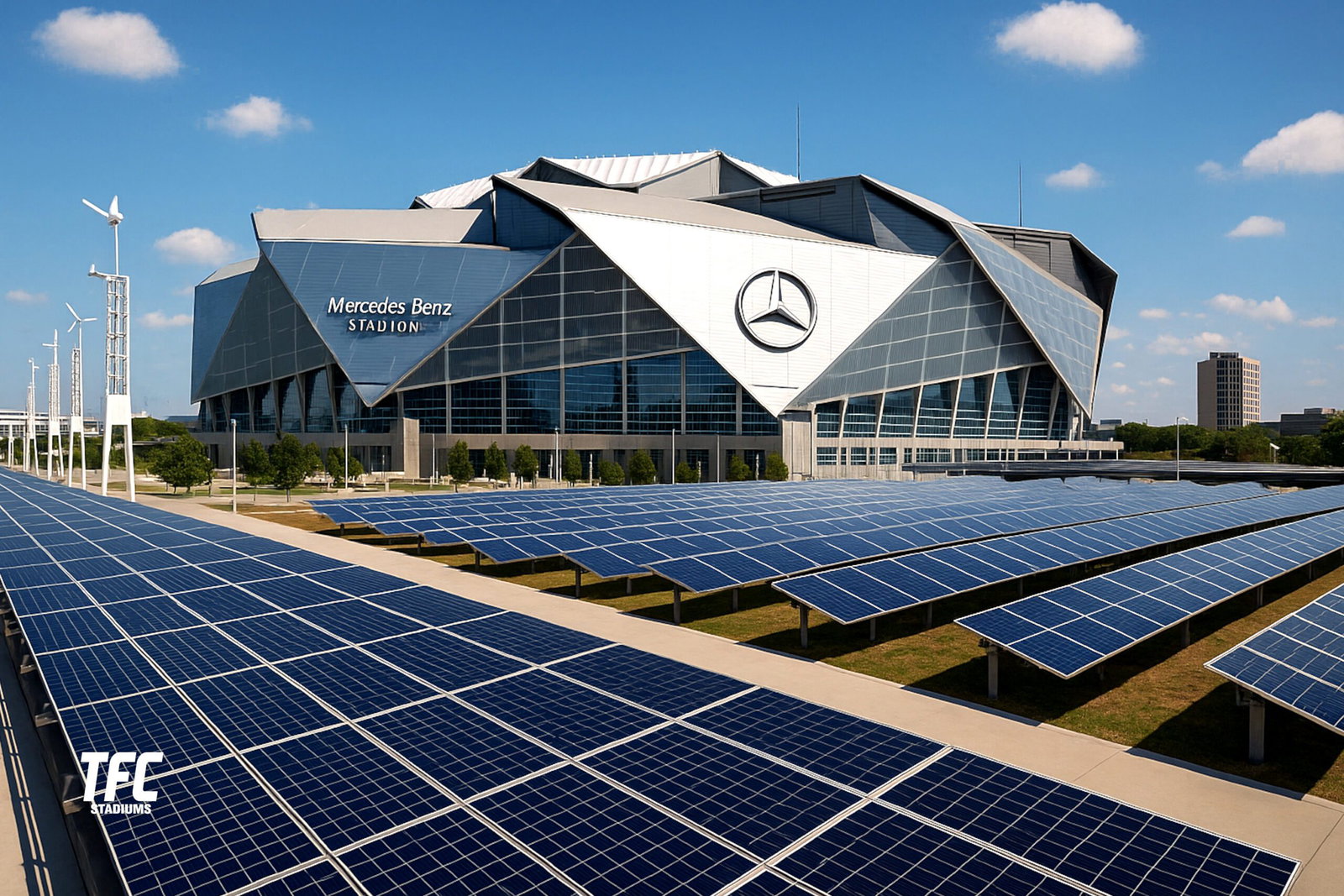
A lot of teams slap a few solar panels on the roof and call it good. Atlanta went the opposite way. The stadium fields thousands of panels placed across the campus. They do not power the whole building, but they shave enough off the electrical demand to be worth talking about.
There is a reason the venue earned top-level LEED Platinum certification. This is the same award your favourite eco-friendly tech HQ brags about in its press releases. Stadiums are not supposed to win these things. Mercedes-Benz Stadium treats that as a challenge.
Cooling Systems That Avoid the Usual Overkill
If you have been to an NFL game in September, you know stadium HVAC systems are often engineered by people who believe the entire fan base is a colony of polar bears. Atlanta is different. The mechanical systems are tuned for precision rather than brute force. They use advanced chillers and ventilation strategies that reduce unnecessary cooling while still keeping fans comfortable enough to enjoy their overpriced concession nachos.
In short, you do not freeze. You do not melt. You just sit there thinking, yeah, this is nice.
Water and Energy Working Together
Energy efficiency is not just about lights and plugs. The stadium uses low flow fixtures and a clever water management setup that reduces strain on the power systems. Less water pumped, treated, or heated means less energy burned behind the scenes. It is a small detail on paper, but a big deal when you multiply it across a stadium that can hold seventy thousand sweaty humans all yelling at once.
The Smart Tech Behind the Scenes
Sensors track occupancy, light levels, and temperature across the building. Most stadiums fire up everything at full blast hours before kickoff. Mercedes-Benz Stadium uses data to soften that load. If a concourse is empty, the systems know. If sunlight is pouring in, the lights dim themselves. It is the kind of behind the scenes wizardry that fans never notice but definitely benefit from.
Why Other Venues Pay Attention
Owners from around the country tour this place and come away with the same expression that quarterbacks get after Aaron Donald hits them. Respect, mixed with a hint of fear. Mercedes-Benz Stadium proves that running a world class venue does not require burning through electricity like it is still 1998.
Some stadiums have already started borrowing ideas. Others are still pretending their old wiring is part of the stadium’s charm. But the shift is happening, and Atlanta pushed it forward.
TFC Takeaway from Rick
Mercedes-Benz Stadium is one of the few buildings where you can watch elite football, grab a reasonably priced soda, and feel slightly better about the planet on your way out. It is a stadium with ambition, not just for trophies, but for smarter, cleaner design. Every city talks about sustainability. Atlanta actually built something that backs it up.
Now if they could just bottle the same efficiency and hand it to every team that insists on running draw plays on third and long, American football would be a better place.
About the Author