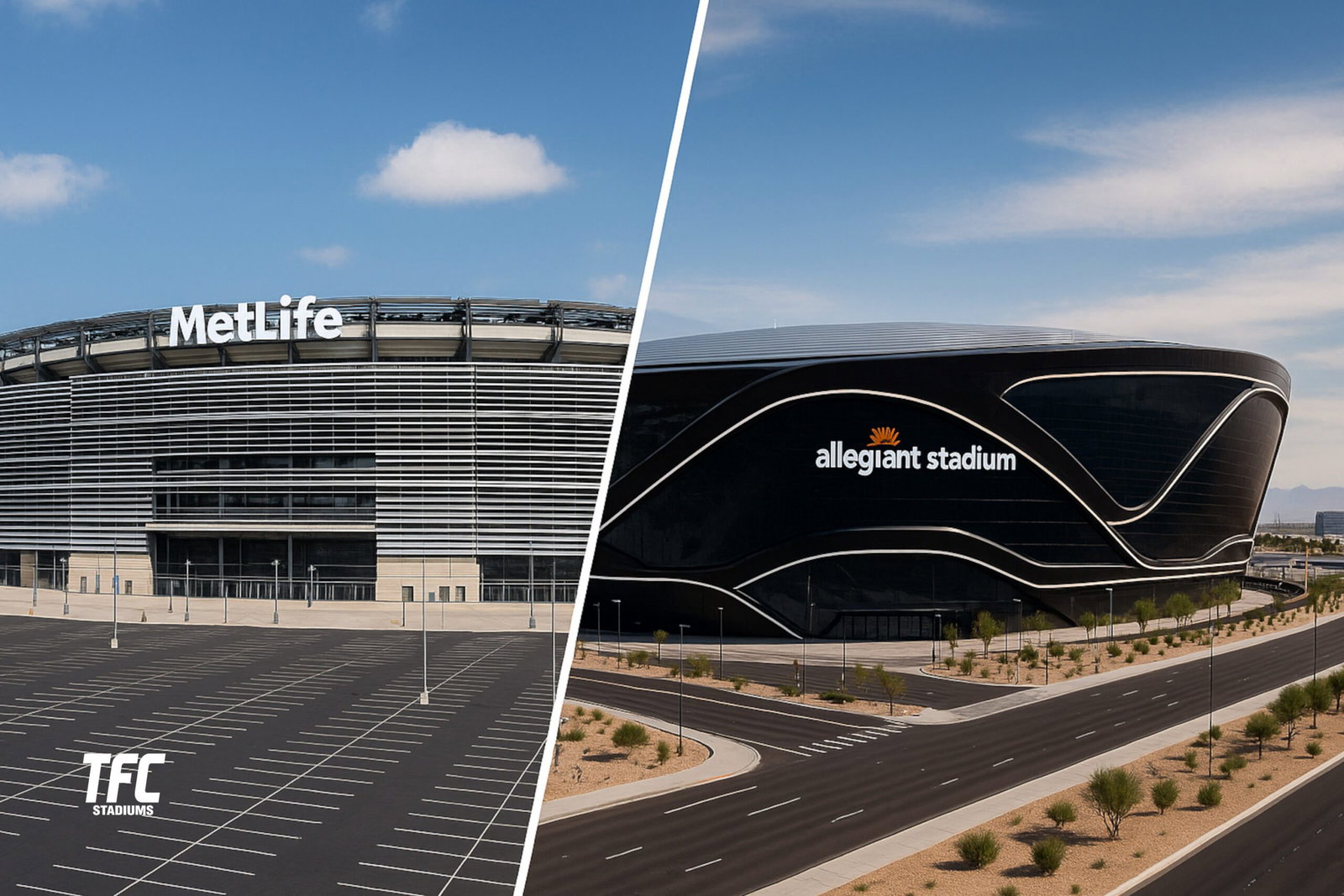
MetLife Stadium in New Jersey and Allegiant Stadium in Las Vegas represent two eras of American football architecture. One was built for durability and scale, the other for spectacle and technology. Both host NFL powerhouses, both dominate their skylines, and both make their mark on fans the moment they walk through the gates. Yet, they could not be more different in how they deliver the game-day experience.
The Basics
| Aspect | MetLife Stadium | Allegiant Stadium |
|---|---|---|
| Location | East Rutherford, New Jersey | Paradise, Nevada |
| Opened | 2010 | 2020 |
| Cost | Around $1.6 billion | Around $1.9 billion |
| Capacity | 82,500 | 65,000 (expandable to 71,000) |
| Tenants | New York Giants, New York Jets | Las Vegas Raiders |
| Surface | FieldTurf | Bermuda Grass (convertible tray system) |
MetLife was designed to hold two NFL franchises without compromise, a logistical feat in itself. Allegiant was designed to embody the glitz of Las Vegas, pairing engineering ambition with showmanship.
Design and Architecture
MetLife’s architecture is a steel-and-glass behemoth, functional rather than flamboyant. The exterior panels shift colours to match the home team, an understated but clever touch. Inside, the focus is on capacity and visibility, not aesthetic flourishes.
Allegiant Stadium feels like a spaceship landed in the desert. The black glass façade and retractable lanai doors overlooking the Vegas Strip make it one of the most striking arenas in the world. The translucent roof floods the interior with natural light while keeping the desert heat at bay, creating a climate-controlled dome that feels both futuristic and inviting.
Fan Experience
At MetLife, the experience is about tradition and intensity. Tailgating remains one of its proudest customs, and the surrounding parking lots turn into fields of barbecue smoke and team colours every Sunday. The acoustics inside the bowl can be deafening, especially during Giants–Cowboys or Jets–Patriots clashes.
Allegiant, meanwhile, feels more like an event destination than a football ground. There are VIP clubs, sleek lounges, touchscreen ordering, and one of the most advanced Wi-Fi systems in sports. Even the concourses have skyline views. It is pure Las Vegas luxury, from the premium suites to the famous torch that honours Al Davis.
Technology and Innovation
MetLife Stadium was cutting-edge when it opened, but Allegiant raises the bar.
- MetLife uses LED lighting, a 360-degree ribbon board, and multiple massive HD displays, but much of the technology has aged into familiarity.
- Allegiant features real-time data connectivity, climate control for every tier, and retractable grass trays that allow natural growth outside the venue between games.
When it comes to sustainability and digital integration, Allegiant stands ahead. It was built with a 4G fibre backbone ready for 5G expansion and a focus on renewable energy.
Atmosphere and Identity
MetLife has the advantage of legacy. The Giants’ Super Bowl triumphs, Jets’ infamous upsets, and decades of New York football culture give it a weight that can’t be built overnight. There is grit, there is history, and there is that unmistakable East Coast edge.
Allegiant, in contrast, thrives on energy and showmanship. It is loud, theatrical, and unapologetically Las Vegas. The fans bring the noise, the DJs bring the rhythm, and every game feels like a performance. What it lacks in decades of history, it compensates for in spectacle.
Verdict
MetLife Stadium is a monument to tradition, function, and shared purpose. Allegiant Stadium is a cathedral of innovation, luxury, and entertainment. One feels like football’s fortress, the other like its future.
For atmosphere and legacy: MetLife takes the crown.
For design, comfort, and technology: Allegiant stands unrivalled.
In truth, the two stadiums symbolise the evolution of the NFL itself, from cold-weather grit to high-tech glamour.
About the Author