Baseball stadiums used to be practical things. You needed grass, foul lines, a few thousand seats, and somewhere to sell hot dogs that tasted suspiciously boiled. Then a handful of ballparks came along and quietly rewrote the rulebook. Some leaned into history, some chased spectacle, others solved problems nobody wanted to admit existed. Together, they reshaped how Major League Baseball looks, sounds, and feels.
Below are the stadiums that did more than host games. They nudged the sport in a new direction, sometimes kicking and screaming.
Fenway Park, When Quirks Became Character
Fenway Park did not try to be clever. It just ran out of space and improvised. The Green Monster exists because Boston streets refused to cooperate, and baseball is better for it. Asymmetric outfields, odd angles, and short porches turned limitations into personality.
Design lesson learned, quirks are not flaws if fans can argue about them for a century. Modern parks borrow this idea constantly, even when they have acres of land to work with.
Dodger Stadium, A Stadium Built for Scale
Dodger Stadium proved that size did not have to mean soulless. Built into Chavez Ravine, it offered sweeping sightlines, clean geometry, and a sense of calm that feels very Southern California. It was also unapologetically big, without leaning on gimmicks.
The takeaway was simple. You could build massive, modern, and still feel connected to the game. Plenty of later stadiums chased intimacy. Dodger Stadium showed confidence works too.
Astrodome, The Roof Heard Round Baseball
The Astrodome was baseball’s first serious flirtation with science fiction. A fully enclosed, climate controlled stadium sounded brilliant, especially in Houston. It solved weather issues and created a new kind of spectacle.
It also introduced artificial turf, which knees and ankles have never forgiven. While few mourn the turf burns, the dome concept stuck. Every modern retractable roof owes something to this bold experiment.
Camden Yards, The Retro Revolution
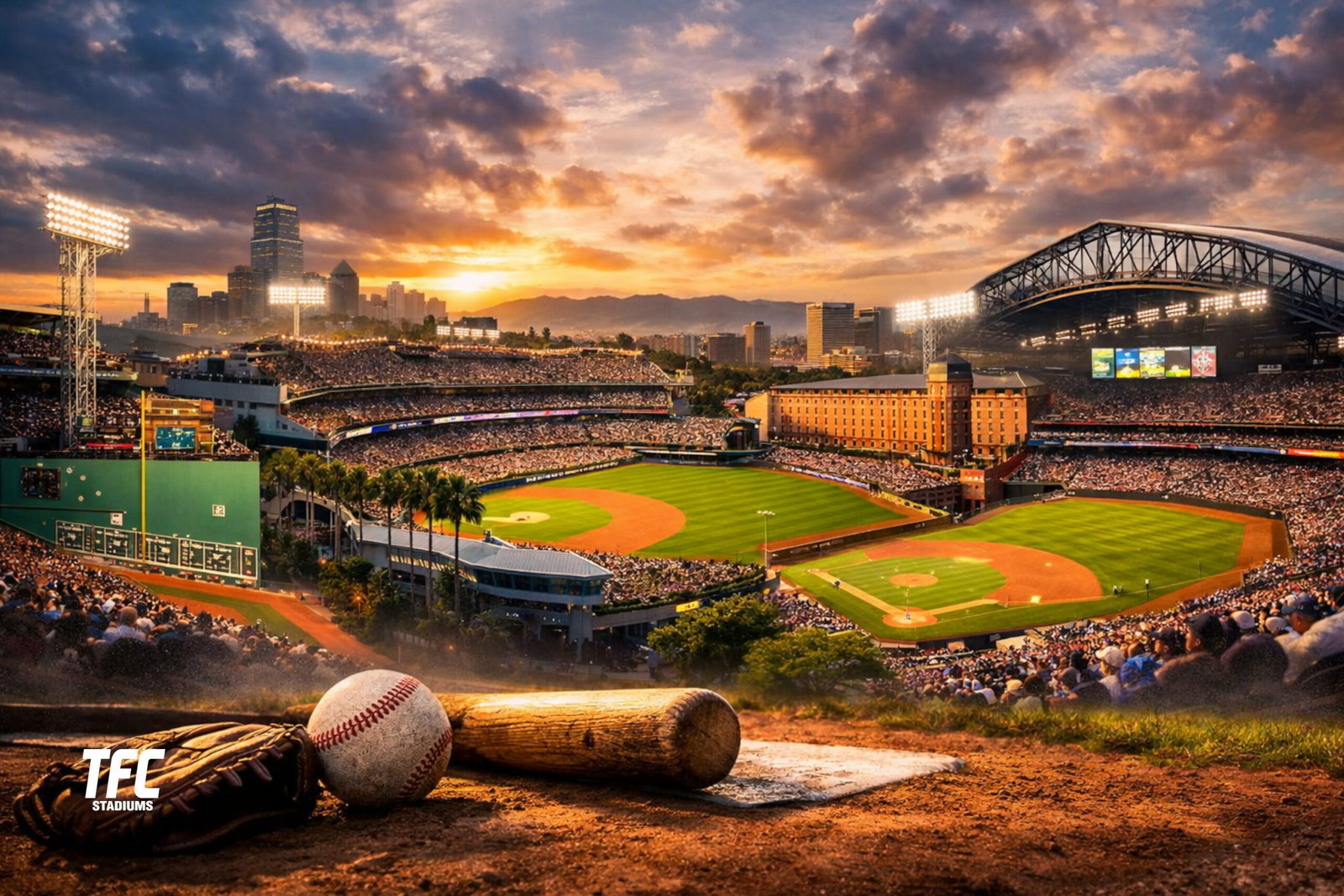
Camden Yards saved baseball from itself. In an era of concrete multipurpose bowls, it brought brick, steel, and nostalgia back into fashion. The warehouse beyond right field became an icon overnight.
Suddenly, teams wanted parks that looked like they belonged in their cities, not dropped from orbit. Nearly every ballpark built in the following two decades copied this template, sometimes too eagerly.
Petco Park, Urban Baseball Done Right
Petco Park took the Camden idea and pushed it downtown. Instead of isolating the stadium with car parks, it wove baseball into the city itself. Bars, apartments, and a historic warehouse became part of the backdrop.
This park made the case that a stadium could be a neighbourhood hub, not just a three hour destination. It also gave designers permission to let skylines and streets share the stage with the field.
Globe Life Field, Comfort as a Design Priority
Globe Life Field embraced a truth fans already knew. Watching baseball in extreme heat is a test of loyalty. With a retractable roof and modern climate control, comfort moved from luxury to necessity.
This stadium signalled a shift toward fan experience as design philosophy. Shade, airflow, and technology now matter as much as sightlines. Purists grumble, but they do it in air conditioning.
How These Stadiums Changed the Blueprint
Together, these parks reshaped expectations. Fans now want character without inconvenience, history without discomfort, and spectacle without losing the soul of the game. Architects respond by mixing old ideas with new tools, sometimes brilliantly, sometimes with too many craft beer taps.
Baseball stadium design today is a conversation between past and present. Fenway whispers about charm. Camden Yards shouts about context. Globe Life Field reminds everyone that sweating through nine innings is optional.
Final Takeaway from the Cheap Seats
Ballparks last longer than players, managers, and often the arguments about them. The best ones change how the sport sees itself. They teach baseball to adapt without forgetting where it came from. If nothing else, they give fans something to argue about besides the bullpen.
And honestly, that might be their greatest contribution.
About the Author